Moving an empty shipping container is already a specialist transport task. Adding stored goods changes the mass, balance and consequences of a poor lift or unsuitable truck choice.
Relocating loaded containers should therefore start with a transport assessment, not with an assumption that the unit can be picked up as it sits. The container condition, actual load, destination and chosen equipment all matter.
For shipping container transport in WA, the safest planning question is simple: has the transport provider confirmed that this specific container and load can be moved by the proposed method?
Decide Whether a Loaded Move Is Appropriate
Confirm Container Condition First
Before discussing the truck, confirm that the container itself is suitable for the intended move.
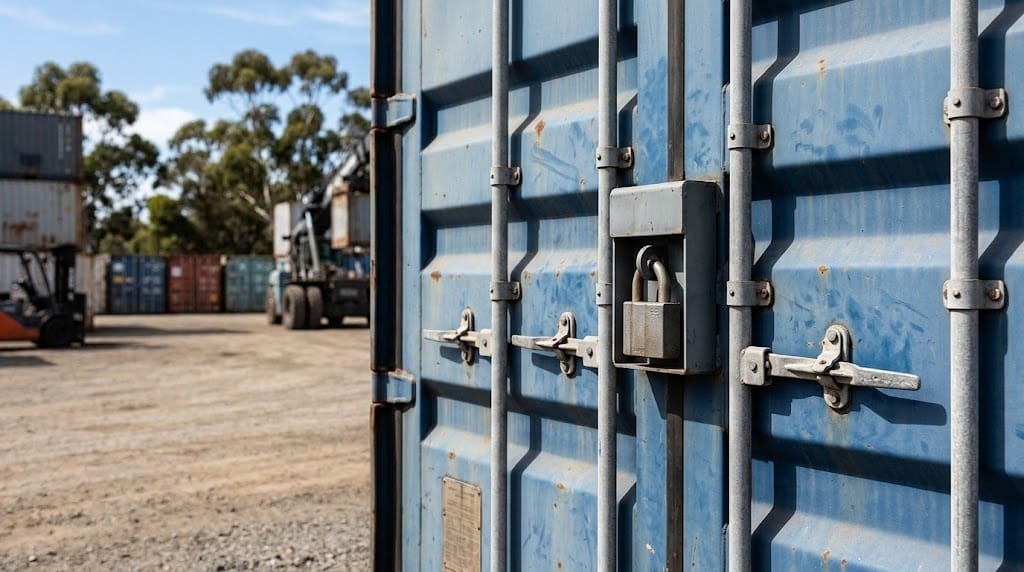
Look for significant corrosion, impact damage, distorted corner areas, damaged doors or modifications that may affect structural condition. If there is doubt, arrange an appropriate inspection rather than relying on appearance.
The current container re-certification service explains that a CSC plate includes information such as maximum gross weight. That information is relevant to structural and transport discussions, but it is not the same as the container’s actual loaded mass today.
Know the Load Before Transport Is Booked
A transport provider needs accurate information about what is inside.
Record the type of goods, whether the load can shift, and the best available mass information. Do not use a casual estimate when the lifting and transport plan depends on weight.
If contents have moved, leaked or become unstable, deal with the load condition before the container is lifted.
Let the Transport Method Follow the Load and Site
Do Not Choose a Truck by Convenience Alone
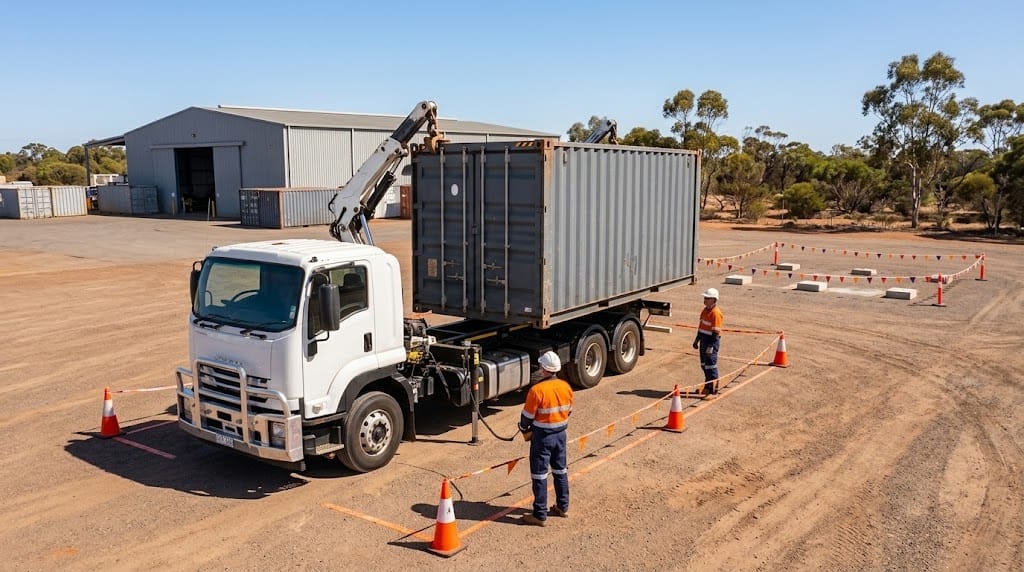
The client’s WA container transport service describes tilt tray, side loader and Hiab options. Each method has different access and placement needs.
The correct choice for a loaded move depends on the container, mass, site and transporter’s equipment limits.
Some current product pages also note that tilt-tray transport can be suitable for empty or lighter containers and that weight restrictions may apply. That is a reason to confirm, not a reason to generalise.
Check Both Ends of the Journey
The departure site can be easy while the destination is difficult.
Check firm ground, truck access, overhead obstacles, final orientation and the space needed to unload. Do the same assessment at both locations.
Where the site is complex, an on-site placement inspection can help assess fit, transport access and positioning before the move is locked in.
Avoid Improvised Lifting or Repositioning
Use Qualified Container Transport
Do not drag, tow, jack or lift a loaded container with improvised equipment.
Container movement should be handled by competent operators using equipment suited to the container, load and site. The risks increase when people cannot confirm actual mass or load stability.
Keep workers outside lifting zones and follow the transport contractor’s site controls.
Stop if the Load or Container Condition Is Unclear
A loaded move should pause if key information is missing.
Examples include uncertain mass, damaged structure, shifted contents, unverified lifting points or a destination that has not been checked.
Delaying the move is preferable to turning uncertainty into a lifting problem.
Give Refrigerated Loads Extra Planning
Maintain the Cold-Storage Plan
A loaded refrigerated container adds an operational requirement because the stored product may need continued temperature control.
Review the current refrigerated container options only as a product reference. Do not assume every reefer can remain powered by the same source during a move.
Plan any shutdown, transport power or reconnection around the exact refrigeration unit and stored product requirements.
Match Backup Power to the Exact Reefer
The current refrigerated container generators are presented for three-phase reefer applications.
That may be relevant for some transport or remote operations, but generator compatibility still requires the exact reefer specification.
Do not choose power equipment as an afterthought once the loaded container is already scheduled to move.
Prepare a Transport Brief
Include the Information That Changes the Move
A useful relocation brief should include:
- Container type and size
- Whether it is dry, insulated or refrigerated
- Container condition
- Best available actual loaded mass
- Type of goods inside
- Whether contents can shift
- Departure address and access conditions
- Destination address and access conditions
- Preferred final door direction
- Any site operating restrictions
This information lets the transport provider assess the real move rather than a generic container.
Keep the Client Service Scope Accurate
Container Refrigeration states that it can organise transport from its O’Connor yard to drop-off points in certain Western Australian locations.
The website does not state that every fully loaded customer container can be relocated between any two sites.
That distinction should stay clear in both the article and the enquiry.
FAQs
Can Every Shipping Container Be Moved While Fully Loaded?
No universal approval should be assumed.
The container, actual load, condition, transport equipment and route all need to be assessed before a loaded move is accepted.
Does a CSC Plate Tell Me the Actual Current Weight?
No.
The client re-certification page says the CSC plate includes the maximum gross weight. The actual current loaded mass still needs separate confirmation.
Can a Tilt Tray Move a Fully Loaded Container?
Do not assume it can.
Current client product guidance notes that tilt trays can be suitable for empty or lighter containers and that weight restrictions can apply. The transport provider must confirm suitability for the specific load.
Does Container Refrigeration Offer Loaded Container Relocation Everywhere in WA?
The current transport page says the business can organise container transport from its O’Connor yard to certain locations in Western Australia.
It does not state universal coverage or guaranteed transport of every fully loaded unit.
Conclusion
Relocating loaded containers requires more than booking a truck. Confirm container condition, load information, site access and transport suitability before lifting begins.
Call (08) 9335 6299 or send transport details so the container, load and destination can be discussed before a move is planned.