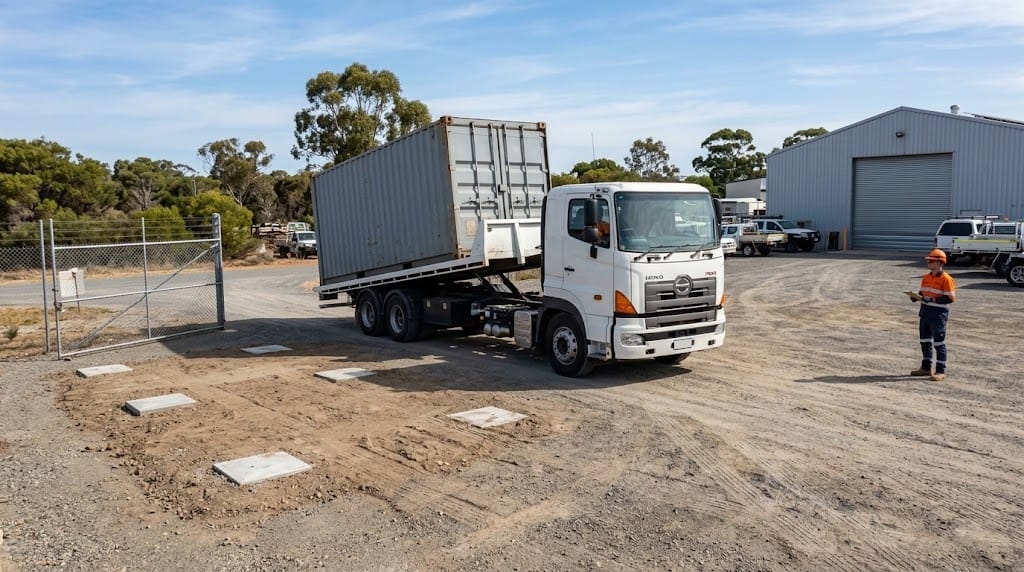
A shipping container can be ready to deliver while the site is not. Narrow access, soft ground, low branches or a poorly planned final position can stop a straightforward delivery from working as expected.
Good shipping container site preparation looks beyond the footprint of the container. It considers how the delivery vehicle will enter, unload and leave without relying on last-minute repositioning.
The most useful container delivery requirements are therefore practical. Check access, ground condition, door direction, nearby structures and the intended long-term use before the truck is booked.
Start With the Truck Route
Check the Approach Before Delivery Day
Begin at the property entrance and follow the route to the placement area. Look for gates, tight turns, overgrown trees, awnings, parked equipment and overhead services.
The client’s current container transport planning page says the delivery site should be free of obstructions and that firm, level ground is important. It also explains that truck choice depends on the access and placement conditions.
Do not assume that a container fitting on the final pad means the truck can reach it. The unloading vehicle also needs room to manoeuvre and set up safely.
Match the Delivery Method to the Site
Tilt tray, side loader and Hiab transport place containers in different ways. The correct method depends on the site, container and unloading position.
A tight site may need a different approach from an open industrial yard. Overhead obstacles can also affect crane-based placement.
If access is not obvious from photos or measurements, an on-site container inspection can help assess whether the container will fit and which placement or transport option is more suitable.
Prepare the Placement Area
Keep the Ground Firm and Level
The final position should be stable enough for the container and practical for the delivery vehicle. The transport page specifically warns that soft sandy ground can contribute to a truck becoming bogged.
Firm, level ground also helps the container sit predictably after unloading. This is one of the clearest parts of shipping container site preparation because it affects both delivery and later use.
Do not improvise a permanent foundation from generic online measurements. Soil condition, loading, modifications and intended use can change what is appropriate.
Decide the Door Direction Before Unloading
Door direction is easy to overlook until the container is already on the ground.
Think about how people, pallets or equipment will approach the doors. Leave room for the doors to open without hitting fences, walls or stored materials.
The transport provider also needs to know the required orientation because the way a container is loaded onto the truck can influence the final door position.
Treat Foundations as a Site-Specific Decision
Avoid Generic Footing Rules
There is no single foundation detail that suits every container installation.
A short-term storage container on a prepared industrial yard is a different project from a modified container that will remain in one location for years. Site soil, drainage, container condition and the planned use all matter.
The current client website does not publish one universal slab thickness, footing size or pier spacing. For that reason, this article does not invent one.
Where structural foundations, anchoring or building approvals are relevant, obtain site-specific advice from an appropriately qualified professional and the relevant authority.
Separate Temporary Placement From Permanent Works
Temporary placement still needs a stable surface, but it should not be confused with permanent structural work.
For general storage, review the available standard dry containers only after the site requirements are understood. The container type does not remove the need for suitable access and placement.
Longer-term or modified projects may also need planning, structural or service considerations that sit outside basic delivery preparation.
Account for the Container Type
Dry Containers Have Different Operating Needs
A dry storage container does not need powered refrigeration equipment, but it still needs sensible access, door clearance and a stable placement area.
Around the middle of the planning process, Container Refrigeration can be considered as the supplier and transport contact rather than as a substitute for site-specific engineering advice.
This distinction keeps the scope clear. The business supplies, hires, modifies and supports containers, while structural foundation design depends on the project.
Refrigerated Containers Need Equipment Clearance
Refrigerated containers add another site consideration because the refrigeration unit needs airflow and service access.
The current refrigerated container range includes several configurations, so the exact unit should be confirmed before finalising placement.
Do not position a reefer based only on the external box size. Check the refrigeration end, door access, power route and service space for the actual unit.
Complete a Pre-Delivery Check
Use a Site Inspection When Access Is Uncertain
A site inspection is useful when access is tight, ground conditions are uncertain or the final position is close to structures.
Photos can help, but they may not show slopes, turning space or overhead restrictions accurately.
For short-term needs, the container hire options can be reviewed after the delivery path and placement area are confirmed. This keeps product selection behind the operational checks.
Prepare the Information the Supplier Needs
Before requesting transport, prepare a simple site brief:
- Delivery address
- Container type and size being considered
- Intended final position
- Gate and access restrictions
- Ground condition
- Overhead obstacles
- Preferred door direction
- Whether the container is refrigerated
- Any known site rules or access windows
This information makes container delivery requirements easier to assess without relying on assumptions.
FAQs
Does Every Shipping Container Need a Concrete Slab?
No universal concrete slab requirement is stated on the client’s website.
The right base depends on the site, load, intended use and any structural or approval requirements. Permanent foundation details should come from project-specific advice.
Can a Container Be Delivered Onto Sandy Ground?
The transport page says solid ground is preferable and warns that soft sandy ground can cause delivery trucks to become bogged.
If the site is soft, discuss access before booking transport rather than assuming the truck can reach the placement area.
Who Decides Which Truck Type Is Used?
Truck selection should be based on the site, container and placement requirements.
Provide accurate access information so the transport provider can determine whether a tilt tray, side loader or Hiab is suitable.
Should Door Direction Be Planned Before Delivery?
Yes. Planning the door direction before unloading can reduce avoidable repositioning and help keep the final layout usable.
Conclusion
Good shipping container site preparation starts with access, firm ground and a clear placement plan. Foundation details should then be matched to the project’s real use rather than copied from a generic rule.
Call (08) 9335 6299 or send your site details so access and placement requirements can be reviewed before delivery is arranged.