A shipping container may feel substantial on a calm day, but severe weather changes the forces acting on any exposed structure. Location, terrain, condition, modifications, base and connections all affect the risk.
To secure a shipping container against weather, separate everyday weather protection from structural wind resistance. A sealed door or padlock can help with access and moisture, but neither proves that the container is adequately restrained for high winds.
A windproof container installation should not be treated as a universal product promise. In Western Australia, wind design can be site-specific and may require competent structural assessment.
Start With the Site, Not the Lock
Wind Risk Is a Structural Question
WorkSafe WA has warned that buildings and temporary structures, including container structures, can fail during severe wind events when design, construction, connections, bases or foundations are inadequate.
That makes high wind container safety a structural issue, not simply a matter of closing the doors.
If the container is in an exposed, remote or storm-prone location, obtain advice that considers the actual site rather than copying an anchor detail from another project.
An on-site container assessment can help with fit, placement and transport questions. Structural wind design may still need a suitably qualified structural professional.
Exposed WA Locations Need Site-Specific Assessment
Western Australia has state-specific wind design provisions within the National Construction Code framework.
This article does not reproduce wind-speed tables or assign a wind classification to a site. That requires the correct project information and design basis.
The practical first step is to identify the site’s exposure, intended use and whether the container is temporary, permanent or part of a modified structure.
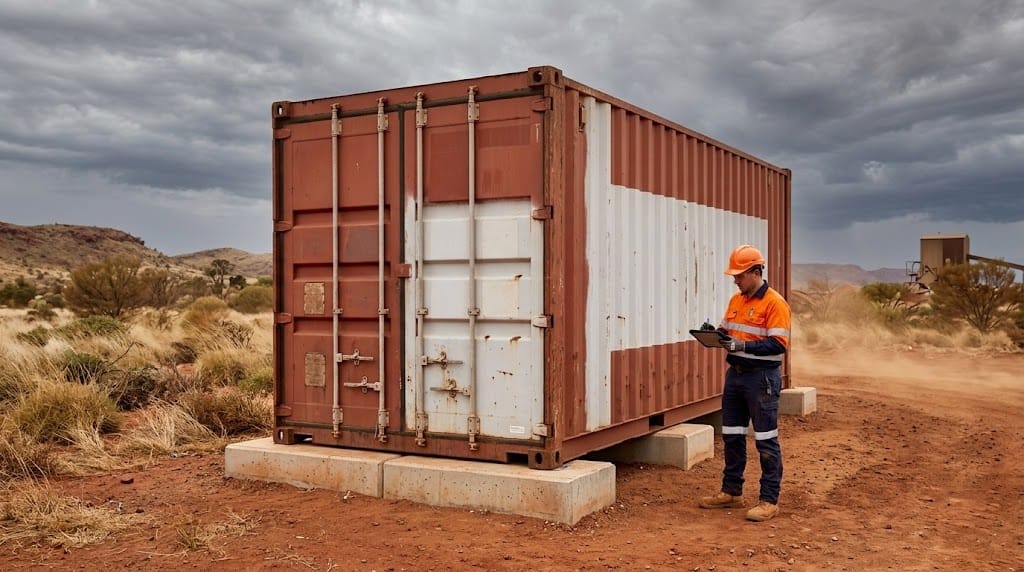
Check the Base and Placement
Stable Ground Still Matters
The current container transport guidance requires firm, level ground for placement and warns about unsuitable soft surfaces.
A stable base helps the container remain predictably positioned. It does not, by itself, prove adequate resistance to wind uplift or sliding.
Drainage, erosion and settlement should also be monitored because changes around the base can affect the support condition over time.
Do Not Invent an Anchor Detail
There is no universal anchor size, spacing or foundation detail on the current client website.
Do not treat a generic bolt, chain, concrete block or twist-lock arrangement as automatically suitable for every WA site.
Where anchoring is required, the system should be designed for the actual structure, site and wind actions by an appropriately competent professional. The installation should follow that design.
Inspect the Container Itself
Damage and Modifications Can Change the Risk
Corrosion, impact damage and structural modifications can affect how a container behaves.
The current container re-certification service deals with container structural inspection for transport-related certification. That is different from a site-specific wind engineering assessment, but it shows why condition matters.
If a container has been heavily modified, do not assume its original structural behaviour is unchanged.
Recheck After Severe Weather or Relocation
High wind container safety is not a one-time task.
After a severe weather event, relocation or significant site work, look for new movement, damage, loose components, settlement or changes around the base.
If anything has shifted or the container has been damaged, keep people clear of the risk area until the condition is assessed.
Separate Weather Sealing From Wind Restraint
Security Doors Solve a Different Problem
The current anti-vandal container door is a security-focused modification with sealed joints and weather or draught seals.
Those features can be relevant to access security and weather sealing. They should not be described as a structural wind anchoring system.
This distinction prevents false advertising and helps readers choose the right type of assessment.
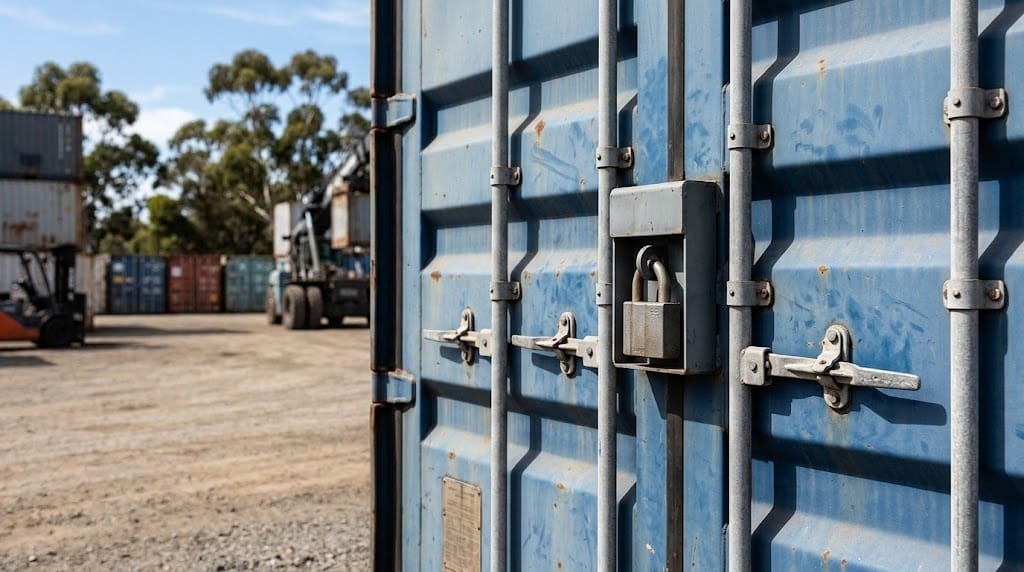
Locks Do Not Anchor a Container
The current container lock range covers access-security products such as twist locks and padlocks.
Security against theft is different from structural restraint against wind. A stronger lock does not prove that the container is safe in a severe wind event.
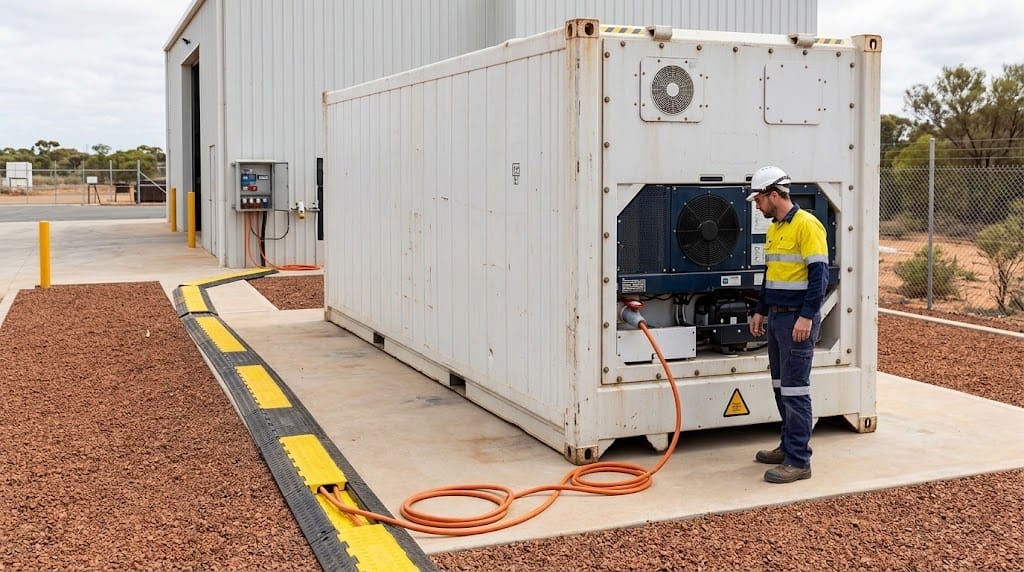
Around this point, Container Refrigeration is relevant for container products, modifications, inspections and placement discussions. Structural wind design remains a separate professional requirement when needed.
Build a Practical Severe-Weather Plan
Keep Records and Inspection Triggers
For exposed sites, keep a simple record of:
- Container condition at placement
- Any modifications made later
- Foundation or anchoring design documents, where applicable
- Inspection findings
- Significant storm or impact events
- Relocations or changes to surrounding ground
- Repairs completed after damage
This makes it easier to identify when the structure has changed from its original condition.
Know When to Escalate to Structural Advice
Seek competent structural advice when the container will be permanently installed, heavily modified, used in an exposed location or relied on as part of a larger structure.
Do not wait for a visible failure before asking whether the base and connections are appropriate.
A responsible plan combines suitable placement, structural design where required, maintenance and post-event inspection.
FAQs
Is a Shipping Container Heavy Enough to Resist High Winds Without Anchoring?
Do not assume weight alone is enough.
Wind resistance depends on the site, structure, exposure, base and connections. Site-specific professional advice may be required.
What Does “Windproof Container Installation” Actually Mean?
The phrase can overpromise if it is used without a defined design basis.
A safer description is a container installation designed for the site’s applicable wind actions, with suitable foundations and connections specified by a competent professional.
Do Weather Seals or Security Doors Make a Container Safe in High Winds?
No.
Weather seals and security doors address different functions. They do not replace structural wind restraint or foundation design.
Can Container Refrigeration Design My Wind Anchoring System?
The current website describes container sales, hire, modifications, inspections, transport and related services.
It does not present a universal structural wind-anchoring design service. For project-specific wind design, engage an appropriately qualified structural professional.
Conclusion
To secure a shipping container against weather and high winds, treat placement, structural condition, foundations and connections as one site-specific system. Avoid calling any installation windproof unless the design basis supports that claim.
Call (08) 9335 6299 or discuss placement requirements for container and site-planning questions, and use qualified structural advice where wind anchoring or permanent structural design is required.