You’re comparing reefer hire options because you need cold storage fast – and you’re trying to work out whether a short-term container hire or a longer commitment makes better financial sense for your operation.
The answer depends on three factors: how long you actually need the unit, what happens if your storage needs suddenly change, and whether the weekly rate difference justifies locking yourself into a contract. Most businesses underestimate how much flexibility costs them when they guess wrong.
What Short-Term Reefer Hire Actually Means
Short-term container hire typically covers anything from one week to three months. You’re paying for maximum flexibility – the ability to return the unit with minimal notice once your cold storage need ends.
The trade-off is a higher weekly rate. Short-term hire costs more per week than equivalent long-term arrangements, depending on container size and refrigeration capacity.
This option suits businesses with:
- Seasonal peaks that last 4-12 weeks (harvest periods, Christmas retail, summer tourism) requiring event catering cold storage
- One-off projects with fixed end dates
- Temporary cold storage needs whilst permanent infrastructure is being built or repaired
- Trial periods before committing to a purchase or long-term lease
Short-term doesn’t mean casual. You still need to match the reefer’s capacity to your product volume and ensure your site has adequate power supply. A 1-phase cool room suits most standard commercial sites and is the most common short-term container hire option.
When Long-Term Hire Becomes the Smarter Option
Long-term reefer hire generally means a commitment of six months or longer. The weekly rate drops significantly because the supplier can plan around consistent utilisation and reduced logistics costs.
The savings become substantial the longer you hold the unit. If you’re still using the container at the four-month mark, you’ve likely already paid more on short-term container hire rates than you would have with a long-term agreement from the start.
Long-term reefer hire makes sense when:
- Your cold storage need extends beyond a single season
- You’re operating a business with year-round refrigeration requirements
- You need consistent temperature control but can’t justify the capital outlay of purchasing
- You want to avoid maintenance responsibility whilst keeping monthly costs predictable
Some businesses start short-term just to test the waters and end up keeping the unit for 18 months. That’s an expensive approach to seasonal cold storage – you’re paying a premium for flexibility you’re not using.
The Break-Even Point Most Businesses Miss
The financial crossover happens faster than most operators expect. If you keep a reefer for more than 16 weeks, short-term container hire almost always costs you more than going long-term from day one.
The rate difference between short-term and long-term agreements varies by supplier and unit size. Always request quotes for both options and compare the total cost over your expected hire period. Include delivery, setup, and collection fees – not just the weekly rate.
That weekly gap widens every week you continue. By six months, the difference between short-term and long-term reefer hire rates is significant. By 12 months, you may have paid considerably more for the exact same cold storage.
The only time short-term container hire makes financial sense beyond 12 weeks is if there’s a genuine chance you’ll finish early and return the unit. If you’re just being cautious, you’re paying a high price for that caution.
How Seasonal Businesses Should Calculate This
Seasonal operations face the trickiest decision. You know you need seasonal cold storage for harvest, vintage, or peak tourism periods – but the exact duration varies year to year.
The smart approach: calculate your minimum guaranteed need, then add a buffer. If your harvest period has run 10-14 weeks for the past five years, your minimum is 10 weeks. Anything beyond that is variable.
Here’s the decision framework:
- 8 weeks or less – short-term hire is almost always correct
- 9-16 weeks – calculate both options with your actual quoted rates
- 17+ weeks – long-term reefer hire wins unless there’s a strong chance of early finish
For agricultural businesses, weather variability matters. A Queensland mango grower might need refrigerated container hire Australia for 8-12 weeks depending on how the season unfolds. That uncertainty can justify short-term rates.
A cherry exporter who consistently needs cold storage from mid-November through January – roughly 10-12 weeks every single year – should negotiate a seasonal long-term rate. Many suppliers offer annual seasonal agreements that give you long-term pricing for a defined period each year.
What Happens When Your Needs Change Mid-Contract
Long-term contracts aren’t as rigid as most businesses assume. Early exit terms vary by supplier, but most allow termination with advance notice after an initial minimum period. Always confirm these terms in writing before signing any long-term reefer hire agreement.
The initial minimum is usually three to six months. If you commit to 12 months but need to exit early, you’ll typically pay an early termination fee and return the unit. These terms vary – clarify them before committing.
Some suppliers offer hybrid arrangements: you commit to a minimum term at long-term rates, then revert to rolling monthly terms afterwards. This works well for businesses with a known core need plus uncertain extension periods.
If your storage needs may increase during the hire period, ask how unit upgrades are handled before signing. Moving from mini refrigerated containers to a larger unit may require a revised agreement, a different weekly rate, and additional transport or changeover costs. Confirm availability, notice requirements, and applicable fees in writing.
Power Supply Considerations That Affect Hire Terms
Your site’s electrical infrastructure directly impacts which reefer options you can hire and whether short-term container hire or long-term makes sense.
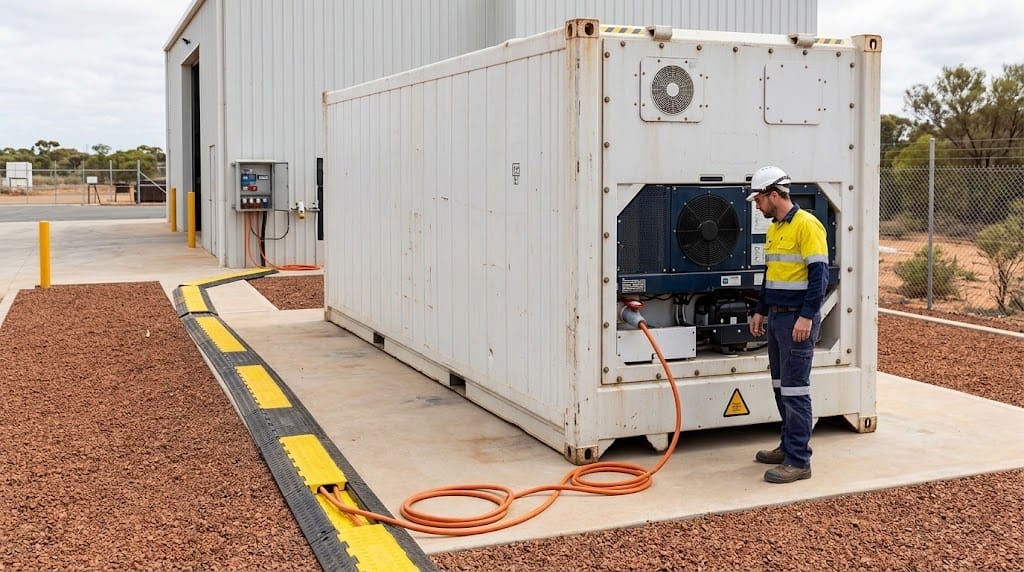
Single-phase refrigerated containers run on standard 15-amp power – the same supply that runs your office or small workshop. These units suit smaller cold storage needs and are the most common short-term container hire option.
Three-phase units require industrial power supply and suit larger operations needing greater refrigeration capacity. If you don’t currently have three-phase power, installation involves additional cost from a licensed electrician – factor this into your total hire calculation.
This changes your hire decision significantly. If you’re installing three-phase power specifically for the reefer, you’ve made a capital investment that only pays off with extended use. For truly remote or temporary sites, off-grid refrigeration generators solve the power supply problem. Keep in mind that ongoing fuel costs factor into your total long-term reefer hire cost comparison.
The Hidden Costs That Change the Calculation
Weekly hire rates tell only part of the story. Delivery, setup, and return logistics add fixed costs that matter more on short-term container hire than on long-term agreements.
Most suppliers charge for delivery and pickup depending on your location. On a short-term hire, that fixed delivery cost represents a larger proportion of your total spend.
Other costs to factor into any refrigerated container hire Australia decision:
- Power connection – a dedicated outlet installation by a licensed electrician (one-off cost)
- Site preparation – reefers need level, stable ground: concrete, compacted gravel, or heavy-duty bearers
- Power leads – refrigeration extension leads are required if your power source isn’t immediately adjacent
Long-term agreements sometimes include free delivery and pickup when you commit to 12+ months. Short-term container hire almost never waives logistics fees. Ask for an all-in quote including delivery, setup, and return pickup – compare the total cost, not just the weekly rate.
When to Hire Short-Term Even If It Costs More
Financial efficiency isn’t the only consideration. Sometimes paying a premium for flexibility is the right business decision.
Short-term container hire makes strategic sense when:
- You’re testing cold storage for the first time and genuinely don’t know if it will work for your operation
- You’re covering for a permanent cool room under repair with a known completion date
- You’re running a one-off event or temporary retail activation with a fixed end date
- Your business is in a transitional phase and can’t commit to 6+ months of any fixed cost
A caterer hiring a trailer-mounted freezer unit for a three-week catering surge with zero chance of extension beyond those three weeks is making exactly the right call. Short-term container hire at a premium rate is entirely justified by certainty of the end date.
The question isn’t whether short-term costs more. It’s whether the flexibility premium is worth it for your specific operational reality.
How to Negotiate Better Terms on Either Option
Hire rates aren’t fixed. Suppliers adjust pricing based on demand, seasonality, and competition in your area.
You’ll get better rates if you:
- Request quotes from multiple suppliers and mention you’re comparing options
- Book during off-peak periods – autumn and winter typically see lower demand for seasonal cold storage
- Commit to longer terms upfront rather than extending month-by-month
- Ask about prepayment discounts on long-term reefer hire agreements
For short-term container hire, ask about early return credits. Some suppliers refund a portion of prepaid weeks if you return the unit earlier than expected.
If you’re hiring during peak season from November through February, book at least 6-8 weeks ahead. Last-minute short-term container hire during high demand can cost significantly more than standard rates.
What to Ask Before You Commit
Whether you’re going short-term or long-term reefer hire, these questions clarify exactly what you’re paying for and what happens if circumstances change.
Essential questions for any refrigerated container hire Australia agreement:
- What’s included in the weekly rate? (Delivery, setup, maintenance, emergency callouts?)
- What temperature range can this unit maintain, and what’s the recovery time after door openings?
- Is this single-phase or three-phase power, and what’s the running amperage?
- What’s the minimum hire period, and what notice do I need to give for return?
- What happens if the unit fails? (Replacement timeframe, backup options, liability for spoiled product)
- Can I upgrade or downgrade to a different size unit mid-contract?
For long-term reefer hire agreements specifically, ask about maintenance schedules. Most suppliers service units every 3-6 months. Confirm whether that happens during your operating hours or if you need to schedule downtime.
A refrigeration maintenance contract protects you from unexpected repair bills during extended hire periods. Clarify whether routine servicing is included in your hire rate or charged separately.
Making the Decision With Incomplete Information
You won’t have perfect certainty about how long you need the reefer. That’s normal. The goal isn’t to predict the future – it’s to make the most cost-effective decision given what you know now.
Use this decision framework:
- 80%+ certain you need cold storage for less than 12 weeks – go short-term container hire. The flexibility premium is justified.
- 80%+ certain you need it for more than 20 weeks – go long-term reefer hire. The savings are too significant to ignore.
- 12-20 week grey zone – calculate both options with your actual quoted rates. If the cost difference is modest, choose short-term for flexibility. If it’s significant, choose long-term and confirm early exit terms.
Most businesses overestimate the risk of committing early and underestimate the cost of staying on short-term container hire too long. If you’re genuinely uncertain, a 6-month long-term reefer hire agreement with a 90-day minimum is usually the optimal middle ground.
For off-grid or remote seasonal cold storage setups, confirm your site’s power supply before committing to any hire term. A Carrier refrigeration generator paired with the right unit eliminates power uncertainty for remote operations and removes one major variable from your hire decision.
Container Refrigeration provides both short-term container hire and long-term reefer hire options across Australia, with transparent pricing covering delivery, setup, and ongoing support. Our team walks you through the actual costs for your location so you can make this decision with real numbers.
If you need to understand your options for compliant cold storage during hire, our guide on used refrigerated containers for sale shows how purchase compares to long-term hire for businesses with stable ongoing cold storage needs.
For food businesses operating under HACCP requirements, a monitoring contract on your hired unit provides continuous temperature logging and documentation – essential if health inspectors audit your cold chain during the hire period.
Our unit swap-over service means that if your hired refrigeration unit develops a fault mid-contract, we replace it promptly – minimising downtime and protecting your stock during the long-term reefer hire period.
Before finalising your hire agreement, confirm the unit has been recently serviced. Our on-site inspection service verifies container condition and power compatibility at your location before the hire period begins – preventing problems that only appear after delivery.
Call (08) 9335 6299 or get in touch with our team to get quotes on both short-term container hire and long-term reefer hire options for your specific situation.