Most businesses buying or hiring a refrigerated container don’t realise power supply matters until the unit arrives on-site. You’ve secured the perfect cold storage solution, only to discover your electrical setup can’t run it properly.
The difference between a single phase reefer container and a three phase refrigerated container isn’t just technical jargon. It determines whether your unit operates efficiently, requires costly electrical upgrades, or even works at all. Choosing the wrong power configuration means unexpected expenses and operational delays that a simple site check could have avoided.
What Single-Phase and Three-Phase Power Actually Mean
Single-phase power uses a standard 15-amp or 20-amp outlet – the same type that runs household appliances. It delivers electricity through two wires: one active wire and one neutral wire. Most residential properties and small commercial premises have single-phase power as standard.
A three phase refrigerated container requires a four-wire supply: three active wires and one neutral wire. This configuration distributes electrical load more evenly. Industrial sites, large commercial buildings, and agricultural properties typically have three-phase power installed.
The key difference isn’t just the number of wires. Three-phase power delivers more consistent electrical current and handles higher loads without overheating or tripping circuit breakers. Single-phase power works perfectly for lighter loads but can struggle with equipment demanding continuous high power draw.
For refrigerated containers, this distinction matters because refrigeration units consume significant power – especially during initial pull-down periods when the unit works hardest to reach target temperature.
Power Draw: The Real Difference Between Single and Three Phase
A typical single phase reefer container draws between 10-15 amps during normal operation. Peak draw during start-up can reach 20 amps momentarily. This suits standard Australian single-phase circuits rated at 15-20 amps.
A three phase refrigerated container distributes its power draw across three circuits simultaneously. A unit requiring 32 amps total might draw approximately 10-11 amps per phase. This balanced distribution reduces strain on any single circuit and improves overall efficiency.
Understanding your refrigerated container power requirements before hire or purchase prevents costly surprises. Have a licensed electrician confirm your site’s available power type and capacity before ordering any unit.
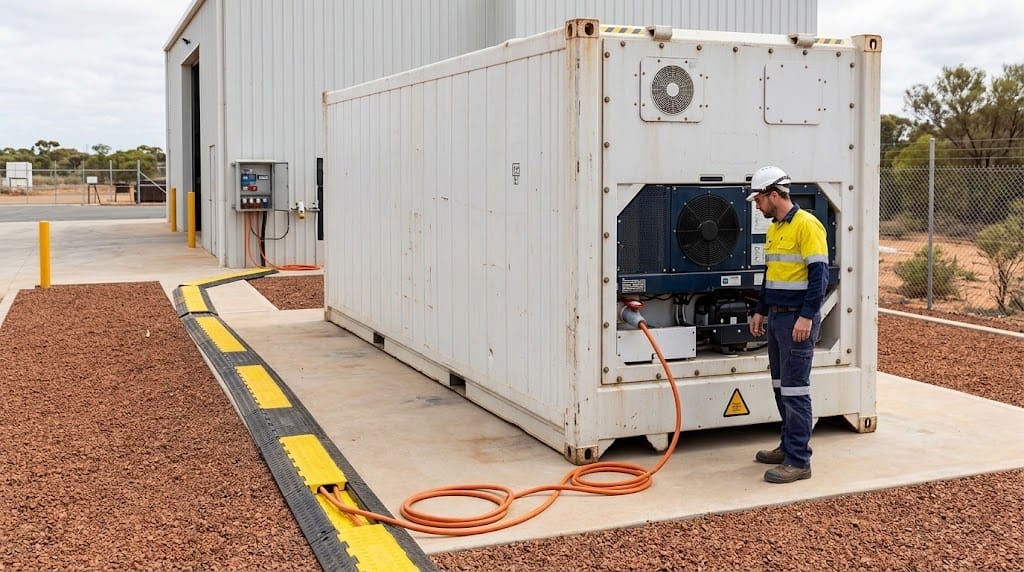
If your site runs on three-phase power, an international shipping power adaptor ensures a safe, compatible connection between your power supply and the container’s inlet. Mismatched connectors create serious safety hazards.
Site Infrastructure: Matching Your Container to Existing Power
Most Australian residential properties and small businesses have single-phase power only. This includes suburban warehouses, small retail premises, farm sheds, and home-based operations. If your property has a standard household-style switchboard with single-pole circuit breakers, you have single-phase power.
Three-phase power is standard at industrial estates, large commercial buildings, manufacturing facilities, and agricultural properties with significant machinery. Check your switchboard – three-phase installations have triple-pole circuit breakers that control three circuits simultaneously.
Understanding your refrigerated container electrical requirements starts with this simple switchboard check. If you’re unsure, a licensed electrician can confirm your power type quickly. This prevents the single most common and costly mistake businesses make when selecting refrigerated containers.
For remote or off-grid sites, refrigerated container generator sizing becomes your primary concern. Small portable generators typically produce single-phase power only. Industrial generators above 10kVA often produce three-phase power. Match your container’s power requirement to your generator’s output before purchase.
A noise reduction box is available for sites where the refrigeration unit creates neighbourhood or camp proximity issues – applicable to both single phase reefer container and three phase refrigerated container installations.
Temperature Performance: Does Power Type Affect Cooling?
Both a single phase reefer container and a three phase refrigerated container achieve identical temperature ranges. A properly specified unit of either type maintains temperatures from -25°C for frozen storage to +25°C for climate-controlled applications. Power type doesn’t limit your temperature options.
The difference appears in temperature stability under extreme conditions. Three-phase units handle high ambient temperatures more consistently because their motors run cooler. In Far North Queensland or Western Australia’s interior, where summer temperatures exceed 40°C, three phase refrigerated container units maintain target temperatures with less cycling.
Single-phase units work reliably in these conditions but may cycle more frequently. For businesses in temperate climates or air-conditioned warehouses, this difference is negligible.
Container Size and Power Type Recommendations
Compact refrigerated containers under 10 feet almost always use single-phase power. The 4ft Cold Cube refrigerated unit and similar small units suit single-phase power perfectly. Their smaller refrigeration units don’t require three-phase capability.
Standard 10-foot and 20-foot refrigerated containers are available in both configurations. Single phase reefer container versions suit small-to-medium businesses with standard electrical infrastructure. Three phase refrigerated containers suit industrial sites or businesses planning long-term use where efficiency and consistent cooling matter most.
Larger 40-foot refrigerated containers typically use three-phase power as standard. Their larger refrigeration units and greater internal volume require the consistent power delivery that three-phase provides.
For commercial cold storage power supply planning, always confirm container specifications with your supplier before committing to any electrical infrastructure work.
Off-Grid and Generator-Powered Refrigeration
Running an off-grid refrigerated container requires careful generator sizing. A single-phase unit needs a generator rated at least 150% of the unit’s maximum draw. Always specify a generator with adequate headroom above the container’s rated power consumption for reliable operation.
Three phase refrigerated container units require three-phase generators. Our Carrier refrigeration unit is available in both power configurations and is designed for high ambient temperature performance across remote Australian sites.
Refrigerated container generator sizing is the most critical decision for off-grid applications. Undersized generators damage both the generator and refrigeration equipment through voltage fluctuations and frequent overload shutdowns. Always size your generator to the container’s specifications, not just its average running draw.
For agricultural applications – such as a farmer storing harvest in a remote property – a single phase reefer container often makes more practical sense. Smaller generators cost less, transport more easily, and still provide reliable cooling for seasonal use.
Container Refrigeration helps businesses across Australia match the right refrigerated container to their site’s electrical infrastructure. Our team assesses your power infrastructure, usage needs, and budget to recommend the most practical cold storage solution.
Electrical Installation and Compliance Requirements
Single phase reefer container installations require a dedicated 15-amp or 20-amp circuit. This means a direct connection from your switchboard to the container’s power inlet, protected by an appropriately rated circuit breaker.
Three-phase installations require a dedicated 32-amp three-phase circuit in most cases. The electrician installs a four-pole circuit breaker and runs four-core cable to the container location. Costs and installation times vary depending on cable run distance and site conditions.
Both configurations must comply with AS/NZS 3000:2018 (Australian Wiring Rules). Your electrician will verify earth leakage protection, cable sizing, and weatherproof connections. For food industry applications, additional requirements under HACCP and Food Standards Australia New Zealand may apply.
If your hired or purchased unit develops a fault, our emergency refrigeration supply service provides a replacement unit quickly – minimising downtime whether you’re running a single phase reefer container or a three phase refrigerated container.
Hire vs Purchase: How Power Type Affects Your Decision
Short-term refrigerated container hire (under six months) almost always favours single phase reefer container units. Most hire locations have standard power available, and you avoid the cost of three-phase installation for temporary needs. Single-phase units also relocate easily if your operational requirements change.
Long-term hire or purchase decisions should factor in total cost of ownership. If your site already has three-phase power, a three phase refrigerated container costs less to run over time. Calculate your expected usage period – the efficiency gains typically justify three-phase selection for continuous long-term operation.
For businesses planning to relocate containers between sites, single phase reefer container units offer more flexibility. You’ll find suitable commercial cold storage power supply at virtually any Australian commercial or industrial location.
Agricultural businesses face a unique calculation. If you need cold storage only during harvest season, single-phase units make sense even if three-phase power exists on-site. The efficiency difference matters less when total operating hours are limited.
Unsure which configuration suits your site? An on-site container assessment confirms your available power type and identifies any infrastructure requirements before you commit to a unit.
Common Power-Related Mistakes and How to Avoid Them
The most common mistake is assuming your site has adequate power without verification. Before ordering a three phase refrigerated container or single phase reefer container, have a licensed electrician confirm your available power type and capacity.
Another frequent error is undersizing electrical supply. Some businesses connect refrigerated containers to existing circuits serving other equipment. This overloads the circuit and trips breakers repeatedly. Refrigerated containers need dedicated circuits – never share the supply with other high-draw equipment.
Businesses sometimes choose three phase refrigerated container units without considering future relocation needs. If you might move the container to a different site within 2-3 years, verify that future locations have three-phase power available.
For off-grid refrigerated container applications, the biggest mistake is undersizing generators. Always specify generators at 150-200% of your refrigeration unit’s rated draw. This is non-negotiable for reliable refrigerated container generator sizing.
Refrigeration Unit Brands and Power Configurations
Carrier units dominate the Australian market because they’re designed for extreme ambient temperatures and offer reliable performance across diverse climates. Thermo King units similarly offer both power types and excel in transport refrigeration applications.
Daikin and Starcool units also appear in Australian refrigerated containers, particularly in custom-built cool rooms. These typically use single-phase power and integrate well with standard commercial electrical systems.
When comparing refrigeration brands, focus on reliability, parts availability, and service network coverage rather than power configuration alone. All major brands perform similarly when properly specified and matched to your refrigerated container electrical requirements.
For units requiring power assessment or a compliance check after purchase, our IICL container certification service confirms structural and operational standards are met.
Modifications and Power Upgrades
Existing refrigerated containers can sometimes be converted between power types, but it’s rarely cost-effective. Converting a three phase refrigerated container to single-phase requires replacing the entire refrigeration unit.
Some businesses add a container climate control unit alongside refrigeration for better temperature management. These typically run on single-phase power regardless of the refrigeration unit’s configuration, allowing precise control for temperature-sensitive applications.
Power supply modifications at your site offer more practical solutions. Upgrading from single-phase to three-phase power opens options for multiple three phase refrigerated container units and other industrial equipment. This investment makes sense for growing businesses with long-term cold storage needs.
Making the Right Choice for Your Business
Start by confirming your site’s existing commercial cold storage power supply. This single piece of information eliminates half your options immediately and focuses your decision on practical choices.
Calculate your expected usage duration and frequency. Continuous year-round operation favours three phase refrigerated container units at sites with existing three-phase power. Seasonal or intermittent use suits single phase reefer container units connecting to standard power outlets.
Consider your business growth plans. If you’re likely to add more refrigerated containers, three-phase infrastructure investment pays off across multiple units. Businesses with stable cold storage needs should stick with single-phase simplicity.
Factor in relocation possibilities. Businesses that might move premises within 2-3 years should favour single phase reefer container units that work at virtually any location.
If your single phase reefer container or three phase refrigerated container needs door modifications to improve access or workflow, our 1-phase container door options cover a range of single-phase unit configurations specifically.
Call (08) 9335 6299 or speak with our specialists to confirm which power configuration suits your site and operational requirements.