Perth’s summer heat and strict food safety standards create unique cold storage challenges. A refrigerated container hire might seem straightforward – call a supplier, book a unit, plug it in. The reality involves power requirements, temperature verification, site access constraints, and compliance obligations that can derail operations if overlooked.
Understanding what you’re committing to before signing any agreement is the difference between a smooth hire and a costly disruption. This is especially true for reefer container hire WA operators, where extreme summer temperatures push refrigeration units harder than in most other states.
Why Perth Businesses Choose Container Hire Over Purchase
Purchasing a refrigerated container outright requires significant capital investment depending on size and specifications. Refrigerated container hire Perth agreements offer an accessible alternative, making them attractive for businesses with temporary cold storage needs.
Common hire scenarios include:
- Seasonal demand spikes – fruit processors during mango or stone fruit harvest needing farm cold storage containers on short notice
- Equipment failure backup – restaurants maintaining operations whilst permanent cool rooms undergo repairs
- Event catering – mobile cool room options for festivals, sporting events, or outdoor functions
- Construction site amenities – worker meal storage on remote mining or infrastructure projects
- Retail fit-outs – temporary cold storage during shop renovations
If your cold storage need extends beyond two years, purchasing becomes more economical. For shorter commitments or uncertain timelines, cold storage hire Perth agreements offer flexibility without capital outlay. For budget-conscious buyers, clearance shipping containers are worth comparing against hire costs for longer-term needs.
Power Supply Requirements: The Most Common Oversight
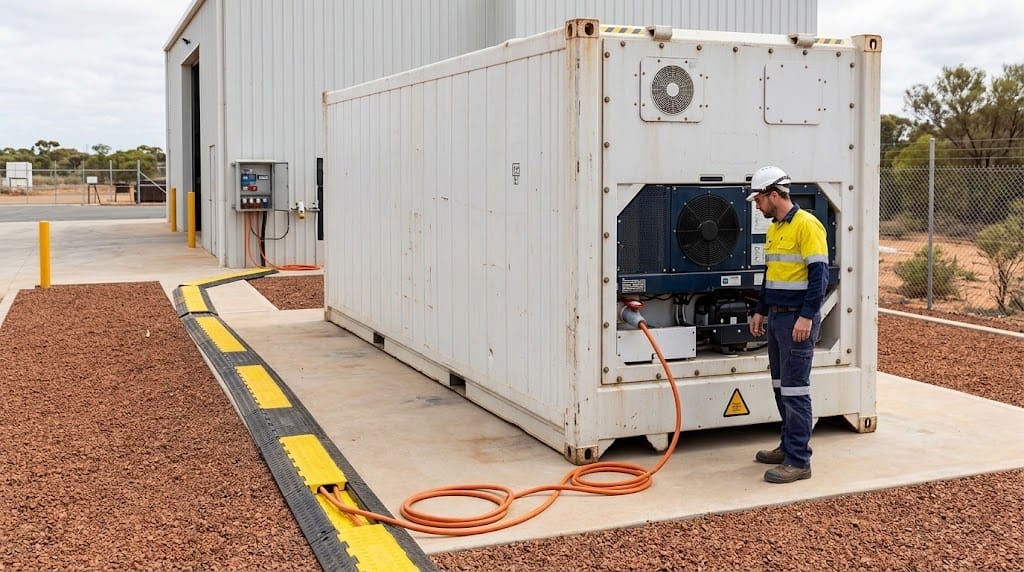
A single-phase refrigerated container operates on a standard 15-amp single-phase power supply – the same supply running most commercial premises. Three-phase units require dedicated industrial power infrastructure.
Perth’s industrial areas like Welshpool, Kewdale, and Malaga typically have three-phase access. Suburban hospitality venues, retail locations, and residential properties usually don’t.
Critical power considerations before reefer container hire WA:
- Outlet location – container extension leads reduce efficiency and create trip hazards when runs are too long
- Circuit capacity – a refrigerated container draws 10-15 amps continuously; sharing circuits with kitchen equipment or air conditioning causes breaker trips
- Generator backup – off-grid sites need properly sized portable refrigeration generators with fuel management plans
- Voltage stability – fluctuating power damages compressor components
Ask your hire provider for the unit’s power specifications sheet. Share this with your electrician before committing to the hire agreement. If your site runs three-phase power, confirm the correct adaptor – a 32-amp 3-phase adaptor ensures a compatible, safe connection.
Temperature Range Verification and Monitoring
Not all refrigerated containers maintain the same temperature ranges. Standard reefer units operate between -25°C and +25°C. Specialised pharmaceutical or laboratory applications may require tighter tolerances.
Temperature categories for common Perth applications:
- Fresh produce storage – +2°C to +8°C (leafy greens, dairy, prepared meals)
- Meat and seafood – -1°C to +2°C (extends shelf life without freezing)
- Frozen goods – -18°C to -25°C (long-term storage, ice cream, frozen seafood)
- Wine storage – +12°C to +15°C (consistent temperature critical for quality)
Perth’s summer temperatures regularly exceed 35°C. A refrigerated container working to maintain -20°C in 40°C ambient heat consumes more power and experiences greater compressor wear than the same unit operating in cooler conditions.
Hire agreements should specify temperature monitoring provisions. Basic units have analogue dial thermometers. Modern equipment includes digital displays with alarm systems that alert you to temperature excursions.
For HACCP compliance, you need verifiable temperature records. Some hire providers offer units with data loggers that record temperature readings every 15-30 minutes. This documentation proves compliance during health inspections and protects you if product spoilage disputes arise. A Perth cold storage solutions provider should be able to confirm the monitoring capabilities of any unit before delivery.
Site Access and Placement Constraints
A 20-foot refrigerated container measures 6.06 metres long, 2.44 metres wide, and 2.59 metres high. It weighs approximately 3,000-3,500 kg when empty. Delivery requires a truck with container-handling equipment and clear access to your site.
Site assessment checklist:
- Access width – minimum 3.5 metres for delivery truck clearance
- Overhead clearance – power lines, tree branches, and building overhangs create obstacles
- Ground stability – soft soil or grass causes containers to sink; concrete pads or railway sleepers provide stable foundations
- Drainage – condensation runoff needs somewhere to go; pooling water damages equipment
- Proximity to power – the further the power source, the more you’ll rely on refrigeration power leads
Perth’s older industrial estates in Bayswater and Osborne Park have narrow laneways designed before modern container transport became standard. In some cases, crane placement is the only viable delivery option, adding to placement costs.
Measure your access points before booking. Provide your hire company with site photos showing entry points, placement area, and obstacles. Accurate information prevents aborted deliveries and additional callout fees.
Understanding Hire Agreement Terms and Hidden Costs
Weekly hire rates advertise the headline price. The total commitment includes delivery, installation, maintenance provisions, and return conditions that significantly affect your actual costs.
Standard hire agreement components:
- Delivery and installation – varies by distance and site complexity; confirm this upfront
- Minimum hire period – typically 4-12 weeks; early termination fees apply
- Maintenance responsibility – clarify whether routine servicing falls to you or the hire company
- Damage liability – define what constitutes normal wear versus chargeable damage
- Return condition requirements – cleaning standards and acceptable wear parameters
- Collection fees – usually match delivery costs
Perth’s geographic spread means delivery from suppliers in Kwinana to sites in Ellenbrook or Yanchep incurs higher transport costs than metro-to-metro moves. Factor location into your total refrigerated container hire Perth cost calculation.
Insurance coverage deserves specific attention. Your business insurance may not automatically cover hired equipment. Ask your broker whether you need to add the refrigerated container to your policy or if the hire company’s insurance suffices.
Some agreements include maintenance callouts; others charge per service visit plus parts. Clarify who bears repair costs before signing. A service contract can protect you from unexpected repair bills during a long-term reefer container hire WA arrangement.
Compliance Obligations for Food Storage Applications
Using a refrigerated container for food storage in Western Australia triggers specific regulatory requirements. Environmental Health Officers enforce the Food Act 2008 and the Australia New Zealand Food Standards Code.
Key compliance requirements:
- Temperature control – documented evidence that food remains in safe temperature zones
- Cleanliness standards – food-grade surfaces, pest-proof seals, and regular sanitisation
- Contamination prevention – separation of raw and cooked products, sealed storage containers
- Record keeping – temperature logs, cleaning schedules, and maintenance records
The City of Perth, City of Stirling, and other local government authorities conduct inspections of food businesses. A mobile cool room used for catering or event purposes falls under the same scrutiny as a permanent commercial kitchen.
Hire providers should supply units with food-grade aluminium or stainless steel interiors. Painted or untreated surfaces don’t meet food safety standards. If you’re unsure about compliance, a refrigerated unit inspection confirms the unit meets requirements before you commit to a hire agreement.
Noise Considerations for Urban and Residential Sites
Refrigerated container compressors generate significant operational noise during use. The unit cycles on and off based on temperature demand, creating intermittent noise throughout 24-hour operation.
Perth’s residential areas have noise restrictions under the Environmental Protection (Noise) Regulations 2017. Operating refrigeration equipment in residential zones requires consideration of:
- Operating hours – some councils restrict commercial equipment noise between 7pm and 7am
- Proximity to neighbours – placement near boundary fences increases complaint likelihood
- Acoustic barriers – temporary fencing or strategic placement reduces noise transmission
Refrigeration unit noise reduction options are available for sites where standard equipment creates neighbourhood friction. These solutions use custom-built cool room panel boxes that suppress operational noise – ideal for temporary refrigeration Perth setups in noise-sensitive locations.
For hospitality venues in Northbridge, Subiaco, or Fremantle’s entertainment precincts, noise management prevents conflicts with residential neighbours and council enforcement actions.
Seasonal Demand and Booking Lead Times
Perth’s refrigerated container hire Perth market experiences pronounced seasonal fluctuations. Summer demand peaks between November and February when:
- Hospitality venues need additional cold storage hire Perth capacity for outdoor dining expansions
- Agricultural processors handle stone fruit, grape, and mango harvests
- Event organisers book equipment for festival and concert seasons
- Construction projects in remote areas require worker amenity facilities
Booking lead times extend from 2-3 days during winter to 2-3 weeks during peak summer periods. Last-minute hire requests during January often face limited equipment availability.
Strategic booking approaches:
- Advance reservations – secure equipment 4-6 weeks before anticipated need during high-demand periods
- Flexible specifications – willingness to accept different unit sizes improves availability
- Off-peak timing – scheduling events or processing activities during autumn/winter reduces competition for equipment
Establishing a relationship with a reliable cold storage hire Perth supplier creates access advantages during tight availability periods. Repeat customers often receive preferential booking treatment during high-demand seasons.
Comparing Hire Providers: What Separates Reliable from Risky
Perth’s reefer container hire WA market includes national logistics companies, specialised cold storage providers, and general equipment hire firms. Service quality varies significantly.
Evaluation criteria for hire providers:
- Equipment age and condition – units older than 15 years face higher breakdown risk
- Maintenance records – documented service history indicates reliability
- Response time commitments – what happens if the unit fails at 2am on Sunday?
- Temperature accuracy verification – calibrated monitoring equipment provides confidence
- Transparent pricing – all costs disclosed upfront versus surprise charges later
Ask potential providers for client references in similar industries. A company experienced in agricultural Perth cold storage solutions understands different requirements than one primarily serving construction sites.
Red flags indicating unreliable providers:
- Reluctance to provide equipment specifications or service history
- No after-hours emergency contact
- Vague contract terms regarding maintenance responsibility
- No insurance documentation or liability coverage
Container Refrigeration has supplied refrigerated containers across Perth’s industrial, hospitality, and agricultural sectors since 1987. Every hire unit undergoes comprehensive servicing, including documented temperature performance, refrigerant checks, and verified operational reliability.
Alternative Options: When Hire Doesn’t Make Sense
Refrigerated container hire suits specific scenarios. Other cold storage solutions may better serve your actual requirements.
Consider these alternatives:
- Mini refrigerated containers – compact cool rooms ideal for small businesses needing permanent, low-footprint cold storage
- Mobile cool room – trailer-mounted options for catering or delivery businesses needing transport capability
- Used equipment – clearance shipping containers offer ownership at competitive costs for long-term cold storage needs
- Agricultural container modifications – purpose-built farm cold storage containers for ongoing harvest operations
A Perth café expanding outdoor dining for six months benefits from hire flexibility. A food manufacturer needing temporary refrigeration Perth solutions for three or more years should consider purchasing equipment outright rather than accumulating ongoing hire costs.
Honest assessment of your timeline, budget, and operational requirements determines the most economical approach.
Security and Container Condition for Hire Units
Security is a practical concern for reefer container hire WA placements on open construction sites, remote agricultural properties, or unsupervised event sites.
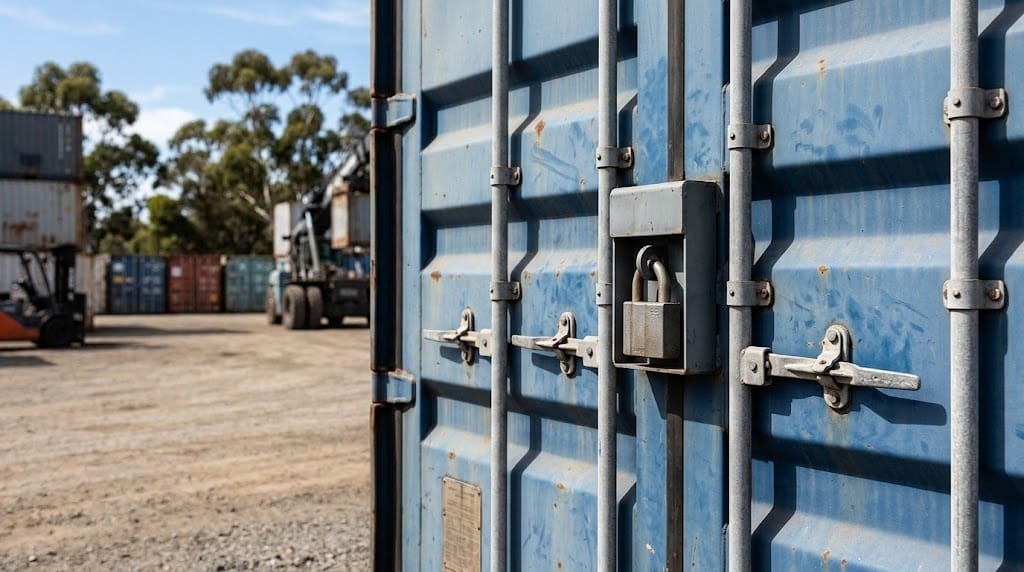
Reliable hire providers supply units fitted with robust locking systems. If your site requires additional protection, anti-vandal container doors are available as an add-on modification to improve site security.
For units that have been in service for extended periods, ask about container re-certification status. Certified units meet current structural and compliance standards – important if your hire involves transport or specific industry requirements.
Making the Commitment: Final Verification Steps
Before signing a refrigerated container hire Perth agreement, complete this verification sequence:
- Confirm power compatibility – electrician verification of your site’s capacity and outlet specifications
- Measure access and placement – physical confirmation that delivery trucks can reach your designated location
- Review complete cost breakdown – written quote including delivery, installation, minimum hire period, maintenance, and collection
- Verify temperature specifications – documented confirmation the unit maintains your required temperature range
- Clarify emergency support – written response time commitments and after-hours contact procedures
- Check insurance coverage – confirmation from your broker regarding liability and damage coverage
- Understand return conditions – specific cleaning and condition requirements to avoid end-of-hire charges
Request a pre-delivery site inspection from your hire provider. Experienced suppliers identify potential issues before equipment arrives, preventing delivery complications and additional costs.
Our hire fleet includes single-phase refrigerated containers suitable for standard commercial power and three-phase units for heavy-duty applications. Every hire includes pre-delivery site consultation, temperature verification and calibration before dispatch, 24/7 emergency support, and flexible hire periods from four weeks to long-term agreements.
For businesses evaluating Perth cold storage solutions, we provide honest assessments of whether hire, purchase, or alternative solutions best serve your operational and financial requirements.
Call (08) 9335 6299 or request a free quote to discuss your specific refrigerated container hire Perth requirements. We’ll assess your site, confirm specifications, and provide transparent pricing for your location.