Choosing the right refrigerated container size isn’t about picking the biggest unit you can afford. It’s about matching storage capacity to your actual cold storage needs – whilst avoiding the running costs and site space problems that come from getting it wrong.
This refrigerated container size guide covers the three main options available for reefer container hire Perth: compact mini units, standard 20ft containers, and full-size 40ft units. Each suits different storage volumes, site constraints, and power availability. The wrong choice means paying for capacity you don’t use, or running out of space during peak demand.
What Refrigerated Container Sizes Are Available for Hire?
Australian suppliers typically offer three standard refrigerated container sizes. Each delivers different storage volumes, power requirements, and site footprints.
Compact cool rooms measuring 8-10ft long suit small cafes, butchers, or market stalls needing extra cool room space. They run on standard single-phase power and fit into tight urban sites where space is limited.
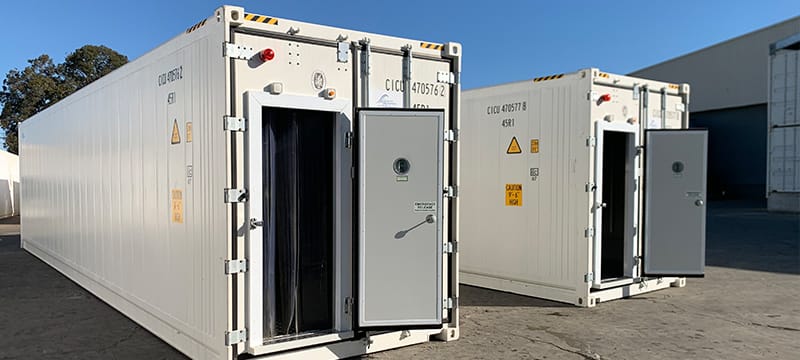
20ft refrigerated containers are the most common reefer container hire Perth size. They deliver approximately 28-30 cubic metres of usable storage and measure 6 metres long by 2.4 metres wide. Most 20ft units run on single-phase power, making them easy to connect at standard commercial sites.
40ft refrigerated containers roughly double the storage capacity. They measure 12 metres long and require three-phase power in most cases. These larger units suit high-volume food businesses, large events, or operations consolidating multiple smaller cool rooms.
The size you need depends on three factors: how much product you’re storing, how often you restock, and whether your site can accommodate the physical footprint and power requirements.
How Much Cold Storage Space Do You Actually Need?
Start by calculating your peak storage volume – not your average daily needs. Cold storage capacity must handle your busiest periods, whether that’s Christmas week for a butcher or summer festival season for a caterer.
List every product category you’ll store and estimate the volume each takes up when properly stacked. Add 20-30% buffer space for airflow and access. Refrigerated containers need air circulation to maintain consistent temperatures throughout the unit.
As a practical example: a small restaurant storing vegetables, meat boxes, and dairy cases would total their combined cubic metres, then add 30% for airflow. A mini refrigerated container typically provides ample room for operations at this scale, with room for growth.
Don’t forget vertical space. Refrigerated containers typically offer 2.3-2.4 metres of internal height. Proper shelving or pallet racking lets you use this vertical capacity efficiently – potentially doubling your usable storage compared to floor stacking alone.
Mini Refrigerated Containers: When Compact Makes Sense
Mini refrigerated containers suit businesses needing supplementary cold storage rather than primary refrigeration. They work best for overflow stock during busy periods, temporary events, or sites where space is genuinely limited.
The key advantage is flexibility. An 8ft unit fits into a single car parking space and connects to standard 15-amp single-phase power. You can position these units close to your kitchen or service area without major site modifications or electrical upgrades.
Common applications for this reefer container hire Perth size include:
- Small cafes needing extra drink storage during summer
- Butchers handling increased Christmas demand
- Market stallholders requiring on-site cold storage
- Florists storing temperature-sensitive stock
- Caterers running pop-up events in venues without cold storage
The limitations matter too. Mini units offer limited capacity for growing businesses. If you’re consistently filling 80% or more of a mini container, you’ll likely outgrow it within 6-12 months.
The 4ft Cold Cube is a compact single-phase option suited to businesses needing a small, self-contained cold storage unit in a minimal footprint. It’s a practical starting point for businesses trialling reefer container hire Perth before committing to a larger size.
Running costs stay low because smaller refrigeration units draw less power than their larger counterparts. Over a 12-month hire period, that difference in power consumption is meaningful for small operators watching overhead costs.
Container Refrigeration matches businesses across Australia to the right refrigerated container size for their specific operation. We assess your storage volume, site constraints, power availability, and hire duration to recommend the most cost-effective option.
20ft Refrigerated Containers: The Australian Standard
The 20ft refrigerated container dominates the Australian hire market because it balances storage capacity with practical site requirements. Most commercial properties can accommodate a 6-metre container without major site modifications.
Single-phase reefer containers in 20ft size suit the majority of small-to-medium food businesses. They deliver 28-30 cubic metres of storage – enough for a busy restaurant, small supermarket, or medium-sized catering operation.
The power requirements stay manageable. Most 20ft single-phase units run on a dedicated 15-amp circuit. You’ll need a qualified electrician to install a suitable outlet near the container location, but you won’t need three-phase power upgrades.
Temperature flexibility makes 20ft containers versatile for reefer container hire Perth applications. Standard units operate between -25°C and +25°C, letting you switch between frozen storage, chilled goods, or temperature-controlled dry storage depending on your needs.
Site access matters when hiring 20ft containers. Delivery trucks need approximately 8 metres of clearance to position the unit. Check your site has suitable access before confirming the hire – narrow laneways or overhead power lines can prevent delivery.
40ft Refrigerated Containers: High-Volume Cold Storage
A 40ft refrigerated container makes sense when you’re storing large volumes continuously – not just during peak periods. These units suit high-volume food businesses, large-scale caterers, or operations consolidating multiple smaller cool rooms.
The storage capacity is roughly double that of a 20ft unit. Running costs don’t quite double, which means you get more storage per dollar spent on power – an efficiency advantage for high-volume operations.
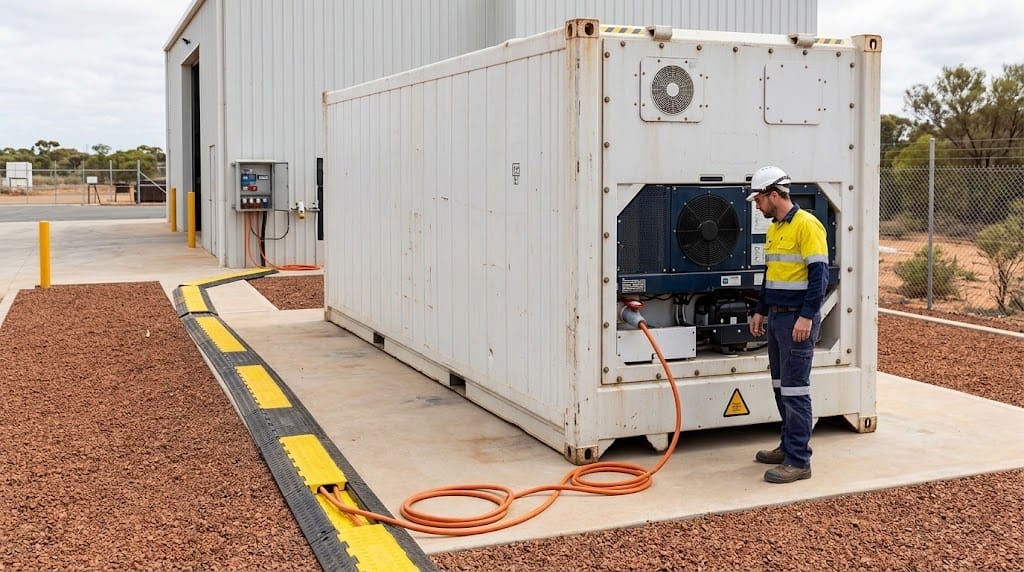
Most 40ft refrigerated containers require three-phase power. Confirm your site has a compatible three-phase supply before hiring a 40ft unit. If you’re connecting to a non-standard power source, a 32-amp 3-phase shipping adaptor ensures a safe, compatible connection.
Site footprint becomes a real constraint. A 40ft container measures 12 metres long and is considerably heavier than smaller units when loaded. You need solid, level ground capable of supporting this weight, plus space for delivery trucks to manoeuvre during placement.
Consider 40ft containers for these refrigerated container size guide applications:
- Large restaurants or hotel kitchens consolidating multiple cool rooms
- Food distributors needing on-site storage before delivery runs
- Event caterers handling major festivals or conferences
- Farmers storing large harvest volumes before transport
- Remote mining sites providing cold storage for workforce catering
If you’re running multiple 20ft containers at the same site, switching to a single 40ft unit often reduces total running costs. You’ll pay for one refrigeration unit instead of two and simplify temperature monitoring and maintenance.
Power Requirements: Matching Your Site to Container Size
Power availability determines which container sizes work at your site. This is the most important step in any refrigerated container size guide – don’t assume you can plug in any unit without checking first.
Single-phase power suits mini and 20ft containers. Standard Australian single-phase supply delivers 230V through a 15-amp or 20-amp circuit. Most commercial sites already have single-phase power.
Three-phase power becomes necessary for most 40ft containers and some high-capacity 20ft units. Three-phase supply delivers 415V and requires professional installation by a licensed electrician.
Check your site’s power capacity before hiring. A busy commercial kitchen running multiple appliances might lack spare capacity for a refrigerated container. Ask your electrician to verify your switchboard can handle the additional load before confirming your reefer container hire Perth booking.
Off-grid sites need generator power. A 3-phase refrigeration generator lets you run larger refrigerated containers at remote locations without mains power. Match the generator output to your container’s power draw – undersized generators cause compressor failures and temperature fluctuations.
Site Space and Access: Physical Constraints That Matter
Container size means nothing if you can’t get the unit onto your site. Delivery logistics eliminate certain sizes before you even consider storage capacity.
Measure your available site space carefully. A 20ft container needs approximately 7 metres of length and 3 metres of width for safe placement. Add extra clearance if you need to open the doors fully for loading – container doors swing open wide and need clear space behind them.
Check overhead clearances. Delivery trucks use cranes or tilt-trays to position containers. You need adequate vertical clearance for crane access. Low-hanging power lines, tree branches, or building overhangs can prevent crane delivery entirely.
Ground conditions affect which sizes work at your site. Refrigerated containers need level, solid ground. Soft soil, steep slopes, or unstable ground require concrete pads or structural supports – factor this into your site preparation planning.
Urban sites with limited space often favour mini or 20ft containers. Rural or industrial sites with open yards can accommodate 40ft units without site modifications. Always match your container size to your actual site constraints – not just your storage needs.
Temperature Range and Product Types: Does Size Affect Performance?
Container size doesn’t directly affect temperature performance – but it does influence how quickly temperatures recover after door openings and how evenly temperatures distribute throughout the unit.
Smaller containers recover faster after door openings. When you open a mini or 20ft container to load or unload stock, the refrigeration unit brings the internal temperature back to setpoint relatively quickly. A 40ft container takes longer to fully recover, depending on how much warm air entered during the door opening.
Larger containers can develop temperature gradients if poorly loaded. The refrigeration unit sits at one end, blowing cold air toward the opposite end. Maintain proper airflow gaps between stacked products to prevent uneven temperature distribution throughout a 40ft unit.
All sizes handle the same temperature range. Whether you choose mini, 20ft, or 40ft, you’ll get -25°C to +25°C operating range with quality refrigeration units like the Primeline refrigeration unit.
When to Upgrade From One Size to Another
Most businesses start with smaller containers and upgrade as their cold storage needs grow. Recognising the right time to upsize prevents capacity problems without overspending on unused space.
Upgrade from mini to 20ft when you’re consistently using 75-80% of your mini container’s capacity. Running a container near maximum capacity reduces airflow and forces the refrigeration unit to work harder – increasing running costs and shortening equipment life.
Upgrade from 20ft to 40ft when you’re running multiple 20ft containers at the same site or consistently maxing out a single 20ft unit. Consolidating two 20ft containers into one 40ft unit typically reduces total running costs whilst simplifying operations.
Seasonal businesses face different decisions. If you only need maximum capacity for 8-12 weeks annually, hiring a second container during peak periods costs less than permanently upgrading to a larger size.
Watch your door opening frequency. If you’re opening your container 15-20 times daily, you might benefit from splitting your storage across two smaller units. Keep high-turnover items in one container and long-term storage in another to reduce temperature fluctuations.
Mobile vs Fixed: Does Container Size Affect Portability?
A mobile cool room trailer offers portability that fixed containers can’t match – but size limitations apply. Not every container size works on a trailer.
Trailer-mounted refrigerated containers typically max out at 20ft length. Road regulations and trailer capacity make 40ft mobile units impractical for most Australian businesses. If you need mobile cold storage, you’re choosing between mini units and 20ft containers.
Fixed containers work better for semi-permanent installations. If you’re setting up cold storage at a site for 3-12 months, a fixed container delivers better value than a mobile unit. You’ll pay less for hire, get better insulation, and avoid the structural compromises of trailer-mounted designs.
Events and festivals favour mobile containers. A catering company working major events across different venues needs mobile cold storage that moves with their operation. Fixed containers suit businesses operating from a single location.
Modifications and Customisation: Size-Specific Options
Container modifications work differently across sizes. Some modifications suit certain sizes better than others.
Security upgrades suit larger containers storing high-value product. A 40ft container justifies high-security container modifications and reinforced locking measures. Smaller containers typically store lower product values and sit in more secure locations.
For food service reefer container hire Perth setups requiring a servery window, container roller shutters work on both 20ft and 40ft containers – providing a secure serving window that opens during trading hours and locks down overnight.
For agricultural reefer container hire Perth applications needing purpose-built cold storage matched to specific produce types, our farm container cold storage range covers modifications suited to WA farming operations across various sectors.
If your hired unit requires a noise enclosure for urban or residential placement, our quiet cool room options reduce operational noise across all container sizes – mini, 20ft, and 40ft alike.
Call (08) 9335 6299 or request a free quote to discuss which container size suits your reefer container hire Perth requirements. We’ll confirm specifications and provide transparent pricing for your location.