A refrigerated container may be positioned further from a suitable power point than the standard connection arrangement allows. The temptation is to solve the distance first and check compatibility later.
Three phase container extension leads should be selected only after the reefer and the power source are identified. Safe reefer power connections depend on the equipment at both ends, the lead in between and the way that lead is routed and protected on site.
This article follows the connection through its full lifecycle: before connection, during use and after shutdown.
Before Connection: Verify Both Ends
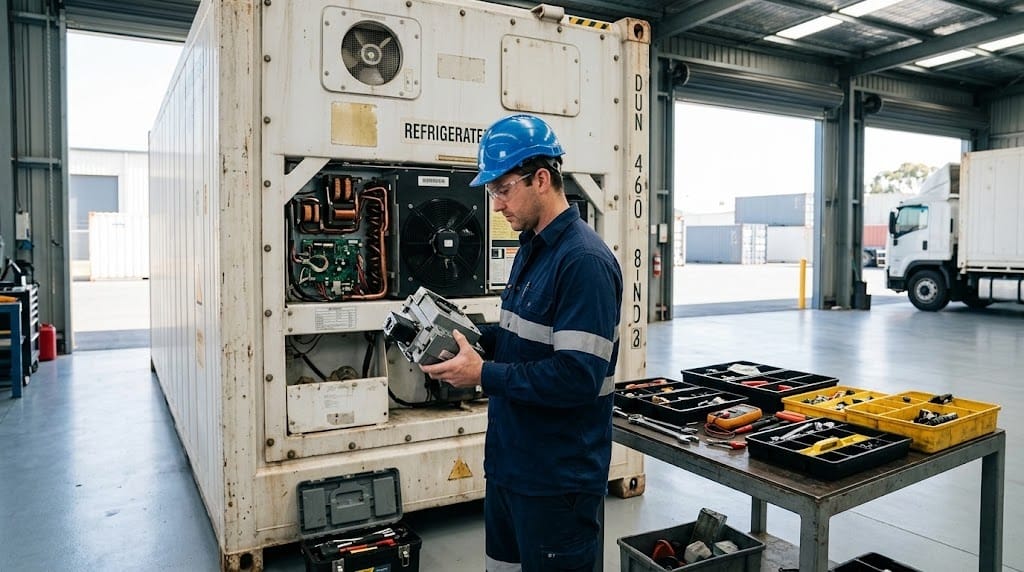
Start with the refrigeration unit. The client’s three-phase refrigerated containers category confirms that three-phase reefer products form part of its range, but that category does not establish one universal connection requirement.
Record the verified electrical information for the exact refrigeration equipment. Then identify the site supply or generator output that will feed it.
The check should cover the relevant phase, voltage, current and connector information for both ends. If the details do not match or cannot be confirmed, do not select a lead by plug appearance alone.
This is the first safety boundary. An extension lead extends a compatible connection. It does not correct an incompatible supply.
Before Use: Inspect and Route the Lead
The physical condition of the lead matters as much as its specification. WorkSafe WA publishes guidance on managing electrical risks in the workplace, which should be considered with the site’s electrical procedures and qualified advice.
Before use, inspect the accessible cable, plug and connector for obvious damage, contamination or signs of overheating. If the equipment shows damage or its condition is uncertain, remove it from use and follow the site’s electrical safety process.
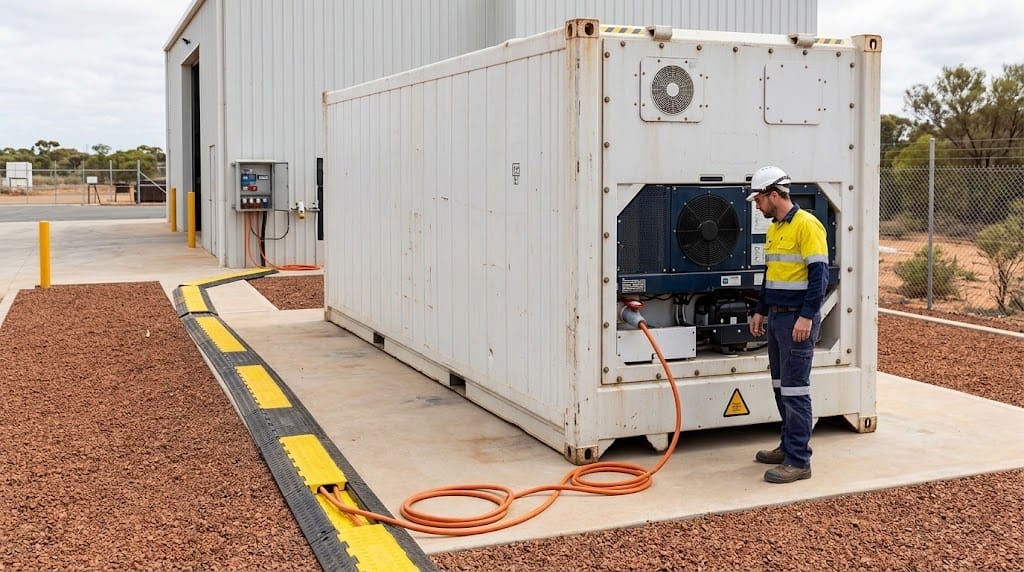
Plan the route before energising the reefer. Avoid vehicle paths, sharp edges, standing water and areas where the cable can become a trip hazard or be crushed by doors or equipment.
Do not create DIY cable protection or modify connectors in the field. Use approved equipment and qualified electrical advice where the connection method is uncertain.
At the Connection: Treat Adaptors as Specific Components
An adaptor is not a universal converter. It has a defined connection purpose and should be used only when that purpose matches the actual equipment.
The client lists a three-phase shipping adaptor with a specific international-to-Australian connection description. That verified product information supports its existence, not suitability for every reefer or site.
At this point, Container Refrigeration can discuss the lead and adaptor products shown on its website. The user still needs to provide the exact reefer and supply details so compatibility can be checked.
Never alter a plug, socket or electrical protection device to make mismatched equipment connect. A connector that does not fit is a reason to stop and verify the system, not a problem to solve with improvised wiring.
During Operation: Protect the Connection
The client’s extension leads category includes three-phase and single-phase products as well as an adaptor. Once the correct lead is in service, the site still needs to protect it from damage.
Keep the cable route visible where practical. Do not allow pallets, vehicles or container doors to load the cable. If the setup changes during a shift, such as moving equipment or changing the traffic route, reassess the lead position rather than leaving it in the old path.
Check the connection if there is any sign of physical damage, unexpected heat, arcing, smell or unstable equipment behaviour. Do not continue operating simply because the reefer has not yet stopped.
Qualified electrical or refrigeration technicians should handle faults that go beyond normal approved operation.
After Shutdown: Inspect, Store and Record
The safest next use starts at the end of the current one.
After approved shutdown and disconnection, inspect the lead for new visible damage. Store it so the cable and connectors are protected from impact, contamination and weather exposure according to the equipment requirements.
If the lead is shared between sites or containers, label and manage it through the workplace’s equipment-control system. Do not rely on staff memory to decide which reefer a particular lead belongs with.
Where the organisation uses inspection or test records for electrical equipment, keep those records current under the applicable workplace process.
Know the Stop Conditions
Safe reefer power connections require clear points where staff stop rather than improvise.
Stop and seek appropriate technical advice when:
- The reefer’s electrical requirements are unknown.
- The supply information cannot be confirmed.
- The plug or socket does not match the intended equipment.
- The lead or connector is visibly damaged.
- The cable cannot be routed away from likely damage.
- An adaptor is being considered without a verified connection need.
- Someone proposes altering electrical hardware to make the setup fit.
These stop conditions are more useful than a long list of generic warnings because they tell operators when the decision has moved beyond normal lead selection.
FAQs
Can I use any three-phase extension lead with a refrigerated container?
No. Match the lead to the verified electrical and connector requirements of the exact reefer and power source.
Does the client sell three phase container extension leads?
The current extension-lead category includes a three-phase lead product alongside other power accessories. Confirm the exact product and connection requirements before use.
What is a reefer power adaptor?
It is an adaptor for a defined connection interface. The client lists a specific three-phase shipping adaptor, but it should not be treated as universal.
Can I change the plug if the lead does not fit?
Do not modify electrical hardware to force an incompatible connection. Stop and seek qualified advice or use an approved matching solution.
Conclusion
Three phase container extension leads are only one part of the power connection. Safe reefer power connections depend on verifying both ends, inspecting the lead, protecting the route and stopping when compatibility is uncertain.
Have the refrigeration-unit and supply information ready before ordering accessories. Call (08) 9335 6299 or confirm the power setup so the team can discuss the lead or adaptor pathway relevant to the equipment.