The step between the ground and a container floor can disrupt an otherwise simple loading task. A forklift, trolley and hand-operated cart do not place the same demands on that transition.
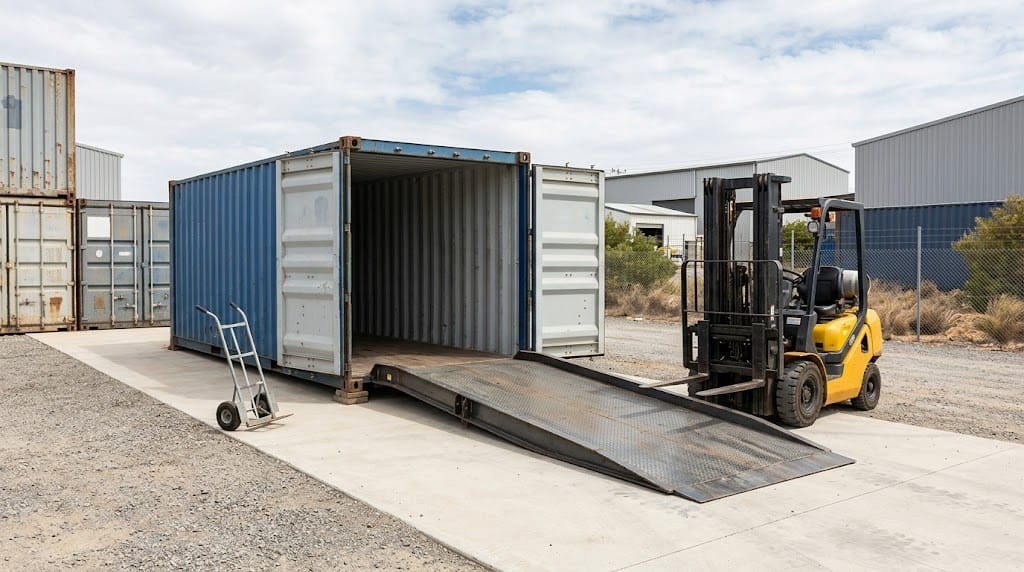
Shipping container access ramps should therefore be selected by the handling method, load and site approach. For forklift loading containers, the surrounding traffic area is just as important as the ramp itself.
The current ramp catalogue separates a heavy-duty forklift ramp from a light-duty trolley ramp. Exact specifications still need to be confirmed before use.
Decide What Will Cross the Threshold
Start with the equipment. The available shipping container access ramps include different products for forklift and trolley access, so the handling method comes first. A trolley pushed by a worker and a forklift carrying a load create different operating conditions.
Write down:
- The handling equipment type.
- The goods being moved.
- The combined operating task.
- How often the container is loaded.
- Whether the ramp stays in place or is moved.
- The available approach distance.
- The ground condition outside the container.
The aim is to define the task without guessing a ramp rating.
If the container itself is still being selected, the client’s dry shipping containers category is a useful reference point for general storage applications. Door configuration and intended use should be considered before finalising the access setup.
Match the Ramp to the Exact Task
“Heavy duty” is not a substitute for product data. A forklift container ramp needs verified information for the exact model and intended load.
The same applies to trolley container access. A lighter ramp may be appropriate for a different task, but it should not be treated as interchangeable with a forklift ramp.
Before use, confirm the relevant manufacturer or supplier information for:
- Intended handling equipment.
- Load capability.
- Placement method.
- Container compatibility.
- Inspection and maintenance.
This article intentionally avoids publishing a universal load figure because the client’s category contains different ramp products and specifications can vary.
Plan the Forklift Approach
Forklift loading containers requires enough space for the operator to approach, align, enter or place the load, and reverse safely.
WorkSafe WA provides forklift safety resources for workplaces using lift trucks. The ramp should fit within the site’s wider traffic-management system.
Review the approach from the operator’s perspective. Is there a blind corner? Could a pedestrian appear beside the container? Does stored material narrow the turning area? Is the ramp visible and stable from the approach?
Keep pedestrians out of the loading zone during forklift movement. Site controls should make that separation clear rather than relying on the operator to negotiate around foot traffic.
Control the Ramp-to-Container Interface
The connection between the ramp, ground and container is the critical transition. It needs to be assessed each time conditions change.
Check the access area before each use. Look for changes in ground condition, ramp damage, debris or movement around the container.
Do not improvise packing, supports or extensions to make a mismatched ramp reach the threshold. If the setup does not match the intended product arrangement, stop and confirm the correct solution.
Container Refrigeration can discuss ramp products and container options. One ramp should not be assumed to fit every container, surface or load.
Add Site Controls Around the Loading Zone
Physical access equipment works best when supported by a simple operating rule.
The client’s safety modifications catalogue includes signage and access-related options that may support a wider container safety plan. Select any modification because it addresses a defined risk, not because it is marketed as a generic safety upgrade.
For a busy loading area, the control plan may address:
- Pedestrian exclusion during forklift movement.
- A designated place to store the ramp when not in use.
- Inspection responsibility.
- Door control.
- Lighting or visibility.
- Housekeeping around the approach.
- Communication between the operator and nearby workers.
The exact controls depend on the workplace and equipment.
Keep the Ramp and Door Area Clear
A ramp can become an obstacle when it remains in a pedestrian route after loading. Define where it belongs when not in use.
Do not allow pallets, waste or loose equipment to collect beside the container doors. A clear doorway makes inspections easier and reduces last-minute rearrangement when a delivery arrives.
Check container doors as part of the loading setup. If the doors cannot be secured in their intended open position or the access area is damaged, address that before moving loads.
Coordinate Security With Access
Loading convenience can lead to containers being left open longer than necessary. Close and secure the unit after the task is complete.
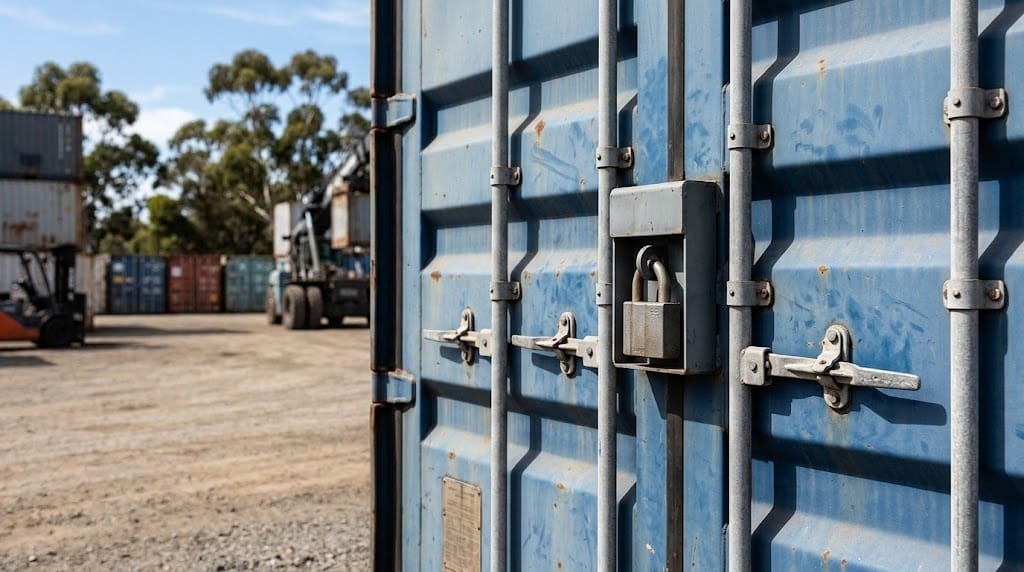
The client’s container locks category covers locking accessories for container applications. Select security hardware separately from the ramp and make sure it suits the door arrangement.
A useful end-of-task routine is simple. Store the ramp, clear the approach, close and secure the container, then report any equipment damage.
FAQs
Are forklift and trolley container ramps the same?
No. Container Refrigeration lists separate forklift and light-duty trolley ramp products. Select the exact ramp for the handling equipment and intended load.
What load can a shipping container ramp carry?
There is no universal figure for all ramps. Confirm the capacity and conditions for the exact product before use.
Can a ramp be used on any ground surface?
Do not assume so. Ground condition and placement affect the setup. Confirm the product requirements and assess the site before use.
What should I check before forklift loading containers?
Check the ramp and container interface, approach area, pedestrian separation, ground condition, doors and any changes since the last use.
Does a heavy-duty product name prove forklift suitability?
No. Product wording is not a substitute for verified specifications. Confirm the exact ramp’s intended use and load information.
Conclusion
Choose shipping container access ramps by the handling equipment, load and site conditions, not by a generic product label. For forklift work, include the ramp in the site’s traffic and inspection system.
Have the equipment type, container details and approach conditions ready when enquiring. Call (08) 9335 6299 or ask about the ramp range so the correct product information can be checked for your task.