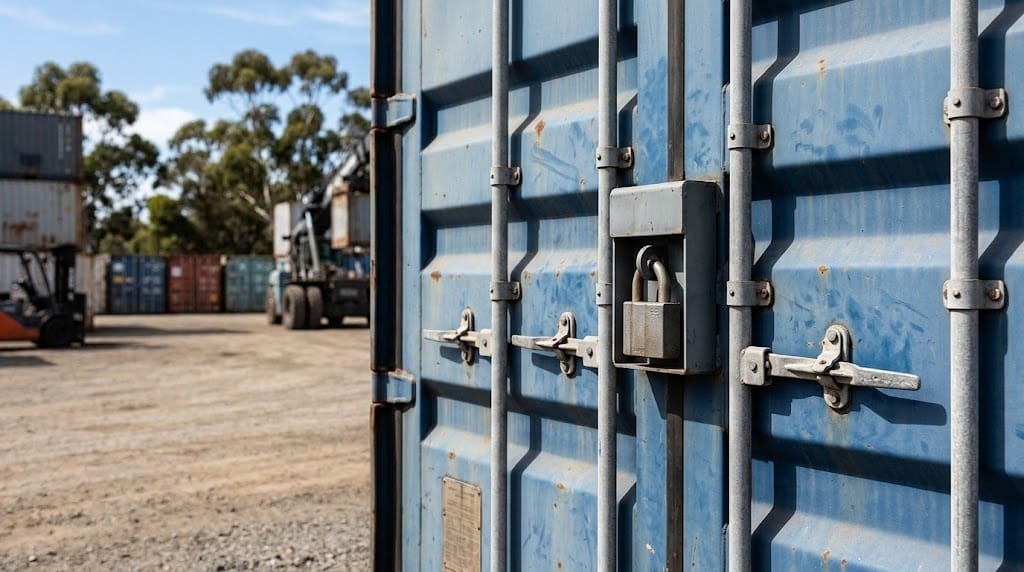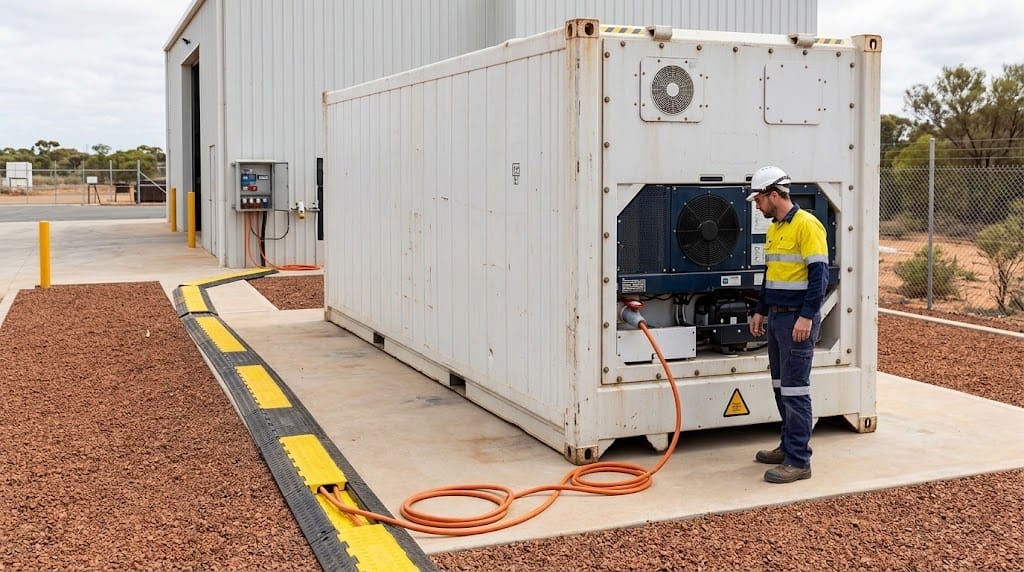
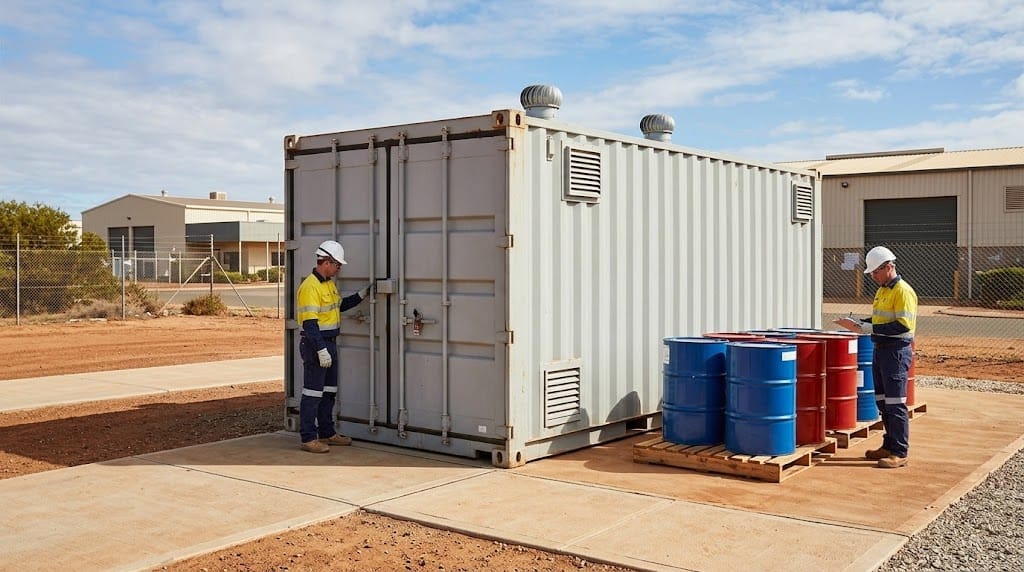
A steel container can be part of a chemical storage solution, but it cannot determine whether the storage arrangement is safe or compliant. The substances, their classifications, the way they are handled and the surrounding site all come first.
For anyone comparing dangerous goods storage containers, the practical starting point is a verified chemical list and the current safety data sheet for each product. Chemical storage regulations WA also need to be checked against the actual site and storage activity before a container is selected.
That order matters because a product name such as “chemical storage container” describes a pathway, not a universal approval. The final storage system still has to match the substances, operating procedures and applicable requirements.
The Decision Starts With the Chemical List
Procurement should begin with what is being stored, not with a container size or accessory list. The current modified container catalogue includes a dangerous chemical storage product pathway, but that page does not remove the need to define the storage task first.
Create one working list that identifies each substance, its current SDS, the package type and how the material will be handled. If the chemical is transferred, opened or decanted in the area, record that as a separate activity rather than treating it as simple closed-package storage.
WorkSafe WA’s hazardous chemical storage guidance discusses matters such as suitable storage, segregation, labelling and ventilation. Those controls cannot be chosen accurately from a generic description such as “combustibles” or “chemicals”.
A useful chemical brief answers these questions:
- What substances will be present?
- Which materials must not be stored together?
- Will packages remain closed during storage?
- How do workers bring materials in and remove them?
- What emergency information and procedures already exist on site?
- Are there nearby vehicle routes, ignition sources or occupied areas that affect placement?
The answers give the container supplier useful context without asking the supplier to make a legal determination for the entire site.
What the WA Regulatory Path Changes
Chemical storage regulations WA do not reduce to a single container specification. Different duties can apply depending on the dangerous goods, quantities, workplace and activity.
WorkSafe WA provides dangerous goods storage and handling guidance that explains the regulatory framework and when site licensing or other requirements can become relevant. The correct pathway should be checked before a business commits to a physical storage layout.
This is also where terminology matters. “Dangerous goods” and “hazardous chemicals” are related concepts, but they are not interchangeable labels for every regulatory purpose. A procurement brief should preserve the classifications used in the SDS and current regulator guidance.
If a threshold, placarding requirement, manifest requirement or licensing question is uncertain, obtain competent advice rather than filling the gap from a product page. That keeps the article, the supplier enquiry and the site decision aligned with verified information.
Where the Container Fits
Once the chemical and regulatory questions are understood, the container can be considered as one physical component of the storage system. The client’s safety modifications catalogue shows options related to access, emergency functions, security and signage. Each option should be selected for a defined reason.
For example, better access may support routine handling, while security hardware may help control unauthorised entry. Neither feature determines whether incompatible substances can share a storage area.
At this point, Container Refrigeration can discuss the modified-container pathways shown on its website and the intended use of the unit. The business should not be presented as certifying every site or chemical combination unless that service is explicitly confirmed for the project.
A useful way to separate responsibilities is:
- The chemical information defines the hazard and handling needs.
- The site assessment defines placement and surrounding controls.
- The applicable rules define regulatory obligations.
- The container specification responds to those inputs.
- Operating procedures determine how the storage area is used after delivery.
That sequence prevents the equipment purchase from becoming the starting assumption.
Turn the Site Into a Storage System
The storage area continues outside the container walls. Vehicle movement, pedestrian access, emergency approach, drainage, nearby work and security can all affect the final arrangement.
The client also lists dry container modifications such as door and other fit-out categories. These options may be relevant where access or internal layout needs to change, but modifications should follow the identified storage controls rather than being added as a standard package.
Walk through the operating cycle before finalising the brief. Consider delivery of chemical packages, checking labels, placing stock, retrieving stock, dealing with damaged packaging and securing the area at the end of a shift.
This walkthrough often exposes issues that a static plan misses. A door that looks convenient on a drawing may open into a vehicle route. A proposed internal arrangement may make segregation or inspection difficult. Security hardware may create problems if emergency access has not been considered.
The goal is not to collect the most modifications. It is to make each feature answer a specific operational need.
Questions to Resolve Before Procurement
A supplier enquiry is stronger when it contains decisions already made and uncertainties that still need technical input. It should not simply ask for “a compliant chemical container”.
Include:
- The site location and intended use.
- The chemical list and current SDS information.
- Whether materials remain sealed or are handled inside the area.
- Access requirements for workers and material handling.
- Known segregation or security requirements.
- Any placement constraints identified by the site review.
- The regulatory questions already checked and any that remain unresolved.
This gives a supplier enough information to discuss relevant container options while leaving legal, engineering or specialist safety decisions with the appropriate advisers.
FAQs
What is a dangerous goods storage container?
It is a container configured for a dangerous-goods or chemical-storage application. Suitability depends on the actual substances, site, modifications and operating controls, so the product description alone does not establish compliance.
Do chemical storage containers automatically satisfy WA requirements?
No universal claim is appropriate. Chemical storage regulations WA depend on the substances and site circumstances. Current regulator guidance and site-specific advice should be checked before the storage arrangement is finalised.
Why is the SDS important when planning storage?
The SDS provides information about the chemical’s hazards and handling considerations. It helps the business and its advisers identify issues that may affect segregation, access and other controls.
Can a standard container be modified for chemical storage?
The client website includes modified-container pathways and a dangerous chemical storage product. Whether a particular base unit and modification scope suits the intended substances still needs project-specific assessment.
Conclusion
Dangerous goods storage containers should be selected after the chemical list, site conditions and applicable WA requirements are understood. That keeps the equipment decision tied to the actual risk instead of a generic product label.
Prepare the SDS information and storage workflow before approaching a supplier. Call (08) 9335 6299 or discuss the storage brief so the team can explain relevant container and modification options without implying automatic regulatory suitability.