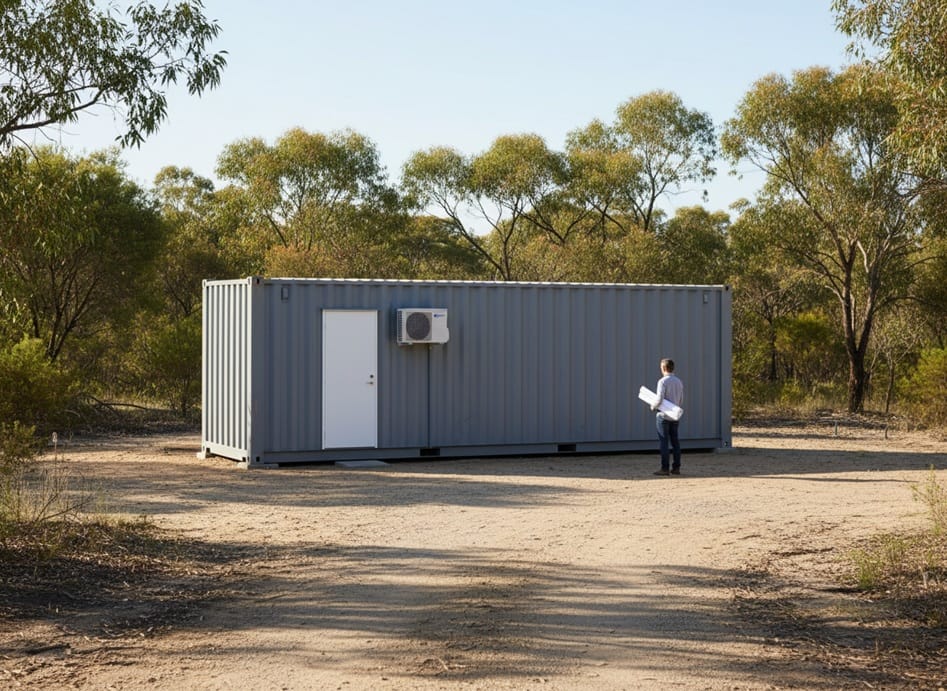
A container home project can look simple until approval questions begin. In Perth, container home council approval depends on the property, intended use, design and applicable planning controls.
What people call shipping container house regulations are not contained in one special rulebook for containers. A project may involve planning requirements, building requirements and local controls that apply to the proposed dwelling and site.
Before settling on a design, review the current container homes and accommodation range as design context only. A listed product does not mean that the same configuration will be approved on every property.
Do Container Homes Need Council Approval In Perth?
The Short Answer
There is no single yes-or-no answer for every container home project. The relevant local government needs to consider the actual property and proposal.
Some single-house development can be exempt from development approval when it meets the applicable deemed-to-comply criteria. That does not remove the separate building approval process.
A useful starting point is the current WA Government Residential Design Codes. The R-Codes provide planning and design provisions for residential development across Western Australia.
The Container Is Not A Separate Planning Category
Using a shipping container as the building shell does not create a universal approval shortcut. The project still needs to be understood as a proposed use and development on a specific site.
That is why container home council approval questions should start with the property rather than the product. Zoning, the proposed dwelling type and the local planning framework can all affect the pathway.
WA container home requirements should therefore be checked against the current rules that apply to the land. A supplier catalogue cannot determine that outcome by itself.
Separate Planning Approval From Building Approval
Planning Approval Deals With Land Use And Development
Planning approval, also called development approval, considers whether the proposed use and development can proceed under the relevant planning framework.
The WA Government’s Local Planning Schemes Regulations include planning approval exemptions for certain single-house proposals that satisfy the applicable criteria.
A planning approval container home pathway therefore depends on how the proposal fits the site and planning controls. Do not assume that a modular or transportable format is automatically exempt.
Building Approval Deals With The Proposed Building Work
Building approval is a separate process. The WA Government advises that the relevant local government assesses building approval applications and can explain the information it needs.
Its current building approvals page provides the state forms and directs applicants to their local government for project-specific requirements.
A building permit container home application is not a special permit class created for shipping containers. The proposed building work still needs to follow the applicable building approval pathway.
Start With The Property And The Proposal
Check Zoning And Local Controls
Perth container home approvals are property-specific. Start by identifying the local government and checking the zoning and local planning framework for the site.
Other controls may also matter depending on the property. Examples can include local planning policies, heritage considerations or constraints identified through the relevant planning framework.
Do not copy an approval outcome from another suburb or council area. The same container design can face a different assessment context on another property.
Define What You Are Actually Building
Describe the intended use clearly. A primary dwelling, ancillary dwelling, temporary facility or non-residential space can raise different planning questions.
Also define the proposed configuration. Record whether the concept uses one container or several connected modules, and identify planned doors, windows and service areas.
These details help the local government understand the proposal. They also make it easier to identify which professional drawings or assessments may be needed next.
Prepare The Design Information Early
Give The Approval Team A Clear Project Description
A useful early enquiry should describe the property and the proposed development in plain language. Include the intended use, approximate position and planned modifications.
Also explain how the project will connect to services and how people will enter the building. Avoid relying on a product brochure as the complete project description.
The approval team may request further documents based on the proposal. Confirm those requirements directly rather than assuming a standard document list applies everywhere.
Include Services And Climate Control In The Design
Climate control and services form part of the physical design. They should be considered before the approval documents are finalised.
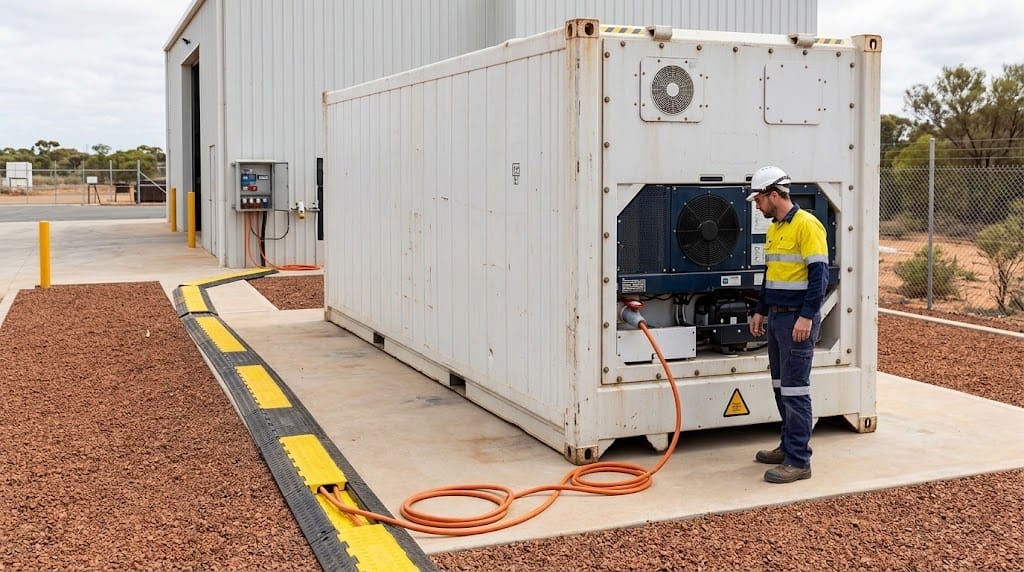
Container Refrigeration lists container air conditioners as a modification for dry or insulated containers. Its page states that the configuration depends on container size.
Container Refrigeration also lists container modification and residential-unit work. Those commercial capabilities do not replace council, building-surveyor or other project-specific approval requirements.
Consider Placement, Access And Physical Modifications
Delivery Planning Is Different From Development Approval
A design can be acceptable in principle but difficult to deliver to the nominated position. Access should therefore be checked alongside the approval work.
The container transport service is described as operating from O’Connor to certain Western Australian locations. Site access and the transport method still need to be confirmed for the project.
Transport planning does not establish planning or building approval. It is a separate practical check that helps ensure the proposed location can actually be reached.
Door And Other Modifications Can Affect The Design Package
A container home can include physical changes that alter its final appearance and layout. Those changes should be represented consistently in the project documentation.
For example, the current catalogue lists a high-security container door for dry and insulated container modifications. That is a product option, not evidence that a particular door will be accepted on every residential project.
The same principle applies to windows, air conditioning and other fit-out changes. Confirm the design first, then ensure the approval information reflects what is actually proposed.
A Straightforward Approval Checklist
Before You Commit To A Container Design
Use this sequence to reduce avoidable assumptions:
- Identify the local government for the property.
- Check the property’s zoning and relevant local planning framework.
- Define the intended use of the proposed container home.
- Confirm the broad configuration and proposed site position.
- Ask whether development approval is required or an exemption may apply.
- Record any site-specific issues the local government identifies.
This approach keeps shipping container house regulations in context. The key question is not whether containers are generally allowed, but whether the specific development can proceed on that site.
Before Building Work Starts
Confirm the building permit pathway with the relevant local government. Ask what drawings, certificates or professional information are required for the proposed work.
Keep the final design aligned with the documents used for approval. Significant changes can affect the information that needs to be assessed.
WA container home requirements can change as planning and building frameworks are updated. Re-check current guidance before lodging an application or starting work.
Frequently Asked Questions
Is A Shipping Container Home Automatically Exempt From Planning Approval?
No. Some single-house proposals can qualify for a planning exemption when they meet the applicable criteria, but this is not because the building uses containers.
The relevant local government should confirm how the current planning framework applies to the property and proposal.
Does A Container Home Still Need A Building Permit?
A building permit is generally part of the approval pathway for a new dwelling, even where development approval is not required. The exact application pathway depends on the proposed building work.
Check the current WA building approvals information and confirm the required documents with the relevant local government.
Who Decides Perth Container Home Approvals?
The relevant local government is central to the assessment of local planning and building applications. The WA Government also states that local governments administer and apply the R-Codes to specific development proposals.
For that reason, the approval pathway should be checked with the authority responsible for the actual property.
Are Shipping Container House Regulations The Same In Every Council Area?
No single container-specific rule applies identically to every project. State planning and building frameworks operate alongside local planning schemes and local controls.
This means shipping container house regulations should be understood as a combination of requirements that must be checked for the site.
Can A Supplier Guarantee Council Approval?
No supplier should be treated as the decision-maker for planning or building approval. A supplier can provide product and project information, but the relevant authorities assess the approval requirements.
Use supplier information to define the proposed design. Use the local government and qualified project advisers to confirm the approval pathway.
Conclusion
A straightforward approval process starts by separating planning questions from building questions. Check the property, intended use and design before assuming a container home is exempt or automatically acceptable.
If the design involves physical changes, review the container modifications catalogue. Use it to define scope, not to predict an approval outcome.
Call (08) 9335 6299 or contact the team to discuss the proposed container design after checking the relevant local-government pathway.