A refrigerated container running continuously generates mechanical noise that’s tolerable in an industrial yard but problematic when your cool room sits near a café, residential boundary, or office window.
Noise complaints from refrigerated shipping containers rank among the top reasons Australian councils issue compliance notices for commercial cold storage. The refrigeration unit itself isn’t faulty – it’s doing exactly what it’s designed to do. The problem is location and lack of acoustic treatment.
Container unit noise reduction addresses the core sources of container noise without compromising cooling performance. This service targets compressor vibration, fan noise, and sound transmission through container walls using engineered acoustic solutions designed for Australian conditions.
Why Refrigerated Containers Generate Noise
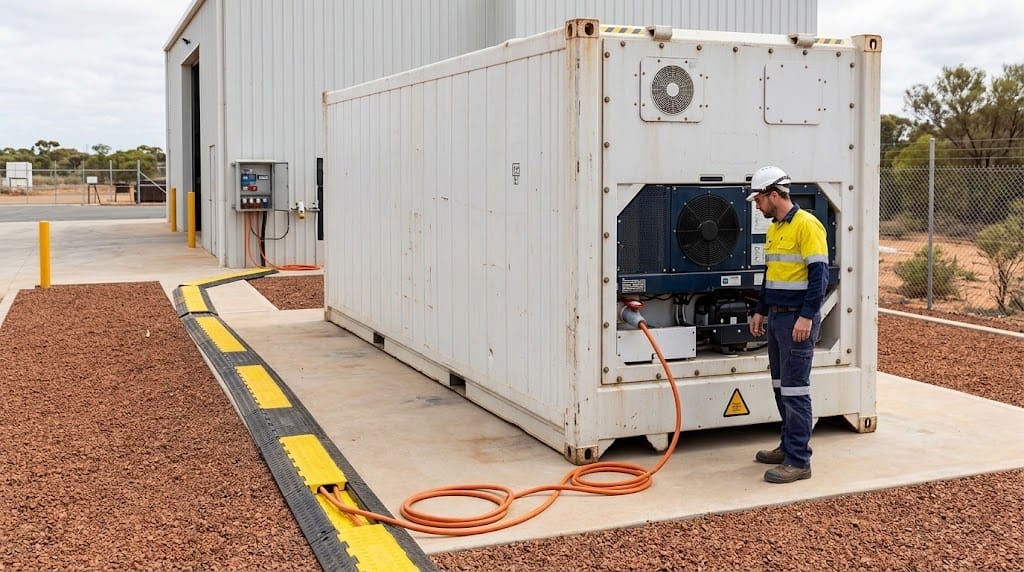
Refrigerated containers use mechanical refrigeration units mounted on the front end wall. These units run continuously or cycle on and off to maintain set temperatures between -25°C and +25°C.
The noise comes from three primary sources:
- Compressor operation – The refrigerant compressor generates a low-frequency hum and vibration during operation
- Condenser fans – High-speed fans expel heat from the condenser coils, producing airflow noise and a higher-pitched whirring sound
- Vibration transmission – The unit’s mounting transfers mechanical vibration into the container frame, which radiates sound outward
Standard single-phase refrigerated containers and three-phase models both generate operational noise. Single-phase units may cycle more frequently, creating intermittent noise peaks that are noticeable in quiet environments.
What the Noise Reduction Service Covers
The refrigeration unit noise reduction service applies a multi-layer acoustic treatment system to reduce operational noise. The specific reduction achieved varies by site, installation, and unit type – our team provides a realistic assessment based on your actual noise measurement before any work begins.
Compressor Sound Enclosure
A custom-built acoustic enclosure surrounds the refrigeration unit’s compressor housing. This enclosure uses acoustic barrier materials and acoustic foam to absorb and block low-frequency refrigeration compressor noise.
The enclosure includes ventilation channels to maintain airflow around the compressor. Blocking airflow causes overheating and compressor failure, so the design balances reefer noise reduction Perth with thermal management. Installation is completed externally to the unit housing using vibration-dampening brackets.
Fan Noise Dampening
Condenser fan cool room noise reduction uses acoustic baffles positioned around the fan discharge area. These baffles redirect airflow whilst absorbing high-frequency fan noise. The baffles use materials that withstand Australian outdoor weather conditions – UV exposure, rain, and temperature cycling.
Vibration Isolation Mounts
Vibration from the compressor transfers into the container frame through the unit’s mounting points. The container unit noise reduction service replaces standard rigid mounts with vibration isolators. These isolators absorb mechanical vibration before it reaches the container walls, significantly reducing structure-borne noise transmission.
Isolation mounts are particularly critical when the container sits on a timber deck, concrete slab, or steel platform. These surfaces amplify vibration noise. The isolators break the vibration path between unit and structure.
External Wall Acoustic Treatment
For containers positioned near noise-sensitive areas, external wall treatment adds a secondary noise barrier. This involves applying acoustic blankets to the container’s exterior end wall where the refrigeration unit mounts.
The blankets use weather-resistant construction that protects acoustic materials from UV and moisture degradation in WA’s climate. Wall treatment is available as an add-on to the standard reefer noise reduction Perth package for maximum noise reduction in the most sensitive locations.
When You Need Noise Reduction
Not every refrigerated container installation requires acoustic treatment containers. Noise reduction becomes necessary when the container operates in proximity to noise-sensitive receivers.
Residential Boundary Compliance
Australian state noise regulations set maximum permissible noise levels at residential boundaries. These limits vary by state, council, and time of day – night-time limits are typically lower than daytime limits. A standard refrigerated container may exceed residential boundary limits if positioned too close to neighbouring properties without refrigeration unit noise compliance treatment.
Container noise regulations Australia-wide are enforced by local councils. Contact your local council to confirm the specific decibel limits that apply at your site’s residential boundary before the noise assessment.
Commercial and Retail Sites
Cafés, restaurants, and retail businesses using refrigerated containers for on-site cold storage face customer complaints when refrigeration noise disrupts the customer experience. Container unit noise reduction treatment can bring operational noise below ambient levels at outdoor seating and service areas.
Multi-Tenancy and Shared Sites
Industrial estates and shared commercial sites often have noise clauses in tenancy agreements. A tenant operating a refrigerated container may breach these clauses if the unit disturbs neighbouring businesses. Reefer noise reduction Perth treatment allows businesses to maintain on-site cold storage whilst meeting lease obligations.
Overnight and 24-Hour Operations
Refrigerated containers running 24-hour cycles in urban areas create the highest risk of container noise regulations Australia complaints. Night-time ambient noise is lower, making refrigeration compressor noise more noticeable to nearby residents.
How the Service Works
Container Refrigeration offers dedicated refrigeration unit noise reduction services across Perth and regional WA. Our team conducts site noise assessments, installs acoustic treatment, and provides post-installation compliance reports – all without interrupting your cold storage operations.
The cool room noise reduction process begins with a site noise assessment. This identifies the primary noise sources and measures baseline noise levels at key locations – typically the nearest boundary, adjacent building, or customer area.
Noise Assessment and Measurement
A technician measures noise levels using a calibrated sound level meter at one metre from the refrigeration unit and at the nearest noise-sensitive location. Measurements are taken with the unit running under normal load.
The assessment identifies whether noise is primarily compressor-driven, fan-driven, or vibration-transmitted. This determines which acoustic treatment containers deliver the best results for your site.
Treatment Recommendation
Based on the assessment, we recommend a container unit noise reduction treatment package. Options range from basic vibration isolation to full acoustic enclosure with wall treatment. The recommendation includes projected noise reduction and confirmation of whether it meets your local council regulations.
Installation and Testing
Installation is completed on-site without removing the container or interrupting cold storage operations. The refrigeration unit remains operational throughout the reefer noise reduction Perth installation process.
Post-installation testing measures the final noise level to confirm the reduction meets the target. You receive a noise compliance report with before-and-after measurements, suitable for council submissions or lease compliance documentation.
Noise Reduction vs Refrigeration Performance
Acoustic treatment containers must not restrict airflow to the condenser or compressor. Reduced airflow causes the unit to overheat, triggering high-pressure shutdowns and compressor damage.
The refrigeration unit noise compliance treatment uses ventilated enclosures and baffles designed to maintain manufacturer-specified airflow rates. Temperature performance remains unchanged after treatment when installation is completed correctly.
If you’re concerned about performance impact, our refrigerated unit inspection verifies temperature performance and refrigerant levels before container unit noise reduction installation – establishing a baseline to confirm no performance change after treatment.
Noise Reduction for Different Container Types
The service adapts to different refrigeration unit brands and container configurations.
Single-Phase Containers
Single-phase refrigerated containers use compressors that cycle on and off to maintain temperature. Refrigeration compressor noise treatment focuses on vibration isolation to reduce the noise impact of these cycling patterns, which are particularly noticeable in quiet environments.
Mini Refrigerated Containers
Mini cool room units benefit from more compact acoustic treatments. The smaller unit size allows for targeted cool room noise reduction enclosures with effective noise reduction in a smaller footprint – practical for tight urban sites where standard enclosure sizes aren’t feasible.
Mobile Cool Rooms
Trailer-mounted cool rooms face unique container unit noise reduction challenges. Road vibration and trailer movement require reinforced vibration isolators and flexible acoustic blanket mounting systems that maintain effectiveness during transport and repositioning between event or market sites.
Combined Services: Noise Reduction With Other Modifications
Reefer noise reduction Perth works well alongside other container modifications. Businesses often combine acoustic treatment with other upgrades during the same service visit to minimise total downtime.
Common combinations include refrigeration unit noise compliance treatment alongside security upgrades, door modifications, or container servery modifications for food businesses operating in noise-sensitive locations near residential areas or outdoor dining precincts.
For businesses adding a refrigerated container to an existing site and needing acoustic treatment containers from day one, combine the noise assessment with a power supply review. A site power assessment confirms both electrical compatibility and acoustic treatment requirements before delivery.
For event operators using refrigerated containers at venues with strict noise limits, our event cool room hire options can include pre-fitted reefer noise reduction Perth treatment – delivered ready for immediate use without additional acoustic installation time on event setup day.
For mining and remote sites where refrigeration compressor noise affects accommodation or worker amenity areas, our container site office solutions can be paired with noise-treated refrigeration units to minimise sound impact on nearby living quarters.
For food businesses needing container unit noise reduction alongside compliant cold storage for HACCP purposes, our monitoring and compliance service provides the temperature logging documentation that regulators require alongside your noise compliance report.
For containers requiring both acoustic treatment containers and refrigeration system maintenance, our scheduled maintenance programme coordinates both activities – reducing the number of service visits required and minimising operational disruption.
Call (08) 9335 6299 or speak with our specialists to arrange a site noise assessment for your container unit noise reduction requirements. We’ll measure your current noise levels, confirm your compliance obligations, and provide a treatment recommendation with realistic noise reduction outcomes.