Most buyers think shipping containers are just for storage. That assumption costs them money. A modified shipping container can replace a permanent building, expand your workspace, or solve cold storage problems that seemed to have no simple solution. The steel box sitting in a depot yard can become a mobile cool room, a container office WA businesses rely on, a workshop, or even a two-storey home. Container modification Perth specialists work across industries to deliver purpose-built solutions that standard construction simply can’t match for cost, speed, or relocatability.
Why Modified Shipping Containers Work in WA
Western Australia’s climate and geography create specific problems. Remote sites need infrastructure without grid power. Businesses need cold storage that moves between harvest sites. Construction teams need secure offices that relocate every six months.
Standard buildings can’t solve these problems affordably. Modified shipping containers WA can.
Containers are built to move. They’re designed to survive ocean freight, which means they handle WA’s heat, dust, and rough roads without issue. Corten steel resists corrosion better than standard structural steel. Proper container modification Perth maintains that weather resistance whilst adding the features your operation needs.
You own the asset. Unlike leased buildings or hired cool rooms, a purchased modified shipping container becomes a depreciable business asset. When you’re done with it at one site, you move it to another.
Cold Storage and Refrigeration Modifications
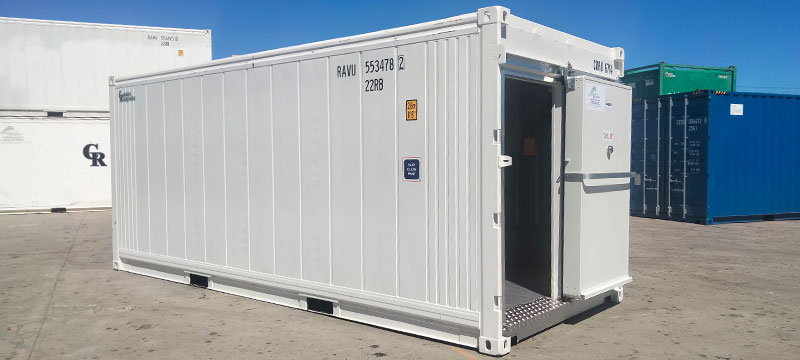
This is where most WA businesses find unexpected value. A refrigerated container isn’t just a cheaper cool room – it’s a mobile cold storage unit that goes where your product is.
Agricultural cold storage modifications solve the post-harvest problem. A WA stone fruit grower running a refrigerated container on a generator can maintain appropriate temperature storage post-harvest without grid power. The same principle works for vegetable producers and livestock operations across regional WA.
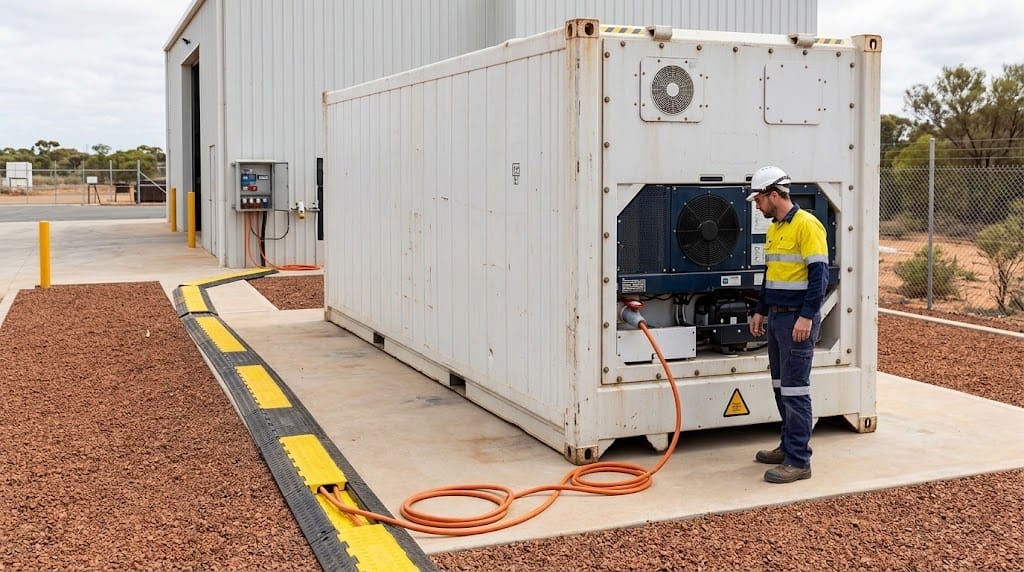
Refrigerated container modifications include units running on standard 15-amp household power, meaning a farm with basic electrical infrastructure can operate a full-size cool room without installing three-phase power.
Temperature range matters more than size when specifying refrigerated container modifications. Match your modification to your actual storage requirements:
- Fresh produce – +2°C to +12°C (single-phase suits this range)
- Chilled goods – -5°C to +5°C (single or three-phase depending on unit size)
- Frozen storage – -18°C to -25°C (three-phase required for reliable performance)
The Carrier Primeline refrigeration unit is designed for high ambient temperature environments common across WA. The refrigeration unit sits externally on the container, meaning internal repairs don’t compromise your cold chain during servicing.
A trailer-mounted cool room turns any compatible vehicle into a refrigerated delivery option. Catering businesses and produce distributors use these for event work and regional deliveries across WA.
Container Office WA: Site Offices and Amenities
Construction sites burn money on hired facilities. A modified shipping container configured as a site office ends that recurring cost.
After an initial period, a container office WA purchase puts you ahead of ongoing hire costs. When the project finishes, you move it to the next site or sell it. Standard office modifications for container modification Perth projects include:
- Insulation (polyurethane or fibreglass panels)
- Wall and ceiling lining (vinyl or plasterboard)
- Electrical fit-out (GPOs, lighting, safety switch)
- Windows and ventilation
- Split-system air conditioning
- Flooring (vinyl or carpet over plywood)
Power requirements stay simple. A modular workspace container set up as a site office runs comfortably on a single-phase connection.
Site amenities containers solve compliance problems. WorkSafe WA requires toilet facilities within 100 metres of work areas. A modified container with plumbing rough-in, a toilet, and a hand basin meets that requirement without permanent construction.
A small site smoking shelter suits mining and construction sites where designated smoking areas are mandatory. For larger crews, a large container smoking shelter provides the space needed to meet WorkSafe WA requirements comfortably.
Container Workshop: Secure Storage and Working Space
A standard shipping container is a steel box. Add roller doors, ventilation, and electrical fit-out, and it becomes a functional container workshop.
Roller door conversions replace one end wall with a full-height roller shutter. This turns the container into drive-through storage or a container workshop where you can move equipment in and out without lifting gear over a threshold.
A basic electrical fit-out for workshop use includes power supply circuits, LED strip lighting for task visibility, multiple GPO circuits, and safety switches and circuit breakers. Ventilation prevents heat build-up in WA’s summer – whirlybird vents, louvre panels, or exhaust fans keep temperatures workable.
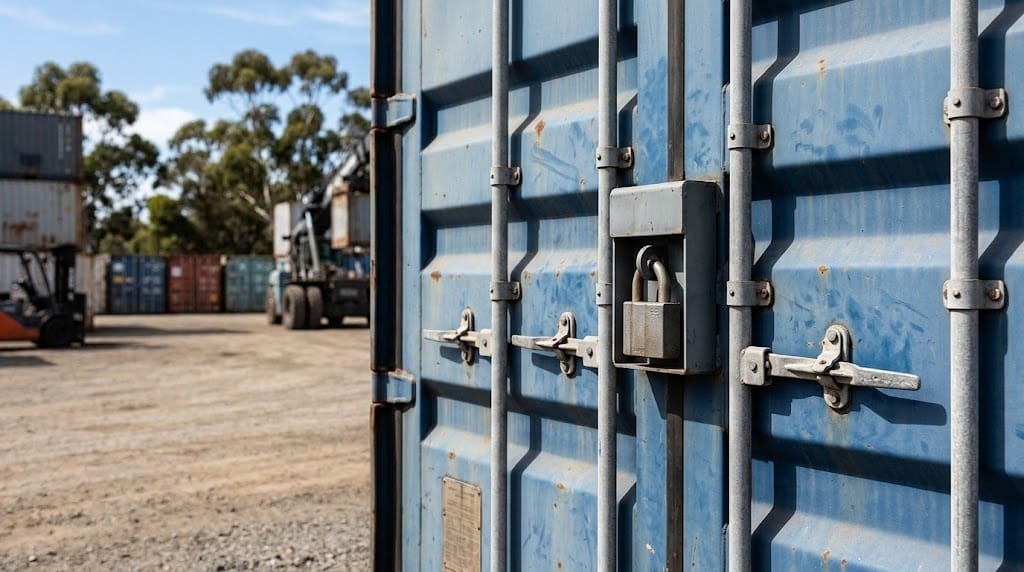
Reinforced container doors replace standard locking bars with reinforced steel and multi-point locking. These container modification Perth security upgrades suit remote sites where equipment theft is a genuine risk.
Retail and Hospitality Pop-Ups
Modified shipping containers WA create retail spaces faster and cheaper than traditional fit-outs. A 20-foot container converted into a coffee shop or retail kiosk can be site-ready in weeks, not months.
Roller shutters for servery create a functional serving window that opens during trading hours and locks down overnight. This is one of the most popular container modification Perth options for food and beverage operators at markets, festivals, and events.
Electrical and plumbing rough-in allows you to connect to site services quickly. Most councils treat containers as temporary structures if they’re not permanently fixed to foundations – this often simplifies approval processes compared to permanent construction.
Container modification Perth specialists have delivered pop-up applications including food trucks and mobile kitchens, farmers market stalls, festival bars and beverage stations, temporary retail during building renovations, and event merchandise sales.
Container Homes WA: A Legitimate Building Method
WA’s housing costs make container homes WA worth considering – not as a compromise, but as a legitimate building method with genuine advantages for remote and semi-rural properties.
Container Refrigeration works with businesses across WA to match container modification Perth specifications to actual requirements. Start with the problem you’re solving, not the container itself – define your temperature range, internal dimensions, power availability, and access constraints before deciding on size or specification.
A two-storey shipping container house uses multiple containers stacked and joined to create a multi-level dwelling. Structural steel framing connects the containers. Internal walls, insulation, and services are fitted like any other home.
Building approval requirements vary by council. Most WA councils assess container homes WA under standard residential building codes. You’ll need engineering certification for structural modifications, plumbing and electrical compliance certificates, energy efficiency compliance, and development approval if your land requires it.
An expandable foldable container house solves the space problem differently. These units fold out to significantly increase their internal floor space when deployed – making them practical for remote properties where transport of building materials is expensive.
Container homes WA make the most sense for remote land where material delivery drives traditional construction costs up. Adequate insulation is critical for WA liveability in any container home WA build.
Agricultural and Industrial Applications
WA farms and industrial sites use modified shipping containers in ways that wouldn’t occur to most buyers.
Agricultural cold storage containers protect produce quality from paddock to dispatch. A container modified with ventilation, shelving, and climate control creates purpose-built storage matched to the specific produce type and harvest volume.
Chemical and fuel storage requires bunded containment. A modified shipping container with internal bunding and ventilation creates compliant storage for chemicals, fuels, or hazardous materials – meeting WorkSafe WA and EPA requirements that farms and industrial sites operate under.
Purpose-built agricultural containers cover a wide range of farm-specific applications – from ventilated fodder storage to secure workshop facilities that relocate between properties as operations shift.
Power and Generator Solutions for Off-Grid Sites
Remote WA sites often lack grid power. Modified shipping containers WA used off-grid need matched power solutions.
Generator sizing matters for refrigerated containers. Undersized generators cause voltage drops that damage refrigeration compressors. Our Carrier 3-phase generator is matched to Carrier refrigeration units – eliminating guesswork and preventing expensive compressor failures in remote container modification Perth deployments.
Power connection accessories prevent compatibility problems. A 3-phase international adaptor allows international-standard refrigeration units to connect to Australian power supplies. Power leads rated for refrigeration loads prevent voltage drop over distance.
Noise Management and Site Considerations
Refrigeration units generate operational noise. This matters for residential neighbours, accommodation sites, or noise-sensitive locations near modified shipping containers WA deployments.
Acoustic cool room panels involve custom-built noise reduction boxes that suppress refrigeration unit noise. For hospitality or residential-adjacent sites, this modification reduces complaints and potential council enforcement actions significantly.
Positioning the refrigeration unit away from neighbouring properties and using natural barriers like sheds or trees to block sound transmission also reduces the perceived impact on neighbours in noise-sensitive areas.
Compliance, Certification, and Buying Safely
Modified shipping containers WA must meet the same standards as permanent buildings when used for occupied purposes.
Electrical work requires a licensed electrician. Any container modification Perth involving power must be certified and tagged. Structural modifications need engineering sign-off – cutting large openings in container walls affects structural integrity.
Container structural re-certification matters for containers used in applications requiring verified structural compliance. This certification is important when containers are relocated between sites or where compliance documentation is required.
Buying safely means avoiding fraudulent sellers. Our guide on how to avoid container buying scams covers the warning signs – including deposits to overseas accounts, suspiciously low prices, and sellers who won’t allow site inspections.
What Most Buyers Get Wrong
The biggest mistake is choosing size before function. A 40-foot container sounds impressive until you realise your site can’t accommodate the truck needed to deliver it.
Access determines what you can actually use. A 40-foot container needs significant clear access for delivery. If your site has tight access, a smaller container or multiple 10-foot units might be your only practical option.
Modifications take time. A basic office conversion takes 2-3 weeks. A complex refrigerated container modification with custom shelving, alarms, and specific temperature zones can take 6-8 weeks. Factor this into your project timeline before committing to a delivery date.
Call (08) 9335 6299 or speak with our specialists about your modified shipping containers WA requirements. We’ll confirm whether a container modification solves your problem – and if it doesn’t, we’ll tell you what will.