Western Australia’s agricultural sector covers vast and varied conditions, from coastal dairy regions to remote pastoral stations. Across this territory, farmers face a challenge city-based businesses rarely encounter: storing everything from livestock feed to agricultural chemicals in locations where traditional buildings may be impractical, expensive, or difficult to construct.
Agricultural container modifications have become a practical solution for many farming operations. A 20-foot steel container modified for farm use can provide a flexible alternative to constructing a permanent shed, especially where speed, mobility, or site access are important. More importantly, these units can solve specific farm cold storage containers and farm storage problems that standard sheds may not address.
Why WA Farms Need Purpose-Built Storage Solutions
Agricultural operations often require storage that standard shipping containers cannot provide without modification. A dairy farm in Margaret River may need ventilated feed storage that reduces the risk of mould in coastal humidity. A Wheatbelt grain operation may need dust-controlled storage for seed, fertiliser, or agricultural chemicals. A pastoral station in the Pilbara may need secure workshop and equipment storage that can withstand remote conditions.
Standard containers may not be suitable for every farm application. Unmodified units can trap moisture, creating conditions that may contribute to fodder spoilage. They may lack the ventilation systems required for some chemical storage applications. Their standard door configuration can also make bulk material handling less efficient.
Agricultural storage containers WA can address these limitations through structural changes, climate control additions, and compliance-focused modifications that match specific farm container modifications to each sector’s requirements.
Ventilation Systems for Fodder and Grain Storage
Stored fodder can generate moisture through natural respiration. Without adequate ventilation, this moisture may condense on container walls, creating conditions that increase the risk of mould and feed spoilage.
Livestock fodder storage containers can include ventilation modifications such as:
- Whirlybird roof vents positioned to support cross-flow ventilation
- Louvre side panels that allow airflow whilst helping prevent rain entry
- Mesh-protected openings designed to reduce pest entry
- Roof or ridge ventilation to support heat-driven air movement
A properly ventilated farm storage container WA can help manage internal humidity and reduce the risk of both mould growth and excessive drying. This is especially useful for WA farms operating in coastal regions like Margaret River or higher-humidity northern zones.
Where monitoring is required, remote monitoring or temperature-alert options may help farmers track internal conditions and respond when humidity or temperature moves outside the preferred range.
Chemical Storage Compliance Modifications
Farms storing agricultural chemicals may need to consider the Dangerous Goods Safety (Storage and Handling of Non-explosives) Regulations 2007, depending on the substances, quantities, and site conditions involved. Chemical storage requirements can vary, so it is important to confirm obligations before modifying or installing a storage container.
Common compliance-focused modifications for chemical storage containers agriculture applications may include:
- Bunded steel flooring for spill containment
- Corrosion-resistant internal coating suited to agricultural chemicals
- Self-closing doors or safe-access hardware where required
- Ventilation systems supporting airflow at floor and roof level
- Compliant signage, hazchem information, or emergency contact details where applicable
Proper containment in chemical storage containers agriculture setups can help reduce the risk of soil contamination, product loss, and costly remediation. This is an important consideration for farms storing herbicides, pesticides, fertilisers, or other regulated substances.
Temperature Control for Livestock Medication and Veterinary Supplies
Veterinary supply storage requirements vary by location across WA. A cattle station in the Kimberley may face summer temperatures that can quickly affect temperature-sensitive products. A sheep operation in the Great Southern may need frost-free storage for winter lambing supplies.
Agriculture container modifications for veterinary supply storage often require climate control for containers, especially when medications, vaccines, or temperature-sensitive veterinary products need stable storage conditions.
These systems may include:
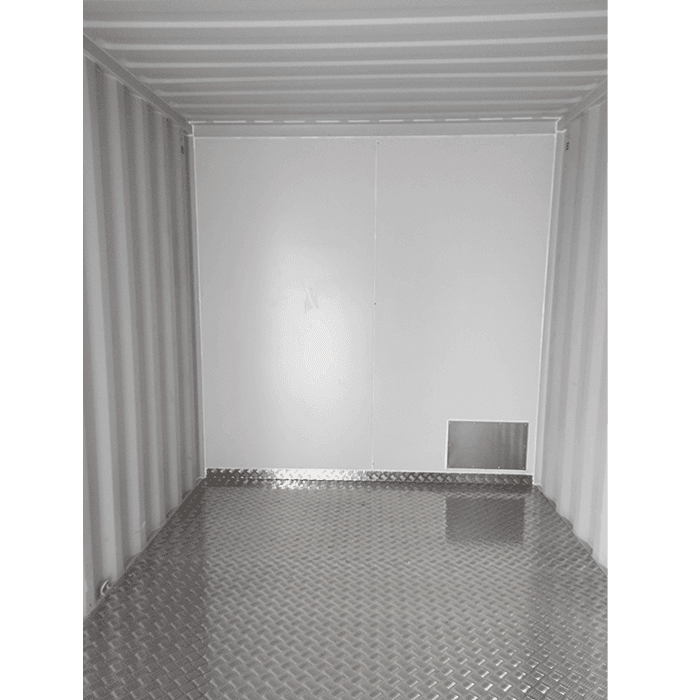
- Insulation packages that help reduce internal temperature fluctuations
- Air conditioning units sized for container volume and local climate conditions
- Solar power options for off-grid storage in remote paddocks
- Battery backup or generator support for sites where power interruptions are a concern
A modified veterinary supply storage container can help maintain more stable storage conditions in locations where grid power is unavailable or unreliable. This can reduce the risk of product spoilage and help farmers keep essential supplies closer to where they are needed.
Regular servicing also helps keep climate control and refrigeration systems running reliably throughout WA’s seasonal temperature swings.
Bulk Feed Storage With Efficient Loading Systems
Large-scale livestock operations require bulk feed storage that allows efficient loading and distribution. Standard container doors can create bottlenecks when loading feed into vehicles or moving materials with forklifts.
Practical farm container modifications for bulk feed handling may include:
- Roller door conversions providing wider access to the container interior
- Raised flooring to help align stored materials with vehicle tray height
- Internal shelving for organised feed type separation
- Reinforced flooring suitable for machinery or forklift access
A 40-foot farm storage container WA modified with wider access can store significant volumes of bagged feed while allowing farmers to load vehicles more efficiently. This can be a meaningful time saving during busy periods such as weaning, lambing, or drought feeding.
Workshop and Equipment Storage Modifications
Remote farming operations often need secure workshop space for equipment maintenance and tool storage. A container modified as a mobile workshop can provide this capability in locations where permanent building construction is impractical.
Workshop agriculture container modifications may include:
- Electrical fit-out with power points, lighting, and safety switches
- Workbench installation with tool storage and vice mounting points
- Equipment racks for organised tool storage
- Ventilation systems for welding, solvents, or general airflow
- Reinforced flooring for tools, parts, and machinery components
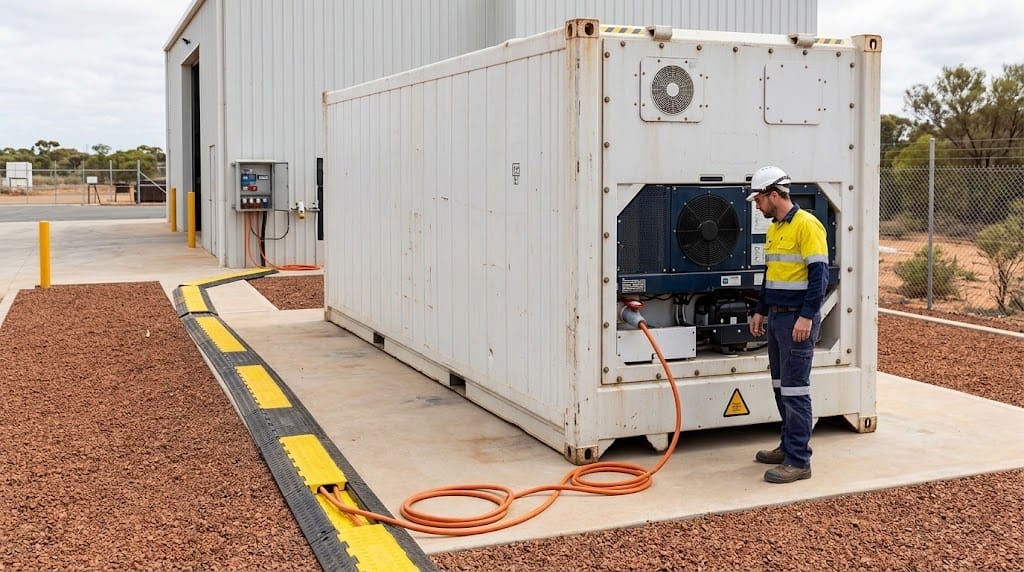
For farms connecting workshop agriculture container modifications to generators or remote power supplies, container extension leads rated for sustained equipment loads can help reduce voltage drop over distance.
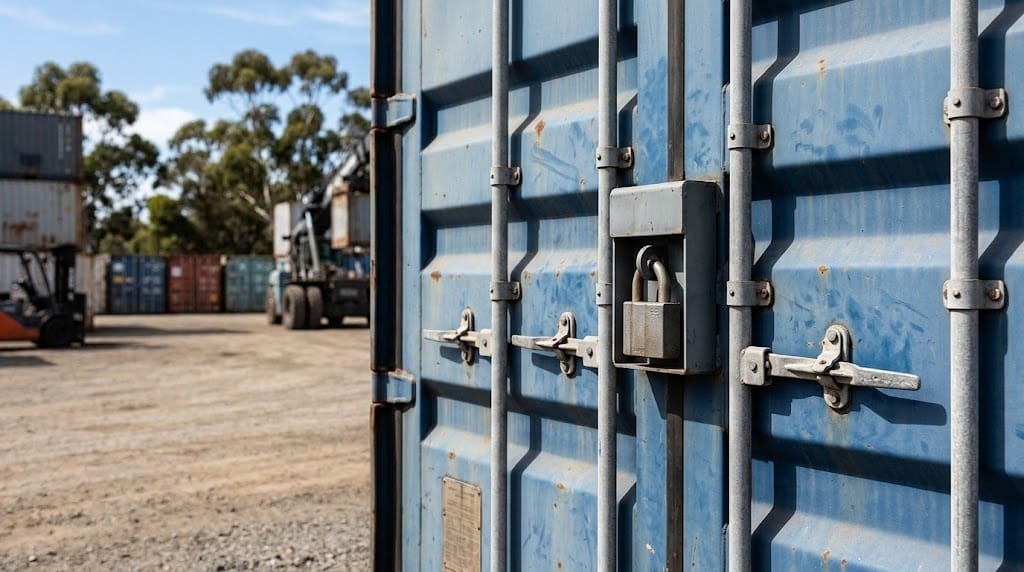
For farms storing tools, parts, and valuable machinery components, high-security container modifications can improve protection for remote or unattended storage locations.
Seed and Fertiliser Storage With Moisture Control
Seed viability depends on controlled storage conditions. Fertiliser can also absorb moisture, leading to caking and application problems. Both require agricultural storage containers WA that help manage humidity, dust, pests, and temperature extremes.
Specialised farm storage container WA modifications for seed and fertiliser may include:
- Vapour barrier flooring to help reduce ground moisture transmission
- Dehumidification systems to support lower relative humidity
- Temperature monitoring with alerts for storage condition changes
- Sealed construction to help reduce dust and pest entry
Maintaining better storage conditions in agriculture container modifications for seed can help preserve product quality and extend the practical storage window for bulk-purchased seed. This is useful for farms buying ahead of planting season or storing inputs across variable weather conditions.
Livestock Handling and Treatment Facilities
Mobile livestock handling facilities allow farmers to conduct animal health procedures closer to paddocks instead of moving animals long distances to fixed yards. Container agriculture container modifications can support portable treatment facilities that reduce livestock stress and improve operational efficiency.
Handling facility modifications may include:
- Shelter or workspace integrated with livestock handling areas
- Treatment area fit-out with veterinary supply storage and bench space
- Wash-down systems with drainage and water supply connections
- Lighting and power for early morning or evening operations
A mobile livestock handling farm container modifications setup can reduce the time required to muster, transport, and process animals. This can be useful during critical periods such as shearing, pregnancy testing, vaccination, or routine health checks.
Power Options for Remote Agricultural Storage
Many agricultural storage containers WA applications occur in locations without grid power. Off-grid power solutions can make agriculture container modifications more practical in remote paddocks and pastoral stations.
Power system options for farm storage container WA off-grid use may include:
- Solar panel arrays sized for container power requirements
- Battery storage systems for backup power
- Generator integration for high-demand applications
- Hybrid systems combining solar, battery, and generator support
For refrigerated agriculture container modifications requiring reliable continuous power, a 3-phase generator for refrigeration can support cold storage applications where grid power is unavailable or unreliable. Pairing the right power source with the container’s intended use can also help reduce the risk of voltage fluctuations affecting refrigeration or climate control equipment.
Structural Considerations for WA Agricultural Conditions
Western Australia’s agricultural regions present specific environmental challenges. Coastal areas can face salt-laden winds that accelerate corrosion. Inland regions experience significant temperature swings. Northern pastoral zones may need storage designed for exposed, high-heat, and high-UV conditions.
WA-specific farm container modifications may include:
- Marine-grade paint systems for coastal farm applications
- UV-resistant coatings to help reduce paint degradation in exposed locations
- Anchoring options suited to exposed or high-wind locations
- Corrosion protection on external fittings and hardware
- Insulation or thermal breaks to help reduce heat transfer through steel walls
These modifications can help extend farm storage container WA service life in harsh agricultural conditions. This is important for farms making a long-term infrastructure investment.
Compliance and Certification for Agricultural Container Use
Agriculture container modifications must be planned with relevant Australian standards, WA regulations, and site-specific requirements in mind. Electrical work should be completed by licensed electricians. Chemical storage containers agriculture setups may need to consider dangerous goods requirements depending on the substances and quantities stored. Structural changes should also be completed in a way that maintains container integrity and supports safe long-term use.
For containers that need to remain compliant for ongoing use, relocation, or resale, container re-certification can help confirm the unit remains suitable for its intended application.
Always engage the relevant regulator or a qualified compliance adviser before committing to a farm container modification for chemical storage or other regulated farm storage applications. Requirements vary based on the specific substances involved, quantities stored, and intended use of the container.
Practical Applications Across WA Agricultural Sectors
Different agricultural sectors require specific agriculture container modifications.
Pastoral stations may use veterinary supply storage with climate control, mobile workshop facilities, equipment storage, and refrigerated storage solutions that can operate across vast properties.
Grain farms may require chemical storage containers agriculture setups for herbicides and pesticides, seed storage with humidity control, and equipment storage to protect valuable machinery.
Horticultural operations may need cool storage for produce, chemical storage for crop protection products, and workshop facilities. Modified refrigerated farm containers for horticultural use can support post-harvest produce storage where temperature control is required.
Dairy farms may use livestock fodder storage containers with ventilation, veterinary supply storage with temperature control, and equipment storage for milking system components.
Choosing the Right Container Size for Farm Applications
20-foot containers suit single-purpose farm storage container WA applications such as chemical storage, veterinary supply storage, workshop fit-outs, or secure equipment storage. Their compact size allows placement in locations where larger units may not have access.
40-foot containers provide bulk storage for fodder, seed, or equipment. The extended length can accommodate vehicle loading, shelving, and forklift operation, making them suitable for larger livestock or broadacre operations.
For smaller temperature-controlled storage needs, mini refrigerated containers can suit small-scale agriculture container modification applications without the space requirements of full-size units.
Site access determines practical container size. Properties with narrow access tracks may need multiple 20-foot agricultural storage containers WA instead of a single 40-foot container.
Delivery and Installation for WA Farms
Farm storage container WA delivery to remote locations requires planning for access, placement, and anchoring. Installation considerations for agriculture container modifications may include access route assessment, ground preparation, wind exposure, and service connections for power, water, or drainage where required.
Container Refrigeration can coordinate delivery logistics for remote farm locations, including arranging appropriate transport for properties with difficult access.
Before your agriculture container modification is deployed, a pre-delivery assessment can help confirm access route suitability, placement area condition, and power connection requirements at your farm location.
Call (08) 9335 6299 or speak with our specialists to discuss agriculture container modifications for your WA farming operation. We’ll help match the modification to your specific storage requirements, compliance obligations, and site conditions.