The History of Containerisation in Australia
Before containerisation, shipping in Australia was slow, labour-intensive, and costly. Cargo was handled as break-bulk, meaning individual items were manually loaded and unloaded. For a country as large and geographically isolated as Australia, this severely limited trade efficiency.
The Arrival of Containerisation in Australia
Containerisation emerged globally in the late 1950s, and Australia began adopting the system during the 1960s and early 1970s. The introduction of standard shipping containers transformed maritime logistics by allowing cargo to move seamlessly between ships, trucks, and trains without repacking.
This change required a fundamental redesign of Australian ports, including those in Western Australia.
Fremantle: Western Australia’s Container Gateway
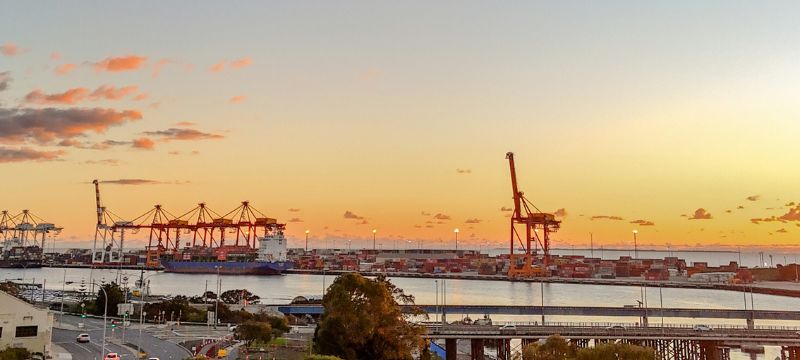
The Port of Fremantle became Western Australia’s primary container port and remains the state’s main gateway for containerised trade. As containerisation expanded, Fremantle transitioned from traditional wharf operations to modern container terminals capable of handling standardised containers.
Major developments included purpose-built container berths, ship-to-shore gantry cranes, expanded container stacking areas, and improved road and rail intermodal connections.
Supporting WA’s Economy and Distance Challenges
Western Australia’s vast distances made containerisation especially valuable. From Fremantle, containers travel by road and rail to Perth’s industrial areas and far beyond, supporting mining operations, agriculture, retail supply chains, and regional communities.
Inland container movements from Fremantle rank among the longest domestic container routes in Australia.
The Importance of Refrigerated Containers in WA
Refrigerated containers played a critical role in Western Australia’s export growth. WA producers rely on reefers to transport meat, seafood, fresh fruit and vegetables, dairy products, and pharmaceuticals.
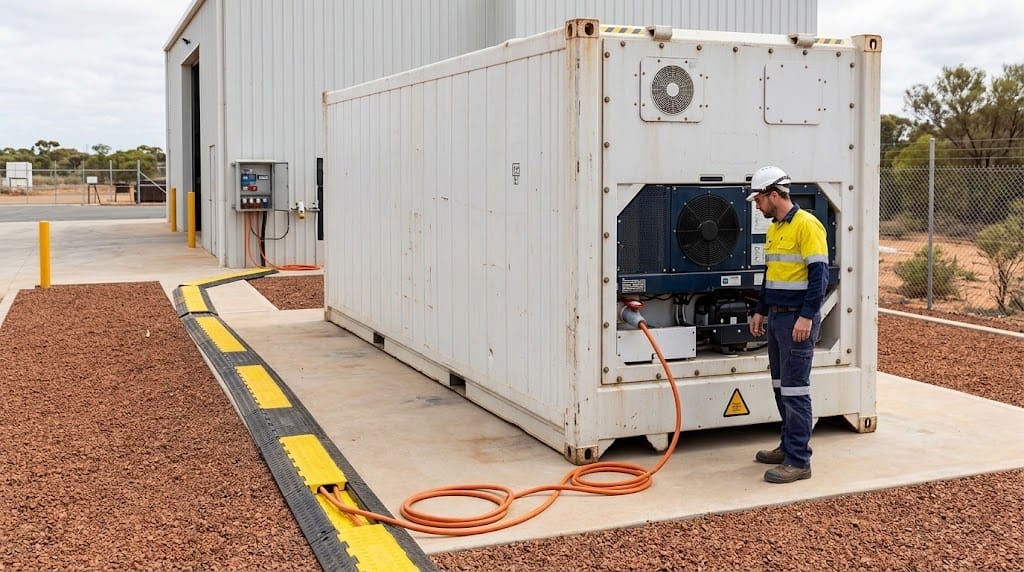
Fremantle’s terminals were progressively equipped with reefer plug-in points, enabling refrigerated containers to maintain temperature while stored at the port.
Reefers and Port Infrastructure
The growth of refrigerated containers required Fremantle to invest in dedicated electrical infrastructure, monitoring systems, and procedures for managing high power loads, particularly during Perth’s hot summer conditions.
Containerisation Beyond the Port
Containerisation reshaped Perth’s inland logistics network. Depots, cold stores, and distribution centres developed around the metropolitan area, linking Fremantle Port with producers and markets across Western Australia.
Ongoing Evolution at Fremantle
Today, container operations at Fremantle continue to evolve with larger vessels, advanced terminal operating systems, remote monitoring of reefers, and increased focus on energy efficiency and emissions reduction.
Conclusion
Containerisation transformed Australia’s shipping industry, and its impact is especially evident in Western Australia. Through the development of Fremantle as a modern container port, shipping containers and refrigerated containers have enabled WA to overcome distance, climate, and isolation to participate fully in global trade.