Portable refrigerated storage can solve a practical capacity problem, but the food-safety responsibility does not move with the equipment. Portable cold storage compliance still depends on how food is received, stored, monitored, protected and handled throughout the operation.
Businesses searching for food safe refrigerated containers are usually trying to reduce temperature and contamination risks. The refrigerated unit is only one part of that system. Staff procedures, food temperatures, cleaning, stock arrangement and site conditions still need active control.
For businesses needing temporary or additional capacity, refrigerated shipping containers can provide a temperature-controlled storage pathway. The exact unit must still be matched to the food, required temperature, available power and site conditions. Container Refrigeration currently lists mini, 20 ft, 40 ft, single-phase, three-phase and specialised refrigerated container categories.
In Perth and across Western Australia, this planning can be especially relevant for caterers, events, hospitality venues and food businesses managing seasonal demand. The safest approach is to define the food-safety requirement before choosing the storage equipment.
What Portable Cold Storage Compliance Actually Requires
Portable cold storage compliance starts with the same food-safety obligations that apply to fixed refrigeration. Under Australian food-safety guidance, potentially hazardous food generally needs to be kept at 5°C or colder during storage. A different temperature can only be used where the business can demonstrate a safe alternative system.
Potentially hazardous food includes products that can support the growth of harmful microorganisms if temperature is not controlled. The exact classification depends on the food and how it has been prepared or processed.
Effective food storage temperature control requires more than reading the refrigeration controller. The displayed temperature is not automatically the same as the temperature of the food. FSANZ advises businesses to check food temperatures directly with a thermometer when confirming safe storage conditions.
Frozen food also needs separate attention. FSANZ guidance states that frozen food should remain frozen hard during storage.
Equipment capability must therefore be verified against the intended use. The current single-phase refrigerated containers range includes different product configurations, so businesses should not assume every unit provides the same chiller or freezer function.
Choose Storage Around the Food and the Site
A refrigerated unit should be selected around the storage task, not only the external size. Start with the food type, target storage condition, expected stock volume and loading pattern.
Consider how the unit will be used during a normal operating day. Frequent door opening, heavy loading and poor stock arrangement can make temperature control harder. FSANZ also advises against overstocking refrigeration because chilled air needs room to circulate.
Where space is limited, mini refrigerated containers may be worth comparing with larger refrigerated containers. The website lists compact units in its refrigerated range, including single-phase and three-phase options.
For operations that need storage which can be transported between suitable locations, a mobile cool room trailer is another listed option. Its product page identifies it as a trailer-mounted refrigerated cool room with dual-temperature capability.
Do not select equipment from a category label alone. Confirm the exact unit’s operating capability, power requirement and intended application before relying on it for refrigerated food storage.
Protect Food From Contamination Inside Cold Storage
Temperature control is only one part of food safety. Food also needs protection from contamination while it is inside temporary cold storage.
FSANZ advises food businesses to keep storage areas clean, dry and free of pests. Food should be protected using suitable food-safe containers, covers or packaging, and damaged packaging should be addressed appropriately.
Raw products need careful placement. Raw meat and seafood should be stored separately or below ready-to-eat food so juices cannot contaminate food that will not receive further cooking.
Chemicals should also be kept away from food, containers and packaging. Cleaning products, pest-control products and other chemicals should not share food-storage areas in a way that creates a contamination risk.
A portable refrigerated unit should therefore be managed as part of the food business’s normal cleaning and food-storage system. Moving stock into temporary refrigeration should not weaken the controls already used in the main premises.
Plan Power, Placement and Daily Temperature Checks
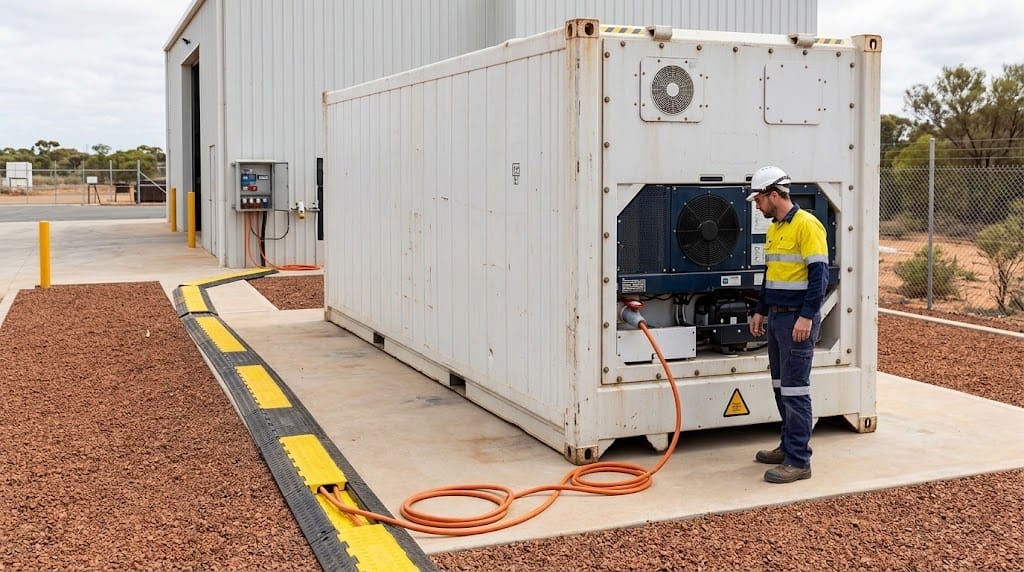
Reliable refrigeration depends on suitable power and an appropriate site. Before delivery, confirm the electrical supply, connection point, access route and proposed container position.
Electrical compatibility should never be guessed from the plug appearance. Where a lead is needed, the available refrigerated container extension leads should only be considered after the exact equipment and site requirements are confirmed. The current product category states that these leads are intended for uses including refrigerated container connections.
A qualified electrician should assess the connection where suitability is uncertain.
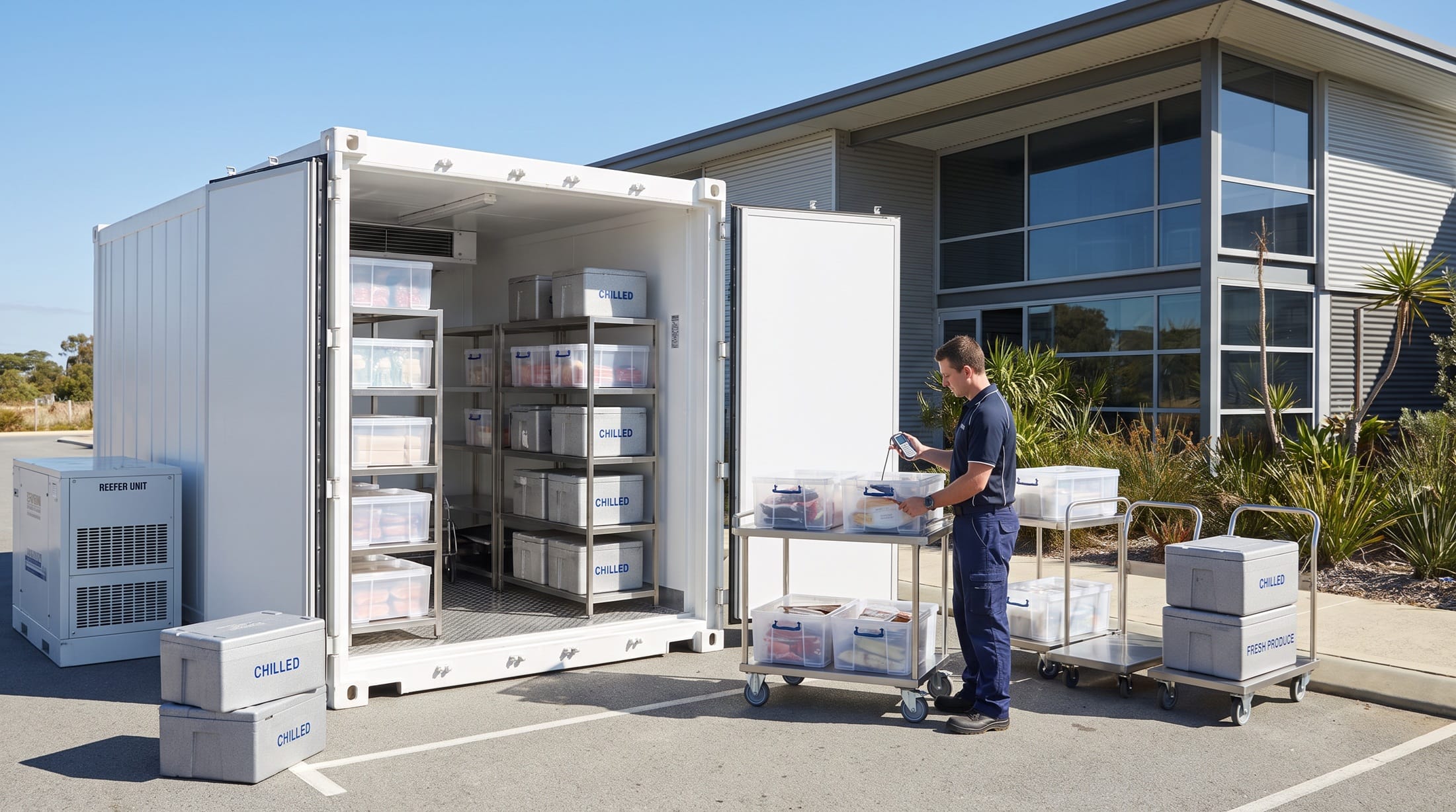
Placement also affects day-to-day operation. Staff need safe access to the doors, while loading practices should allow chilled air to circulate around stored food. Avoid packing the unit so tightly that temperature-controlled air cannot move effectively. FSANZ specifically recommends avoiding overstocking refrigeration so chilled air can circulate.
At the planning stage, Container Refrigeration lists refrigerated containers across several sizes and power configurations. Its O’Connor location provides a local point of contact for Perth and WA businesses assessing cold-storage options.
Once the unit is operating, monitor the food rather than relying only on the equipment display. A clean, sanitised thermometer can help confirm whether potentially hazardous food remains at the required storage temperature.
The business should also decide who checks temperatures, how findings are recorded where records are required, and what action follows an unacceptable reading. Some food service businesses handling unpackaged, ready-to-eat, potentially hazardous food may have additional substantiation requirements under Standard 3.2.2A.
Manage Deliveries, Events and Temporary Food Operations
Portable refrigeration is often used when food moves through several locations. Each transfer creates a point where time, temperature and contamination controls can be lost.
When chilled potentially hazardous food is received, FSANZ guidance says it should generally be at 5°C or colder. Frozen food should arrive frozen hard. Food should then be moved into suitable temperature-controlled storage without unnecessary delay.
Event operators and caterers should also consider what happens before and after the event. Storage at a commissary kitchen, transport to site, temporary refrigeration and return transport can all form part of the same food-safety chain.
In Western Australia, temporary and mobile food businesses may have registration, notification or operating requirements involving local government. WA Health provides specific guidance for these businesses under the Food Act framework.
The storage unit itself does not replace these obligations. Before operating at a new location, confirm the requirements that apply to the business, the approved activities and the relevant local government area.
Prepare for Refrigeration Faults and Temperature Excursions
A refrigeration fault becomes a food-safety issue when the business can no longer confirm that food has stayed under safe control. Restarting the equipment does not, by itself, establish that the food remains safe.
If a temperature reading is outside the business’s required limit, assess the actual food temperature and the time involved. Follow the business’s documented food-safety procedure and applicable FSANZ guidance before deciding whether food can be retained.
Do not bypass refrigeration alarms, controls or electrical protection devices to keep a unit operating. Refrigeration and electrical faults should be handled by appropriately qualified technicians.
For relevant refrigerated container faults, the website lists 24/7 emergency refrigeration servicing for callouts or technical support. Service availability and response arrangements should be confirmed for the specific location and situation.
Businesses using temperature-controlled food storage should also have a practical contingency plan. It should identify who makes food-safety decisions, where alternative storage may be available and how temperature information will be documented during an incident.
Portable Refrigerated Storage Compliance Checklist
Before using temporary refrigerated storage for food, check the following:
- Identify whether the food is potentially hazardous and confirm its storage requirements.
- Confirm whether chilled or frozen storage is needed.
- Verify the exact refrigeration unit can provide the required operating condition.
- Confirm site power, electrical connection and cable requirements before delivery.
- Check delivery access and provide a stable, practical operating location.
- Keep the storage area clean, dry and protected from pests.
- Use suitable food-safe containers, covers or packaging.
- Separate raw products from ready-to-eat food to reduce contamination risk.
- Avoid overstocking so chilled air can circulate around stored food.
- Check food temperatures directly with a suitable thermometer when needed.
- Decide who is responsible for monitoring and corrective action.
- Keep required food-safety records where the applicable standard or business system requires them.
- Confirm registration, notification or temporary-event requirements with the relevant authority.
- Have a response plan for power loss, refrigeration faults or unacceptable food temperatures.
These controls reflect current FSANZ storage guidance and WA considerations for temporary or mobile food businesses.
This checklist supports planning, but it does not replace the requirements that apply to a specific food business or food process.
Frequently Asked Questions
Are Food Safe Refrigerated Containers Enough to Meet Food Regulations?
No. When businesses refer to food safe refrigerated containers, they are usually describing the intended use. Compliance also depends on food temperature, hygiene, contamination controls, staff practices, monitoring and any regulatory requirements that apply to the business.
What Temperature Should Potentially Hazardous Food Be Stored At?
FSANZ states that potentially hazardous food generally needs to be stored at 5°C or colder. A business using another temperature must be able to demonstrate that its alternative system keeps the food safe.
Can Every Refrigerated Container Be Used as a Freezer?
No. Refrigerated container capabilities vary by model and configuration. Confirm the exact product’s verified operating capability before selecting it for chilled or frozen food. The client’s current range itself includes differing refrigerated configurations.
Is the Temperature on the Refrigeration Display Enough?
Not necessarily. The display indicates the refrigeration system’s reading, while food temperature can vary within the load. FSANZ recommends checking food temperatures directly with a thermometer when confirming safe storage.
Do Temporary Food Businesses in WA Have Additional Requirements?
They can. WA Health provides specific registration, notification and operating guidance for temporary and mobile food businesses. Requirements can depend on the business activities and the local government areas involved.
What Should a Business Do if Portable Refrigeration Fails?
Assess the actual food temperature and relevant time outside required control. Follow the business’s documented food-safety process and current regulatory guidance. Qualified refrigeration or electrical support may also be required to address the equipment fault.
Conclusion
Safe portable refrigeration starts with the food requirement, not the equipment alone. Temperature control, contamination prevention, monitoring, power planning and staff procedures need to work together throughout storage and handling.
Compare suitable refrigerated container options only after confirming the food, temperature, site and operating requirements.
Call (08) 9335 6299 or contact the team to discuss the refrigerated storage requirements for your site.