Hot weather can expose weaknesses that are easy to overlook during milder operating conditions. A refrigerated container may still be running, yet small problems with airflow, power, loading, seals, controls, or machinery can become more noticeable when ambient conditions are demanding.
A practical refrigerated container summer maintenance plan should focus on condition, airflow, power, monitoring, and a clear response to faults. Reefer temperature stability also depends on the complete storage system, not only the temperature shown on the controller. This guide explains the checks operators can make safely before the hotter WA period and when technical support is more appropriate.
Why Summer Preparation Matters
Heat Adds Load to the Storage System
A refrigerated shipping container removes heat from its internal space and rejects that heat outside. When the surrounding air is hotter, the refrigeration system operates under a more demanding environment.
That does not mean every unit will struggle in summer. Suitability depends on the specific unit, its condition, the required storage task, site conditions, and the manufacturer’s operating limits.
The current refrigerated shipping containers range includes different sizes, power configurations, and refrigeration arrangements. This variation is why operators should avoid applying one maintenance rule or temperature limit to every reefer.
Temperature Control Depends on More Than the Set Point
A set point tells the controller what temperature the system is trying to maintain. It does not confirm that every part of the storage process is working correctly.
Temperature stability can be influenced by:
- Refrigeration unit condition
- Insulation condition
- Internal airflow
- Cargo arrangement
- Door opening frequency
- Power supply stability
- Sensor and controller condition
- Ambient operating conditions
The goal of summer preparation is to identify avoidable problems before they become a temperature fault. It is not to make unsupported guarantees about product condition or cargo outcomes.
Start With a Pre-Summer Condition Check
Look for Visible Changes Before Peak Heat
Begin with checks that do not require opening electrical panels or refrigeration components. Compare the container with its normal operating condition.
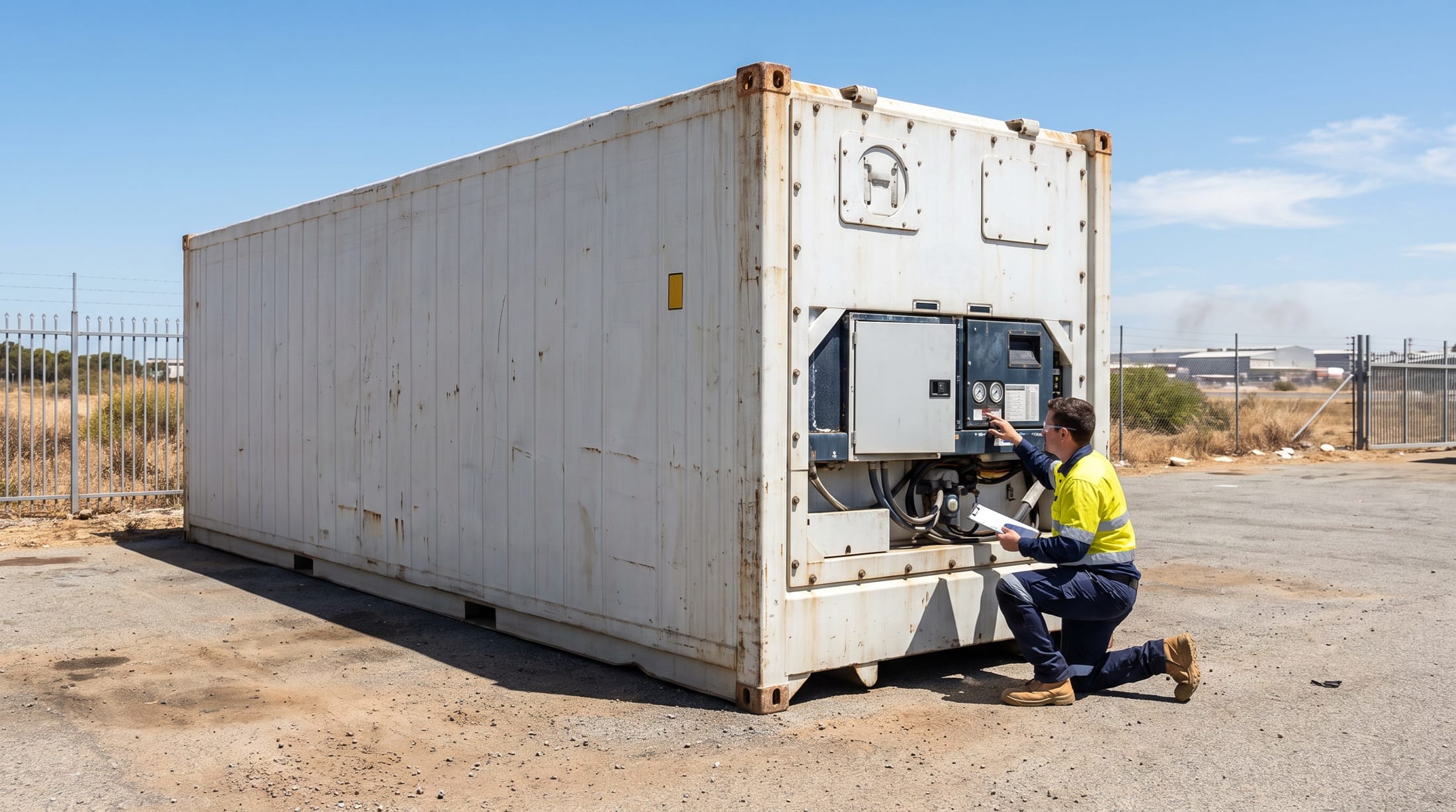
Look for visible door damage, damaged seals, unusual ice or water where it has not appeared before, new vibration, unusual noise, alarms, damaged leads, or signs that the unit is not maintaining its expected operating pattern.
Also check that the refrigeration machinery area is not obstructed by stored materials, temporary fencing, packaging, or site clutter. The exact clearance requirements should come from the specific unit documentation or technical advice.
If the unit is already showing a fault, a refrigerated unit inspection can identify the problem before repair or servicing is quoted. The client describes this service for defective refrigerated units.
Use Qualified Technicians for Faults
Refrigeration systems contain electrical and refrigeration components that are not suitable for unqualified repair work. Do not open live electrical equipment, alter controls, bypass alarms, or handle refrigerant systems.
A site operator can record symptoms and keep the area accessible. Technical diagnosis and repair should be left to qualified personnel.
This boundary is especially important during refrigerated container summer maintenance. Quick improvised fixes can create new faults or conceal the original problem.
Useful information to record includes:
- When the issue started
- What the controller displays
- Whether an alarm is active
- Whether the problem is continuous or intermittent
- Any recent change to loading or site power
- Any unusual noise, vibration, or visible damage
These details help a technician understand what changed without relying on guesswork.
Protect Airflow and Loading Conditions
Keep Internal Air Paths Clear
Refrigerated containers use circulated air to move cooling through the storage space. Container Refrigeration’s guide to refrigerated container guide explains that airflow under cargo is part of temperature distribution inside a reefer.
For operators, the practical point is simple. Do not block designed air paths with poorly placed goods, loose packaging, or material that prevents normal circulation.
The correct loading arrangement depends on the container and the stored product. Follow the equipment instructions and the storage requirements for the goods rather than copying another site’s layout.
Avoid placing goods against components, sensors, or air outlets unless the unit documentation specifically permits it. Loading should also allow safe access for normal operation and inspection.
Reduce Unnecessary Door Exposure
Opening a refrigerated container introduces outside air. During hot WA weather, repeated or prolonged door opening can add more heat to the internal space.
Plan loading before opening the doors. Have goods, equipment, and staff ready so the container is not left open while the next task is organised.
This does not mean doors must remain closed at all costs. Safe work practices, product handling, and operational needs come first. The aim is to avoid unnecessary exposure rather than create an unrealistic rule.
After a major loading event, watch the unit’s normal temperature trend. If recovery appears unusual for that container and load, investigate rather than assuming the heat is the only cause.
Confirm Power and Temperature Monitoring
Check the Power Arrangement
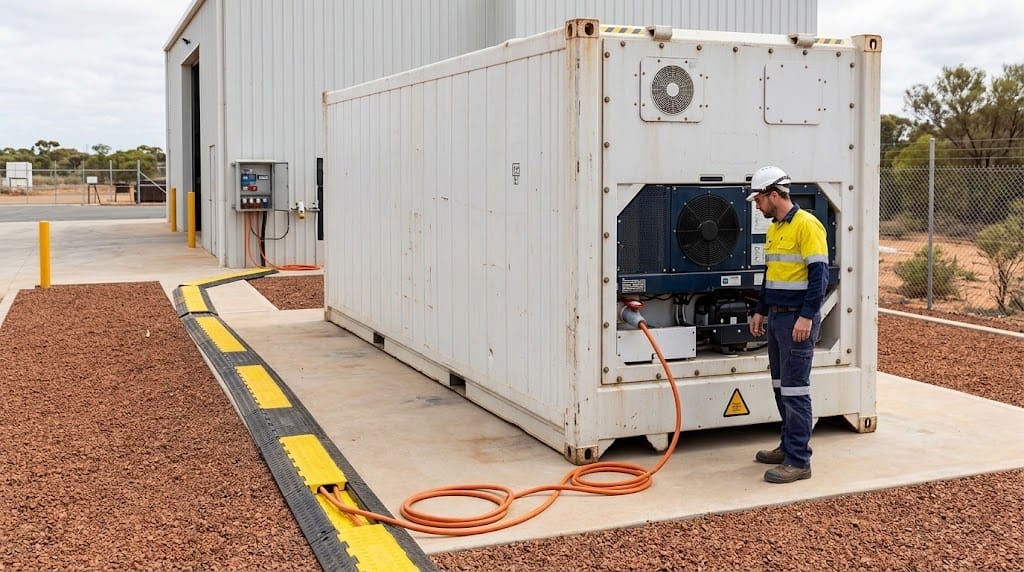
A reefer cannot maintain temperature without a suitable power supply. The phase, voltage, amperage, socket, lead, cable route, and electrical protection must match the actual unit and site.
Container Refrigeration lists refrigerated container extension leads for different container power applications. The existence of these options does not mean any lead is compatible with any refrigerated container.
Before summer, check for obvious physical damage to accessible plugs and leads. Do not modify plugs, sockets, boards, or cables to make an unsuitable connection fit.
If the electrical supply or protection is uncertain, use a qualified electrician and confirm the refrigeration unit requirements.
Watch Trends, Not Just One Reading
A single controller reading provides only one point in time. Operators handling temperature-sensitive goods may need a clearer picture of how conditions behave through loading, overnight operation, hotter periods, and normal daily use.
The container monitoring service includes remote monitoring of refrigerated container temperature, time, and location. The service page also describes monitoring options and alarms.
Monitoring can help identify an unusual pattern earlier. It does not replace physical maintenance, inspection, or a technician’s diagnosis.
For reefer temperature stability, record what is normal for your own unit and storage process. Escalate unexplained changes rather than repeatedly changing the set point.
At the planning stage, Container Refrigeration can review refrigerated container, monitoring, repair, and service requirements from its O’Connor base in Western Australia.
Have a Fault Response Plan
Know What Requires Technical Support
Summer preparation should include a response plan for faults that staff cannot safely resolve.
Container Refrigeration’s emergency refrigeration service lists breakdowns, temperature faults, power issues, and mechanical failures among the problems it supports.
A temperature problem should be treated as a technical issue when the cause is unclear, an alarm persists, the system behaves abnormally, or there is visible equipment damage.
Do not keep resetting a unit without understanding why the fault returns. Repeated resets can hide useful diagnostic information.
Record Useful Information Before Calling
A clear fault description helps technical support start with useful context.
Prepare:
- Container or unit identification
- Current controller display
- Active alarm information
- Stored product type
- Recent loading activity
- Site power observations
- Approximate time the issue started
- Photos of visible damage, where safe to take them
Do not enter restricted areas or remove guards to obtain information.
A good refrigerated container summer maintenance process includes knowing who will respond, who can authorise service work, and how the stored goods will be managed if the unit needs attention.
Frequently Asked Questions
What Should Be Checked Before Summer?
Check for visible damage, abnormal noise, alarms, damaged leads, obstructed machinery areas, door or seal problems, and unusual temperature behaviour. Keep checks external and non-invasive.
If the unit shows a refrigeration, electrical, sensor, or mechanical problem, arrange a qualified inspection rather than attempting repairs.
What Affects Reefer Temperature Stability?
Stable reefer temperatures depend on the refrigeration system, insulation, airflow, loading, door activity, power, sensors, controls, ambient conditions, and the storage requirement.
The exact importance of each factor depends on the unit and operating situation.
Should Staff Clean or Repair the Refrigeration Unit Themselves?
Staff should not open or repair refrigeration or electrical systems unless they are appropriately qualified and authorised.
Site teams can keep the area unobstructed, report symptoms, inspect accessible external condition, and follow the equipment’s approved operating instructions.
Can Monitoring Replace Maintenance?
No. Monitoring helps show what the container is doing, but it does not repair worn, damaged, or faulty components.
A monitoring alert should trigger investigation when the behaviour differs from the expected operating pattern.
When Should a Technician Inspect the Unit?
Arrange technical assessment when there are persistent alarms, unexplained temperature changes, abnormal noise or vibration, visible damage, power-related faults, or other signs of defective operation.
Do not wait for a complete loss of cooling before asking for help.
Conclusion
Preparing for WA summer means checking the condition of the complete refrigerated storage system before hotter conditions expose a weakness. Focus on safe visual checks, airflow, loading, power, monitoring, and a clear response to faults.
Good refrigerated container summer maintenance does not require operators to become refrigeration technicians. Where repair work is needed, review the available container repairs rather than attempting an unsafe workaround.
Call (08) 9335 6299 or contact the team to discuss a refrigerated container inspection, fault, or maintenance requirement.