Pharmaceutical products can lose quality when storage conditions move outside their approved requirements. That makes pharmaceutical cold storage containers a quality-system decision, not simply a refrigeration purchase.
When teams compare temperature control reefers, the important question is not whether a unit can get cold. The real issue is whether the complete storage process can maintain the required conditions and detect problems.
This guide explains the controls to consider before using a refrigerated container for pharmaceutical storage. It focuses on equipment selection, monitoring, loading, power continuity, maintenance, and deviation planning.
What Strict Temperature Control Actually Requires
Strict temperature control begins with the medicine itself. The required storage conditions should come from approved product information, sponsor instructions, and the organisation’s quality procedures.
Australian TGA wholesaling guidance links cold-chain storage to the conditions stated on approved product packaging. It also expects temperature-sensitive storage areas to be monitored with suitable recording devices.
Start With the Medicine’s Approved Storage Conditions
Not every pharmaceutical product needs the same environment. Some products may need refrigerated conditions, while others require a different controlled range.
Do not choose a container first and then make the medicine fit the equipment. Start with the labelled requirement, then assess equipment that can support it.
Container Refrigeration’s single-phase refrigerated containers category identifies medical and pharmaceutical cold storage as an application. That category statement does not establish suitability for a specific medicine.
Separate Refrigeration Capability From Pharmaceutical Compliance
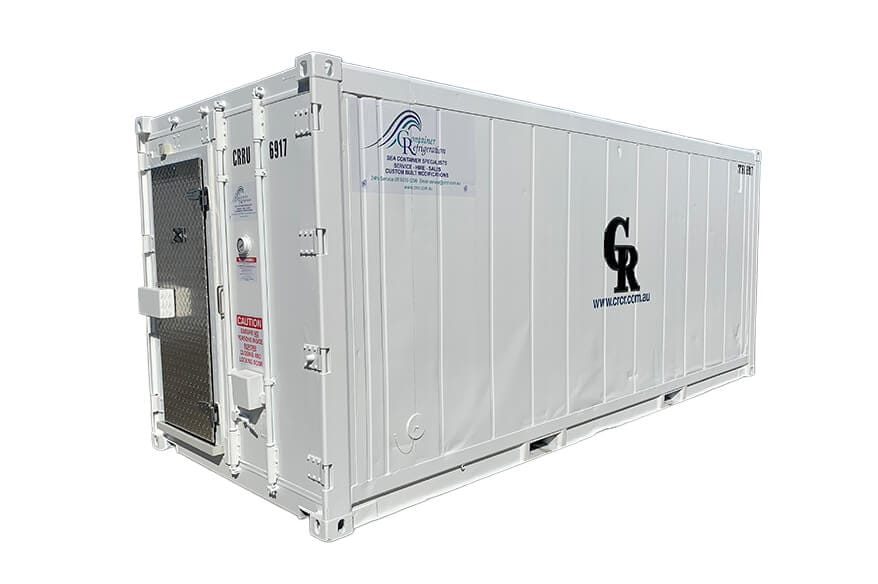
A refrigerated shipping container, often called a reefer, uses active refrigeration to control its internal environment. In procurement discussions, temperature control reefers may describe units being considered for temperature-sensitive cargo.
Refrigeration capability is only one control. Pharmaceutical suitability can also depend on qualification, monitoring, documentation, loading practices, power continuity, maintenance, and deviation management.
A supplier can confirm equipment features and service options. The pharmaceutical operator remains responsible for confirming whether the complete storage arrangement meets its regulatory and quality obligations.
Match the Container to the Storage Task
Before selecting pharmaceutical cold storage containers, define what will actually happen inside them. Storage volume is important, but so are access frequency, packaging, workflow, and site conditions.
Check the Load, Access Pattern, and Available Space
A container should suit the amount and type of product being stored without compromising the operating process. Staff also need practical access for loading, checking stock, and removing goods.
Where space or stored volume is limited, mini refrigerated containers are another category to assess. The current client page includes medical and pharmaceutical storage among its listed applications.
Selection still needs to be product-specific. A category description should never replace verification of the exact unit, refrigeration system, site setup, and intended storage conditions.
Protect Airflow During Loading and Storage
Refrigerated containers depend on controlled air movement. Poor loading can obstruct circulation and create conditions that differ across the stored load.
Door opening also introduces outside air. Frequent access may place more demand on the storage process, especially during loading or dispatch activity.
Operating procedures should therefore cover stock placement, door management, loading sequence, alarm response, and any product quarantine process after a suspected excursion.
Monitor Conditions and Keep Usable Records
Temperature control is difficult to demonstrate without monitoring records. Australian guidance expects temperature-sensitive medicine storage conditions to be monitored and the results reviewed.
Monitoring Must Support the Quality System
The refrigeration controller provides operational information, but the organisation should decide what records its quality system requires. Monitoring should support investigation when an alarm, fault, or suspected excursion occurs.
Container Refrigeration lists container monitoring contracts that can remotely track temperature, time, and location. The service page also describes remote monitoring and alarm options.
Those capabilities may support operational visibility. They should not be described as pharmaceutical validation, regulatory approval, or a substitute for the operator’s quality controls.
Around this stage of planning, Container Refrigeration can discuss refrigerated container categories, monitoring services, and related equipment. The pharmaceutical application still needs assessment against the product’s approved storage requirements.
Temperature Mapping Helps Identify Variation Inside the Space
A single displayed temperature does not describe every point inside a storage area. Temperature mapping examines conditions across the usable space and can identify areas that behave differently.
World Health Organization guidance describes temperature mapping and monitoring as important parts of pharmaceutical storage control. Mapping should be planned by people qualified to define the protocol and interpret the results.
Do not assume the container supplier performs pharmaceutical mapping or qualification unless that service is explicitly confirmed. The current client website does not present pharmaceutical validation as part of its service offer.
Plan for Power Continuity and Operational Interruptions
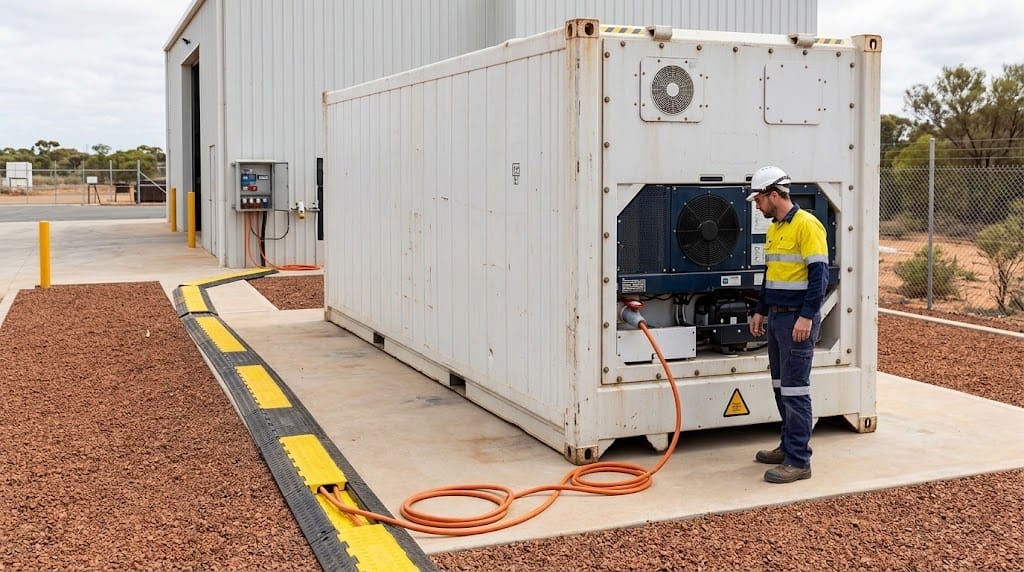
A temperature-controlled process depends on more than the refrigeration machinery. It also depends on a suitable and dependable power arrangement for the exact unit.
Confirm the Site Power Before Selecting Equipment
Confirm phase, connection, protection, cable requirements, and site suitability before the container is put into service. Do not alter electrical equipment to make an incompatible connection work.
Where electrical suitability is uncertain, use a qualified electrician. The correct power arrangement depends on the exact refrigerated container and the site.
Build a Response Plan for Outages and Deviations
A pharmaceutical storage plan should define the response to power loss, refrigeration faults, monitoring alarms, and suspected temperature excursions. Staff need clear responsibilities before an incident occurs.
The response may include protecting stock, restricting access, reviewing monitoring records, contacting the product sponsor, and arranging technical support. The correct response depends on the medicine and the organisation’s procedures.
Container Refrigeration lists generator solutions for refrigerated container applications, including medical and pharmaceutical storage. Generator compatibility must be confirmed for the exact reefer and operating situation.
Keep Refrigeration Equipment Fit for Service
Temperature control can be affected by equipment faults, damaged components, electrical issues, or maintenance needs. A maintenance plan should therefore sit alongside monitoring and quality procedures.
Inspections Can Identify Refrigeration Problems
The client offers refrigerated unit inspections for defective refrigerated units. An inspection can help identify equipment problems and the servicing that may be needed.
That technical assessment is different from pharmaceutical qualification. It should not be presented as proof that a storage system meets a medicine’s regulatory requirements.
Preventative Maintenance Supports Operational Reliability
Container Refrigeration also lists service contracts for refrigerated shipping containers. The service is presented around on-site servicing and preventative maintenance.
For pharmaceutical operations, maintenance records can form part of a wider equipment history. The organisation should decide how servicing, monitoring, alarms, deviations, and change control fit together.
Maintenance should also be coordinated with storage continuity. Product should not be left in uncontrolled conditions during planned work unless the operator’s approved process allows it.
Frequently Asked Questions
Can a Refrigerated Container Be Used for Pharmaceutical Storage?
Potentially, but suitability must be established for the intended medicine and process. Pharmaceutical cold storage containers should be assessed against approved storage conditions, monitoring requirements, site power, loading practices, and the organisation’s quality system.
The client website identifies pharmaceutical storage as an application for several refrigerated container categories. That does not make every unit appropriate for every pharmaceutical product.
Are Temperature-Controlled Reefers Automatically Pharmaceutical Compliant?
No. A reefer can provide active refrigeration, but pharmaceutical compliance involves more than cooling equipment.
The operator may need qualification, monitoring, documented procedures, excursion management, maintenance controls, and other measures required by its regulatory framework.
What Should Be Monitored During Pharmaceutical Container Storage?
Monitoring requirements should be defined by the medicine’s approved conditions and the organisation’s quality system. The system should provide records that can support routine review and investigation when conditions move outside expectations.
Alarm response is also important. A recorded warning has limited value if responsibility and escalation steps are unclear.
Why Does Door Opening Matter for Temperature Control?
Opening a refrigerated container allows outside air to enter and disturbs the controlled internal environment. Loading activity can also affect airflow around stored goods.
Procedures should limit unnecessary door opening and keep the loading layout consistent with the validated storage arrangement.
Does Refrigeration Maintenance Replace Temperature Validation?
No. Maintenance checks the condition and operation of equipment. Validation or qualification examines whether the storage system performs as intended for its defined use.
Both can be important, but they answer different questions.
Conclusion
Maintaining pharmaceutical temperature control starts with the medicine’s approved storage conditions. Equipment selection should follow those requirements, not the other way around.
A suitable process also considers monitoring, airflow, loading, power continuity, maintenance, alarms, documentation, and deviation response. None of these controls should be assumed from a generic reefer description.
If you are assessing refrigerated storage for a pharmaceutical application, discuss your storage and site requirements before selecting a unit.