Running a food business means adapting to demand – whether that’s a weekend market, a construction site lunch rush, or a festival crowd. Fixed premises lock you into one location, high rent, and limited flexibility.
A servery container Perth changes that equation. These container cafe modifications transform shipping containers into mobile food outlets that you can relocate, reconfigure, and scale as your business grows. For Australian food operators facing rising commercial rents and seasonal demand swings, a container cafe Perth represents a capital investment that increases operational freedom.
What Makes a Container Servery Different From a Food Truck
Food trucks and caravans have dominated the mobile food space for decades. A servery container Perth offers something fundamentally different – a semi-permanent structure combining the mobility of a trailer with the professional fit-out of a shopfront.
A standard 10-foot or 20-foot shipping container is modified with serving windows, internal fit-outs, electrical systems, and plumbing. The result functions like a proper cafe or takeaway shop – but you can relocate it with a truck and crane.
Unlike food trucks, a mobile food service container doesn’t need to be road-registered or maintained as a vehicle. You’re not paying for an engine, transmission, or ongoing mechanical servicing. You’re buying a building that happens to be relocatable.
The structural integrity of a shipping container means you can install heavy commercial equipment – commercial fridges, espresso machines, deep fryers – without worrying about weight distribution or road vibration. A food truck’s chassis limits what you can install. A commercial container modification doesn’t carry those same restrictions.
The Real Cost Comparison: Container Servery vs Traditional Shopfront
A traditional shopfront involves substantial annual rent plus significant fit-out costs before you’ve served a single customer. A fully fitted servery container Perth is a one-time capital expense with no ongoing rent if you operate on your own land or a low-cost site.
Always compare total cost of ownership – site fees, power connection, and maintenance – against commercial rent and lease commitments. The numbers vary significantly by location, fit-out complexity, and trading hours.
The depreciation schedule also works in your favour. Shipping containers are recognised as building structures for tax purposes. A well-maintained container cafe Perth retains meaningful resale value. Consult your accountant regarding depreciation treatment for your specific situation.
How Container Serveries Handle Australian Climate Extremes
Perth summers regularly push past 40°C. A mobile food container without proper modification becomes an oven – and a food safety liability.
Insulation is the first line of defence. Spray foam insulation applied to the roof, walls, and floor creates a thermal barrier that keeps internal temperatures stable during summer service periods.
A climate control unit sized appropriately for the container volume maintains comfortable working temperatures. A 20-foot container cafe modification in WA’s summer needs a properly sized unit to keep staff productive during peak service.
Ventilation matters as much as cooling. Commercial rangehoods extract heat and cooking fumes, whilst intake vents provide fresh air circulation. Proper ventilation also prevents condensation build-up that can damage electrical systems and create food safety risks.
The steel construction of shipping containers provides natural fire resistance – a meaningful safety advantage over timber-framed structures or fibreglass food trailers.
The Modification Options That Actually Matter
Not every modification adds value. Here’s what actually matters for a working shipping container food business.
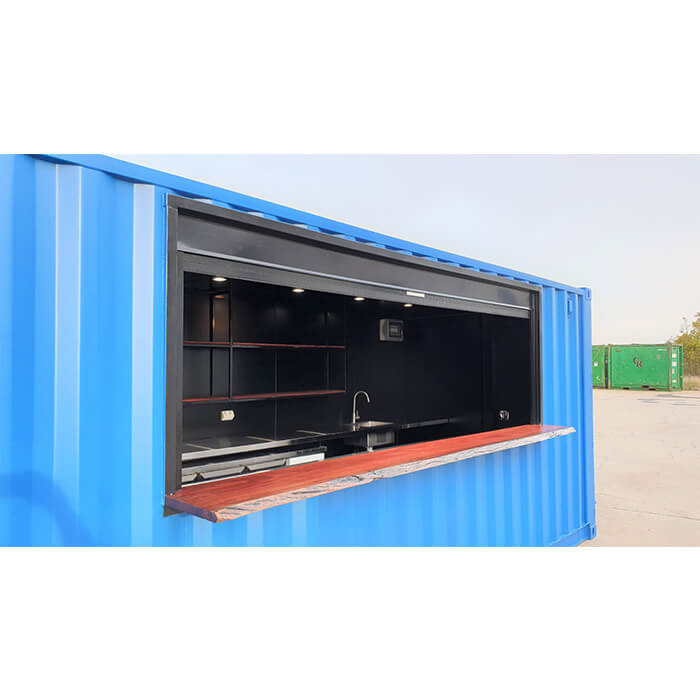
Container servery shutters provide security when closed and weather protection when open. A well-designed serving window includes a fold-down counter for order collection and payment processing. This is the most important container cafe modification for any customer-facing operation.
Electrical systems need to match your equipment load. Most servery containers Perth run on three-phase power to handle commercial fridges, coffee machines, and cooking equipment simultaneously. Single-phase systems work for lighter operations like coffee carts or cold food service.
Plumbing requirements depend on your menu. Hot food preparation needs a three-bay sink for washing, rinsing, and sanitising. A hand-wash basin is mandatory under Australian food safety standards.
Internal fit-out should prioritise workflow efficiency. The best container cafe Perth layouts position equipment to create a logical preparation sequence – cold storage to prep bench to cooking equipment to serving window.
Flooring takes constant punishment from spills and cleaning. Commercial vinyl or epoxy coatings provide slip resistance and easy sanitisation – essential for any shipping container food business.
Where Container Serveries Deliver the Strongest ROI
Farmers markets and weekend events suit servery containers Perth well. You’re paying a stall fee rather than daily rent. A well-positioned mobile food service container at a regular Perth market generates consistent weekend revenue without permanent premises overhead.
Construction site catering provides consistent weekday income. A container cafe modification serving breakfast and lunch to workers throughout a large project generates reliable daily revenue. Site managers often prefer containers over food trucks because they’re more stable, secure, and professional-looking.
Winery cellar doors and farm gate sales use servery containers Perth to add food service without permanent structures. Capital cost is lower, council approval is often simpler, and you can relocate the servery if you redesign the property layout.
Festival and event catering generates high-volume sales during peak periods. A mobile food container at a music festival or sporting event can process more transactions than a food truck because of the additional internal space for staff and equipment.
Pop-up retail and seasonal businesses benefit from the relocatable nature of a container cafe Perth. A coffee servery near a beach in summer can move to a different location when seasonal demand shifts.
The Council Approval Process in Western Australia
Container Refrigeration fits out servery containers Perth for food and beverage operators across WA. Every container cafe modification is specified to match your operational requirements.
Every local council in WA has different requirements for servery containers Perth. Development approval depends on how long you’re placing the container on a site. Temporary placement often requires only notification. Permanent or semi-permanent installation typically triggers a full development application.
Health department registration is mandatory for all food businesses. Your container cafe modification must meet Food Standards Australia New Zealand requirements for food preparation areas, hand-washing facilities, and temperature control.
Planning approval depends on zoning. Commercial zones generally allow food service operations. Residential or rural zones may restrict trading hours or require additional consultation. Always verify requirements with your specific local council before purchasing a shipping container food business setup.
How to Match Your Container Size to Your Menu
A 10-foot servery container Perth suits simple operations – coffee, cold drinks, pre-made food. You have roughly 7 square metres of internal space, enough for one or two staff working a limited menu.
A 20-foot container cafe Perth provides 14 square metres of workspace. This accommodates full hot food preparation, multiple staff during busy periods, and a more complex menu. Most successful shipping container food businesses find 20-foot containers hit the sweet spot between functionality and mobility.
A 40-foot container or multiple joined containers create cafe-scale operations with internal seating, separate prep and service areas, and a full commercial kitchen. The trade-off is reduced mobility – moving a 40-foot mobile food container requires specialised transport and crane access.
Menu complexity determines space requirements. Think about peak service periods. If you’re serving high volumes per hour, you need space for multiple staff to work without collision. A compact layout works well for lower-volume operations.
Power Supply Options That Keep You Trading
Mains power connection is the simplest option when available. A qualified electrician must install appropriate outlets and safety switches for any container cafe Perth with full commercial equipment.
Generator power provides complete location flexibility. A 3-phase container power generator sized appropriately handles most container servery Perth power requirements. Factor in noise, fuel costs, and maintenance when evaluating generator-powered operation.
Calculate your actual power requirements before choosing a system. Add up the running wattage of all equipment you’ll operate simultaneously, then add 20% for startup surges. Undersizing your power supply causes equipment failures and lost trading time.
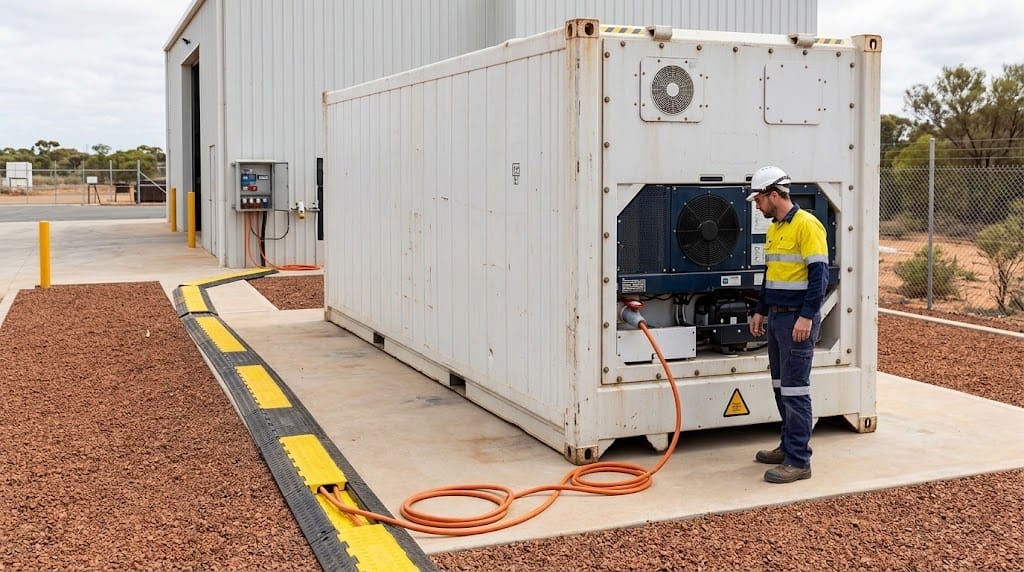
For servery container Perth builds needing an approved power connection point, a power supply adaptor ensures safe three-phase connection at event sites and market locations with industrial power boards.
Food Safety and Cold Storage Integration
Food safety regulations require proper temperature control for high-risk foods. A shipping container food business handling fresh produce, dairy, or meat needs refrigeration capacity that matches your menu and service volume.
Internal refrigeration within the servery provides immediate access during service. Size your refrigeration to hold one day’s worth of high-turnover ingredients plus backup stock.
Many servery container Perth operators pair their servery with a single-phase cool room positioned nearby. This provides walk-in cold storage without consuming valuable servery workspace.
Temperature monitoring is legally required for food businesses. Install digital thermometers in all refrigeration units and maintain daily temperature logs. Health inspectors check these records during audits of any container cafe Perth operation.
Our cold storage monitoring service provides continuous temperature logging for servery container Perth operators who need documented cold chain compliance for health inspections and audits.
Security and Asset Protection
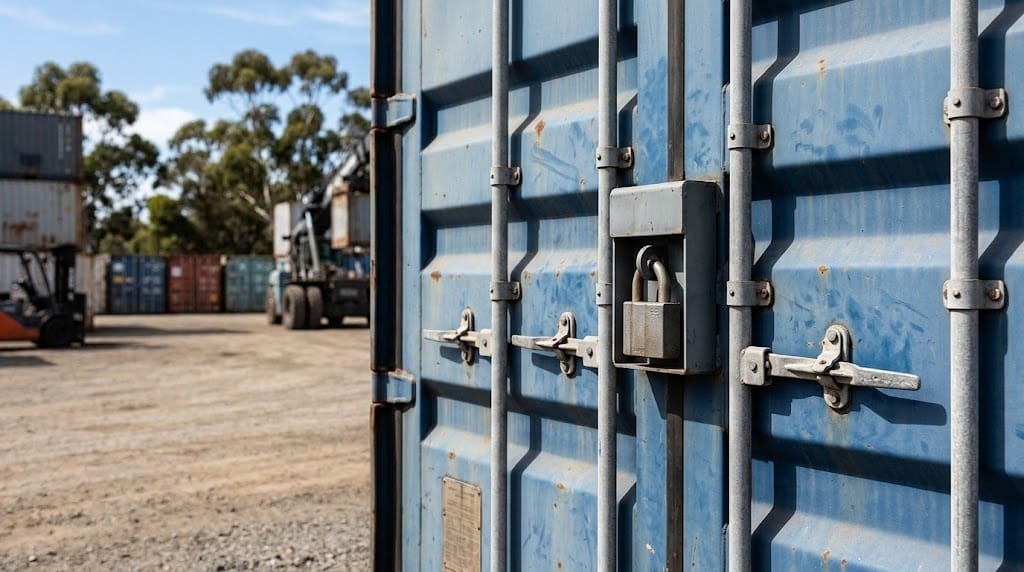
A mobile food service container operating at markets and events overnight needs robust security. For high-value fit-outs at locations with elevated theft risk, container security doors provide reinforced locking bars and concealed hinges that resist forced entry – protecting your commercial container modification investment between trading sessions.
For businesses operating a servery container Perth at multiple venues, our container hire options provide flexible access to additional cold storage units at each event location without requiring a permanent second container.
Maintenance Requirements That Protect Your Investment
A servery container Perth is a building, not a vehicle. Maintenance focuses on protecting the structure and keeping equipment operational.
Rust prevention matters in coastal or high-humidity areas. Inspect the container exterior every six months for paint damage or rust spots. Treat any exposed steel immediately – untreated rust spreads quickly.
Seal integrity keeps water out and temperature control effective. Check door seals, window seals, and roof penetrations annually. Water ingress damages electrical systems and creates mould problems.
Electrical safety requires annual inspection by a licensed electrician. Electrical faults in shipping container food businesses create serious fire risks – don’t defer this maintenance.
If refrigeration equipment within your container cafe modification needs servicing, our refrigeration unit swap service minimises your downtime during peak trading periods by replacing faulty units quickly.
When your servery container Perth is positioned at a permanent or semi-permanent location, our container warranty service covers structural and refrigeration components during the warranty period.
The Exit Strategy: Resale and Repurposing Options
A well-maintained container cafe modification retains strong resale value. Buyers pay more for servery containers Perth with documented maintenance history, compliance certificates, and photographs of the fit-out quality.
Repurposing potential adds value beyond food service. A container cafe Perth converts to a retail kiosk, ticket booth, information centre, or site office. The electrical and climate control systems make them valuable for non-food applications.
For businesses considering a new shipping container home conversion alongside their food business, our shipping container homes range demonstrates the full range of residential and commercial uses possible from the same base container structure.
Before finalising your servery container Perth fit-out, a servery site inspection confirms power supply compatibility, access requirements, and council compliance for your specific trading location.
For container cafe Perth operators needing cold storage alongside their servery, our new refrigerated containers provide fresh, certified units with full warranty – matched to your servery’s power supply and footprint requirements.
For servery container Perth operators needing spare parts and accessories for their mobile food business, our container spare parts range covers the essentials for day-to-day container operations.
For businesses hiring a mobile food service container for short-term events or market seasons, our container hire service provides flexible short and long-term agreements matched to your trading schedule.
Call (08) 9335 6299 or get in touch with our team to discuss your servery container Perth requirements. We’ll help you determine the right size, fit-out, and power configuration for your food business model.